


AI Automation Services: How Businesses Can Automate Everyday Workflows
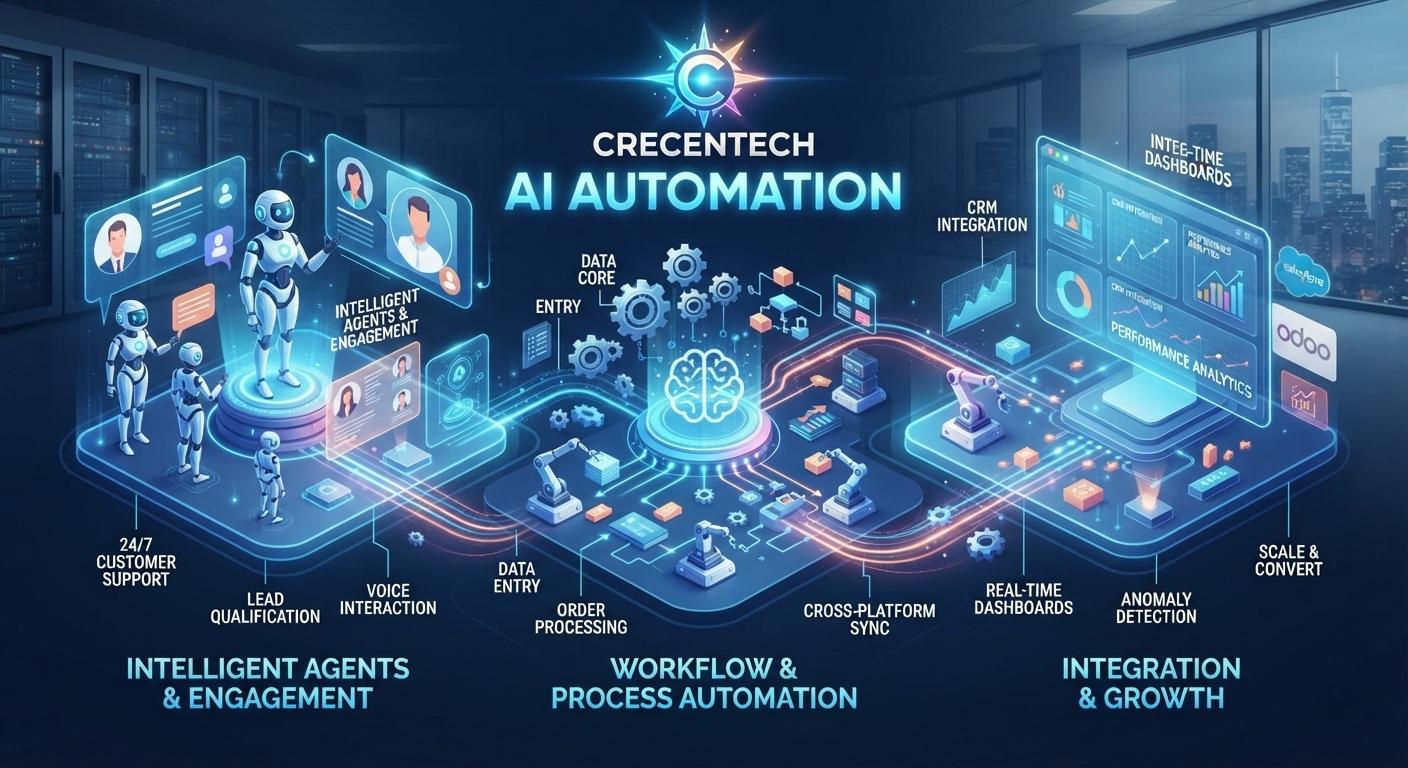
Many businesses spend a surprising amount of time on repetitive activities that appear simple individually but become expensive when performed every day. Employees may move information between applications, respond to similar customer questions, organize documents, qualify leads, schedule meetings, or update records manually. These tasks can slow operations and prevent teams from focusing on more valuable responsibilities.
AI automation services provide a practical way to address these challenges by combining artificial intelligence with business workflows and existing software systems. Rather than automating a single isolated task, businesses can create connected processes where information is captured, analyzed, routed, and acted upon automatically. The result can be faster operations, fewer manual errors, and a more consistent experience for employees and customers.
What Makes AI Automation Different?
Traditional automation generally follows predefined rules. AI automation can add intelligence to those workflows by interpreting information, identifying patterns, classifying requests, and determining what action should happen next.
For example, a traditional workflow might send every website inquiry to the same employee. An intelligent system could analyze the inquiry, identify the customer's intent, categorize the lead, update the CRM, and route the request to the appropriate team.
This distinction makes automation useful for workflows where information is not always presented in exactly the same format.
Where Businesses Can Apply AI Automation
Sales and Lead Management
Sales teams are often responsible for handling large volumes of inquiries while ensuring that promising prospects receive timely attention. Automation can help capture incoming leads, analyze submitted information, assign lead categories, and trigger follow up actions.
Consider a software company receiving inquiries through its website. An automated workflow could identify the visitor's company size and requirements, add the contact to the CRM, notify the appropriate sales representative, and schedule a follow up email.
The sales team remains responsible for building the relationship, while repetitive administrative work happens in the background.
Customer Service Operations
Customer support is another area where automation can improve efficiency. Businesses frequently receive questions about account information, services, appointments, orders, or common technical issues.
AI can classify incoming requests and provide relevant information for routine cases. More complex requests can be transferred to employees along with the conversation history and relevant customer information. This approach can reduce unnecessary manual sorting while preserving human involvement when it matters.
How AI Workflow Automation Connects Business Processes
One of the biggest benefits of modern automation is the ability to connect separate applications into a coordinated workflow.
Moving Information Between Systems
Businesses often use several platforms to manage daily operations. A lead might begin on a website, move into a CRM, trigger an email, create a task in a project management system, and eventually become part of a reporting process.
Without integration, employees may need to manually move information between these systems. AI workflow automation can coordinate these steps so that one action triggers the next.
For example, when a customer submits a form, the workflow could extract relevant information, identify the request type, create a CRM record, send a confirmation message, and notify an employee if human attention is required.
Handling Exceptions Intelligently
Not every situation follows the same pattern. An effective automated workflow should be able to recognize when a request falls outside normal conditions.
Suppose an automated document processing system encounters missing information. Instead of continuing with incomplete data, it can flag the document for review. This creates a human oversight point without requiring employees to manually inspect every document.
AI Automation Services for Businesses Should Be Problem Driven
Businesses should not automate a process simply because AI technology is available. The strongest results usually come from identifying a specific operational problem first.
Start by examining processes that involve high volumes of repetitive work, frequent delays, manual data transfers, or unnecessary administrative effort. Document how the process currently works and identify where employees spend the most time.
Next, determine which parts can be automated and which require human judgment. A customer support workflow, for example, might automate classification and basic responses while allowing employees to handle complaints, sensitive requests, and unusual situations.
This approach creates a practical balance between efficiency and control.
Choosing the Right Automation Strategy
The technology behind an automation project should match the business requirement. Some workflows may only require straightforward integrations, while others may benefit from AI agents, machine learning models, document processing, or natural language processing.
Security should also be considered from the beginning. Businesses need to establish appropriate access permissions, protect sensitive information, and determine which actions an automated system is allowed to perform.
Testing is equally important. Before deploying an automated workflow broadly, businesses should evaluate how it performs with normal requests, incomplete information, unusual scenarios, and potential errors.
Measuring the Business Impact
Successful automation should be measurable. Businesses can compare processing times, employee workload, response rates, error frequency, customer satisfaction, and operational costs before and after implementation.
For example, if employees previously spent ten hours each week manually processing incoming inquiries, the organization can measure how much of that workload is removed after automation. It can then determine whether the workflow is producing meaningful operational value.
Monitoring should continue after deployment because workflows, customer expectations, software systems, and business requirements can change over time.
Conclusion
AI automation services can help businesses transform repetitive processes into connected, intelligent workflows. From sales and customer support to document processing and internal operations, automation can reduce manual effort while helping employees focus on work that requires judgment and expertise.
The key is to begin with a clearly defined business problem, select appropriate technologies, connect existing systems carefully, and maintain human oversight where necessary. Businesses looking to explore AI powered automation can visit CrecenTech to discover practical approaches for improving workflows and building more efficient operations.
FAQs
What are AI automation services for businesses?
AI automation services use artificial intelligence, integrations, and workflow technologies to automate repetitive business processes. They can support activities such as lead management, customer service, document processing, and internal operations.
How does AI workflow automation work?
AI workflow automation captures information, analyzes it, determines the appropriate next action, and triggers connected processes. Depending on the workflow, it can update systems, send messages, classify information, or request human review.
What business processes can be automated with AI?
Common examples include lead qualification, customer support, appointment scheduling, document processing, data classification, reporting, email workflows, and administrative tasks.
Can AI automation integrate with existing business software?
Yes. Automation can connect compatible CRMs, communication platforms, databases, project management tools, calendars, and other business applications. The available integration depends on each system's technical capabilities.
Is AI automation suitable for small businesses?
Yes. Small businesses can start with a single repetitive workflow where automation can save meaningful employee time. Starting small also makes it easier to measure results before expanding to other processes.
Does AI automation replace human employees?
AI automation is often designed to support employees rather than remove human involvement completely. Routine activities can be automated while employees handle complex decisions, exceptions, relationships, and strategic responsibilities.
How can a business identify workflows suitable for AI automation?
Businesses should look for processes that are repetitive, time consuming, data intensive, or prone to manual errors. The workflow should then be evaluated for complexity, security requirements, expected benefits, and human oversight.
How can businesses measure the success of AI automation?
Organizations can track processing time, employee hours saved, error rates, response times, customer satisfaction, lead handling, and operating costs to determine whether an automated workflow is delivering measurable value.

 English
 Arabic
 French
 Spanish
 Portuguese
 Deutsch
 Turkish
 Italiano
 Russian
 Romaian
 Portuguese (Brazil)
 Greek
Greek
