


Salicylic Acid Serum: A Simple Guide for Acne Prone Skin
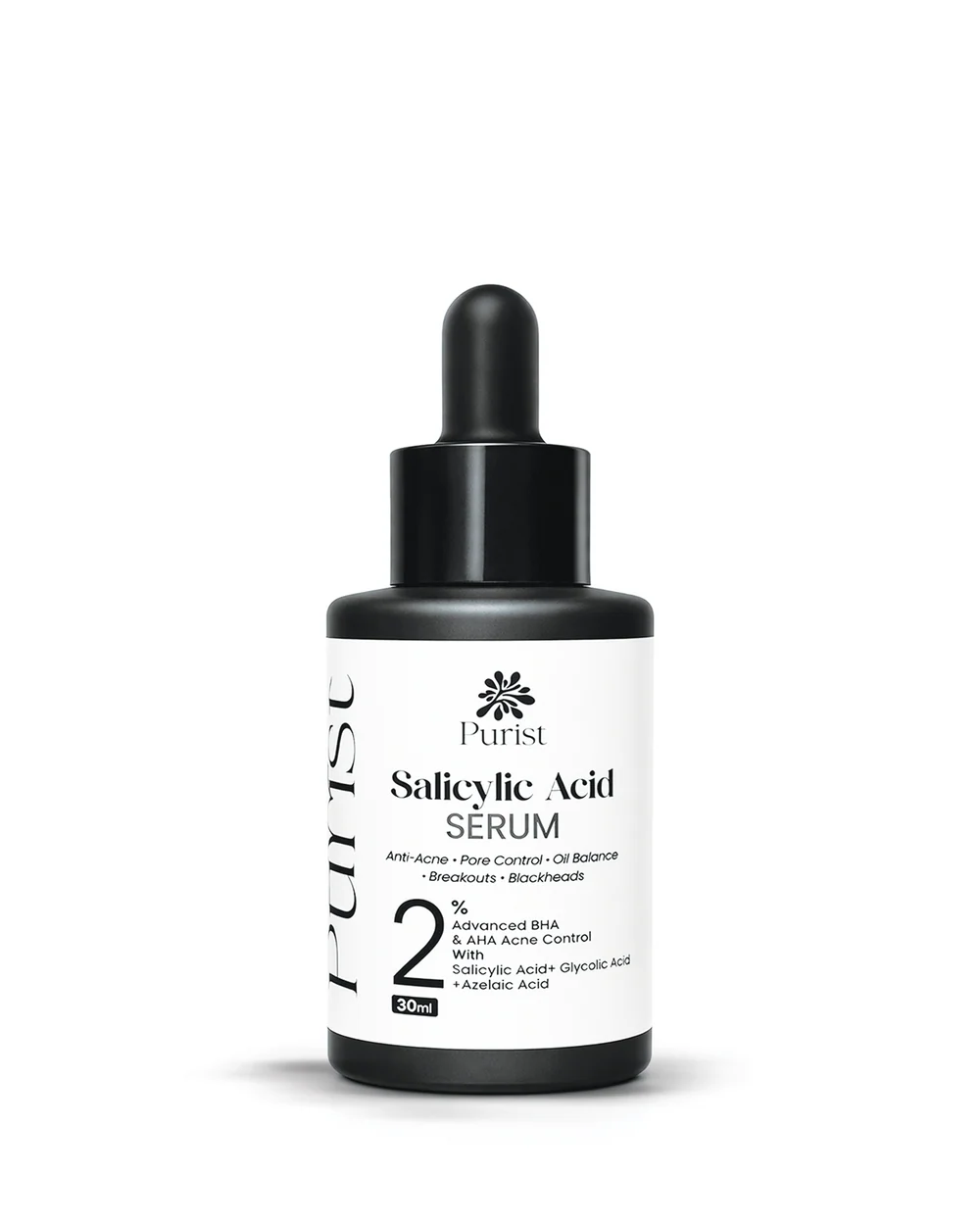
If your skin gets oily quickly, your nose is covered with blackheads, or you keep getting small breakouts, you have probably come across salicylic acid.
It is one of those skincare ingredients that sounds complicated but is actually pretty straightforward. Salicylic acid helps loosen the oil and dead skin cells that can build up inside pores. That makes it especially useful for oily and acne-prone skin.
A serum takes this ingredient one step further because you leave it on your skin instead of washing it away.
What Is Salicylic Acid?
Salicylic acid is a type of beta hydroxy acid, also called BHA.
The thing that makes it different from many other exfoliating acids is that it is oil-soluble. In simple terms, it can work through the oily buildup around your pores and help loosen dead skin cells.
This is why you will often find salicylic acid in products made for blackheads, whiteheads, oily skin, and breakouts. You can check out Salicylic Acid Product Line at the Purist website.
It does not magically clean your pores overnight, though. Like most skincare ingredients, it needs regular and sensible use.
What Does a Salicylic Acid Serum Do?
A salicylic acid serum is mainly used when clogged pores and excess oil are a problem.
It helps with clogged pores
Dead skin cells and oil can collect inside pores. Over time, that buildup can contribute to blackheads and whiteheads.
Salicylic acid helps loosen this buildup, which can keep pores clearer.
It can help with blackheads
Blackheads are not simply dirt sitting on your skin. They form when a pore becomes clogged and the material inside it reacts with air.
Because salicylic acid works on oil and dead skin cells, it can be a helpful ingredient for blackhead-prone skin.
It helps smooth rough skin
When dead skin cells build up on the surface, your skin can feel rough or bumpy.
Regular exfoliation can make the skin feel smoother and look more even.
It suits oily skin
If your face becomes shiny soon after washing it, salicylic acid may fit well into your routine.
It does not mean you should try to remove every bit of oil from your face. Your skin still needs some natural oil to stay comfortable and healthy.
Is a 2% Salicylic Acid Serum Strong?
2% is a commonly used concentration in leave-on salicylic acid products.
But don't make the mistake of thinking that a higher percentage automatically means better results.
Your skin also has to tolerate the formula. A strong serum that leaves your face red and peeling isn't doing you any favors.
If you are new to salicylic acid, start slowly. Give your skin a chance to get used to it before deciding whether you need more frequent use.
Who Should Try Salicylic Acid Serum?
It can be a good option if you regularly deal with:
-
Blackheads
-
Whiteheads
-
Oily skin
-
Clogged pores
-
Small breakouts
-
Rough skin texture
You may want to be more careful if your skin is already very dry, sensitive, irritated, or peeling.
In that situation, adding another exfoliating product may only make things worse.
How to Use Salicylic Acid Serum
This is where many people overcomplicate things.
You don't need a ten-step routine.
At night, wash your face with a gentle cleanser and pat your skin dry. Apply a small amount of your Salicylic acid serum in Pakistan as directed on the product. Then use a moisturizer.
If you're trying salicylic acid for the first time, start two or three nights a week.
If your skin feels fine after a few weeks, you can decide whether you need to use it more often.
And don't scrub your face while using it. Salicylic acid is already doing the exfoliating work.
What If Your Skin Feels Dry?
A little dryness can happen when you introduce an exfoliating product.
But burning, significant redness, persistent peeling, or uncomfortable tightness isn't something you need to push through.
Use the serum less often or stop for a while and let your skin recover.
Your skincare routine should make your skin feel better, not like you've lost a fight with a bottle of acid.
Can You Use Salicylic Acid Every Day?
Some people can. Others can't.
There is no rule saying you must use salicylic acid every day to see results.
Start with a few applications per week and see how your skin responds. If you tolerate it well, you can gradually increase the frequency if the product instructions allow it.
If your skin starts getting irritated, go back to using it less often.
More product and more frequent application don't always mean faster results.
Salicylic Acid Serum vs Salicylic Acid Cleanser
Both products use the same ingredient, but they work differently in your routine.
A salicylic acid cleanser goes on your skin and then gets rinsed off. A serum stays on your skin after application.
If you're new to salicylic acid or your skin is easily irritated, a cleanser may feel like an easier place to start.
A serum makes more sense when you want a leave-on treatment for concerns such as clogged pores and breakouts.
You don't necessarily need both.
Using a salicylic acid cleanser and serum together can be too much for some people, especially when you're just starting out.
What About Other Skincare Ingredients?
You don't have to stop using every other product just because you've added salicylic acid.
The problem starts when you throw several strong ingredients into the same routine at once.
For example, using salicylic acid alongside other exfoliating acids or a retinoid may irritate your skin, especially if you're new to active skincare.
A simple routine is easier to manage:
Morning: Cleanser → Moisturizer → Sunscreen
Night: Cleanser → Salicylic acid serum → Moisturizer
Once you know how your skin reacts, you can make changes if you actually need them.
Can You Use Vitamin C With Salicylic Acid?
You can include both ingredients in the same overall skincare routine, but you don't have to layer everything together.
If you're new to both, using one active at a time makes things much easier. That way, if your skin becomes irritated, you have a better idea of what caused it.
For example, you could use vitamin C in the morning and salicylic acid at night.
Keep the rest of the routine simple.
Salicylic Acid Serum in Pakistan
If you're searching for a salicylic acid serum in Pakistan, don't choose one just because it says “2%” on the bottle.
Look at the whole formula.
Think about your skin type, what else you're already using, and what you're actually trying to fix. Someone with oily skin and blackheads may have very different needs from someone with dry, sensitive skin.
It's also worth checking the product instructions instead of assuming that every salicylic acid serum should be used in exactly the same way.
And yes, hot and humid weather can make oily skin feel more uncomfortable. But living in Pakistan doesn't automatically mean you need a strong acne treatment. Your own skin should guide your routine.
Mistakes That Can Make Salicylic Acid Irritating
One of the biggest mistakes is starting too aggressively.
People often see an active ingredient working on other people's skin and assume they should use it every night from day one.
That's not necessary.
Avoid applying more serum than recommended. Don't scrub your face before or after using it. Don't pile several exfoliating products on top of each other.
And don't forget moisturizer just because you have oily skin.
Oily skin can still become dehydrated and irritated.
When Should You Expect Results?
Don't judge a salicylic acid serum after two or three days.
Some people notice that their skin feels smoother fairly quickly, but clogged pores and breakouts take time to improve.
Give your routine a fair chance before changing everything.
If your acne is painful, severe, leaving scars, or not improving despite a consistent routine, it's worth speaking with a dermatologist. A serum may help with mild congestion, but it isn't the answer to every type of acne.
Final Thoughts
Salicylic acid serum can be a simple way to deal with oily skin, clogged pores, blackheads, and mild breakouts.
The trick is not to go overboard.
Start slowly, keep your routine simple, moisturize your skin, and pay attention to how it reacts. You don't need a complicated routine or a bathroom shelf full of active ingredients.
Sometimes, doing a few things consistently works better than constantly looking for the next product.

 English
 French
 Spanish
 Portuguese
 Deutsch
 Turkish
 Dutch
Dutch
 Italiano
 Russian
 Romaian
 Portuguese (Brazil)
 Greek
Greek
