


Forklift Parts: A Guide to Choosing the Right Components
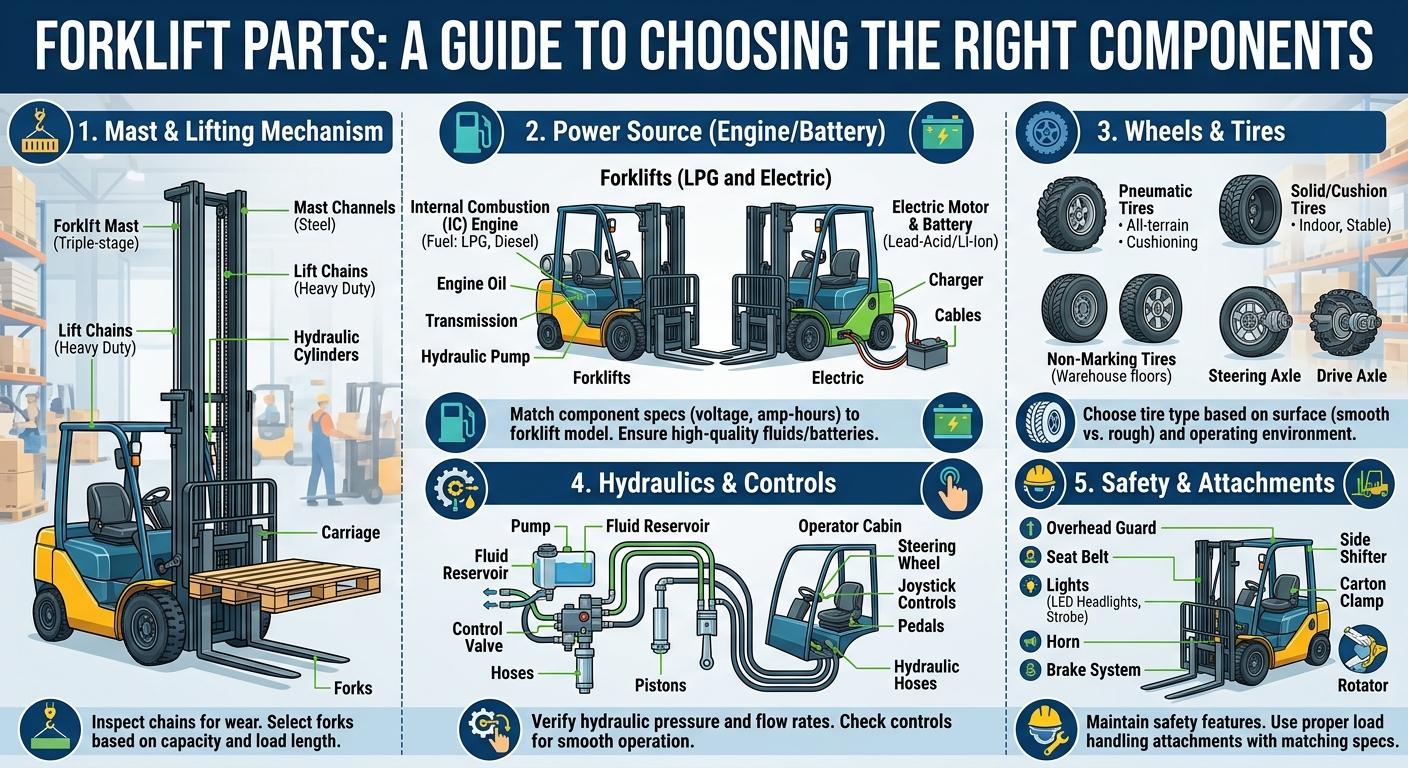
Forklifts are essential machines in warehouses, construction sites, distribution centers, manufacturing facilities, and other industrial workplaces. They are designed to move heavy materials efficiently, but like any other equipment, forklifts require regular maintenance and replacement components to remain reliable. Choosing the right forklift parts can improve machine performance, reduce unexpected downtime, and help create a safer working environment.
From hydraulic components and tires to electrical systems and lifting equipment, every part plays an important role in the overall operation of a forklift. Understanding the main types of parts and knowing what to look for when purchasing replacements can make maintenance easier and more cost-effective.
Common Forklift Parts and Their Functions
A forklift contains many components that work together to lift, carry, and transport loads. Some parts experience more wear than others because they are exposed to heavy loads, constant movement, friction, and demanding operating conditions.
Forklift tires are among the most frequently replaced components. Solid tires are commonly used in warehouses and industrial environments because they provide durability and resistance to punctures. Pneumatic tires may be preferred for outdoor applications where uneven surfaces require additional cushioning. Selecting the appropriate tire type depends on the forklift model, operating environment, load requirements, and floor conditions.
The hydraulic system is another important area of a forklift. Hydraulic pumps, cylinders, hoses, seals, and fittings help control lifting and lowering functions. A damaged hydraulic hose or worn seal can reduce lifting performance and may create a safety concern. Regular inspection can help identify leaks, cracks, and other signs of wear before they become larger problems.
Engine and Electrical Components
Internal combustion forklifts depend on engine components to provide the power required for lifting and movement. Common replacement components can include filters, belts, spark plugs, fuel system components, gaskets, and other engine-related parts. Regular servicing helps keep the engine operating efficiently and can reduce the risk of unexpected breakdowns.
Electric forklifts use batteries, chargers, motors, controllers, and other electrical components instead of traditional fuel-powered engines. Battery condition is particularly important because it directly affects operating time and performance. Electrical connections should also be inspected regularly to identify corrosion, loose connections, or damaged wiring.
When replacing an electrical or engine component, compatibility is essential. A part that looks similar may not have the correct specifications for a particular forklift. Checking the manufacturer's part number and equipment model can help prevent installation problems.
Mast, Forks, and Lifting Components
The mast and forks are central to the forklift's lifting operation. Forks are designed to support and transport loads, while the mast allows the forks to move vertically. These components operate under significant pressure and should be inspected regularly for signs of bending, cracks, excessive wear, or other damage.
Other lifting components may include rollers, chains, bearings, bushings, and hydraulic cylinders. Worn lifting components can affect stability and lifting performance. Maintenance teams should follow the equipment manufacturer's inspection recommendations and replace damaged components when necessary.
Using the correct replacement part is particularly important for load-bearing components. The specifications should match the forklift's capacity and design rather than simply selecting a part based on appearance or price.
How to Choose the Right Forklift Parts
There are several factors to consider when purchasing replacement components. The forklift's make, model, serial number, and year can help identify compatible parts. Some manufacturers use different components across models that may appear nearly identical, so accurate equipment information is important.
Quality is another major consideration. High-quality replacement components are generally designed to meet specific performance and durability requirements. Lower-cost alternatives may appear attractive initially, but poor-quality parts can lead to premature wear, additional repairs, or equipment downtime.
The operating environment should also be considered. A forklift used outdoors may require different tires and protective components than one operating inside a clean warehouse. Similarly, forklifts exposed to dust, moisture, chemicals, or extreme temperatures may need components designed for those conditions.
New and Used Forklift Parts
Both new and used components can have a place in forklift maintenance. New parts can be a practical choice when reliability, warranty coverage, and long-term performance are priorities. They are often suitable for critical components where failure could cause significant downtime.
Used forklift parts can provide another option for businesses working with older equipment or trying to control maintenance costs. However, used components should be inspected carefully before installation. Buyers should consider the part's condition, compatibility, remaining service life, and source.
For older forklift models, used or refurbished components may also be easier to find than newly manufactured parts. Working with a reputable supplier can make it easier to verify specifications and condition.
Maintaining Forklift Parts for Longer Service Life
Proper maintenance can extend the useful life of many forklift components. Operators and maintenance teams should inspect equipment regularly and address minor problems before they develop into major failures. Fluid levels, hydraulic hoses, tires, chains, forks, brakes, and electrical connections should receive appropriate attention based on the forklift type and manufacturer's recommendations.
Keeping accurate maintenance records can also help identify recurring problems. If a particular component repeatedly fails, the underlying issue may involve incorrect installation, excessive loads, poor operating conditions, or another mechanical problem.
Clean operating practices are equally important. Removing dirt and debris from critical areas can reduce unnecessary wear and make it easier to identify leaks, cracks, and damaged components during inspections.
Finding Reliable Forklift Parts
Reliable sourcing is an important part of forklift maintenance. A dependable supplier should provide accurate product information and help customers identify components that match their equipment. Part numbers, dimensions, specifications, and compatibility information should be checked before placing an order.
Businesses should also consider availability when selecting a supplier. Having access to commonly needed components can reduce downtime when maintenance is required. For facilities that operate multiple forklifts, keeping frequently replaced parts available can make routine repairs more efficient.
Conclusion
Forklift parts are essential for maintaining safe, productive, and dependable material-handling equipment. Tires, hydraulic components, engine parts, electrical systems, forks, chains, and mast components all contribute to proper forklift operation. Choosing parts based on compatibility, quality, operating conditions, and equipment requirements can help reduce unnecessary repairs and downtime.
Whether a business needs new components for modern equipment or used forklift parts for older machines, careful selection and regular maintenance are key. By working with reliable suppliers and following recommended inspection practices, businesses can keep their forklifts operating efficiently and support smoother day-to-day operations.

 English
 Arabic
 French
 Spanish
 Portuguese
 Deutsch
 Turkish
 Dutch
Dutch
 Italiano
 Romaian
 Portuguese (Brazil)
 Greek
Greek
