


A Practical Guide to Selecting Multi-Function Welding Equipment
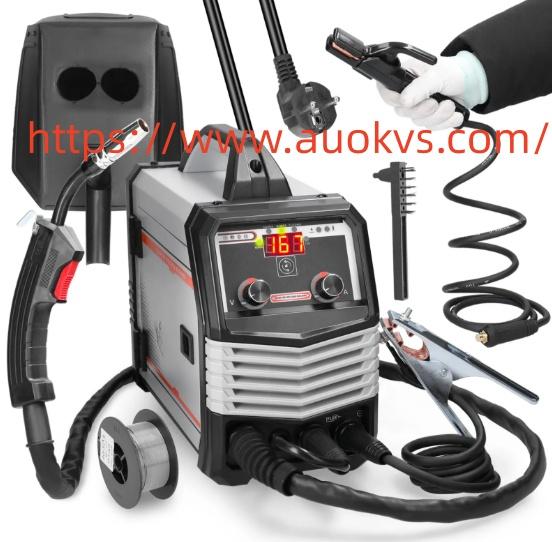
In workshops where different metalworking tasks need to be handled within the same working environment, a Multi-function Welding Machine can provide greater process flexibility while keeping equipment organization relatively simple. Rather than focusing on a single welding method, users can consider a solution according to the materials they commonly process, the type of joints they create, the working conditions they face, and the level of flexibility required. Taizhou ChuangLi Electronic Technology Co., Ltd. develops welding and cutting equipment for a range of metalworking applications, making process adaptability an important consideration when evaluating its product range.
Material compatibility should be one of the first points considered during equipment selection. Different metals respond differently to heat and welding processes, so a machine intended for varied applications should be evaluated according to the materials encountered in daily work. Carbon steel, stainless steel, aluminum, galvanized materials, and other conductive metals may call for different welding approaches. Understanding the material mix can help users select equipment with suitable welding processes rather than choosing functions that may not be relevant to their actual workflow.
The welding consumables and accessories also have a direct relationship with material selection. Electrodes, welding wire, torches, shielding gas, and related components can influence how the welding process interacts with the workpiece. Users should therefore look beyond the main machine housing and consider whether the supporting components are compatible with their preferred welding methods. Easy access to these components can also make routine preparation and replacement more convenient.
The right purchasing decision begins with identifying the type of work the machine will perform. A repair workshop may need to move between different materials and joint conditions, while a fabrication environment may focus more heavily on repeatable production tasks. Maintenance teams may value flexibility because the material and workpiece can change from one job to another. For this reason, users should examine their actual workflow before deciding which combination of welding processes is most useful.
Process integration is particularly relevant when several welding methods are used in one workspace. MMA welding can be useful for general repair and structural work, while MIG welding is commonly associated with continuous wire feeding and fabrication applications. TIG welding provides a different approach where controlled heat and clean weld formation are important. The ability to select a suitable process according to the task can make a flexible machine more practical for mixed metalworking environments. AUOKVS lists MMA, MIG, TIG, gas-shielded welding, and other welding solutions within its wider product range.
Control technology has an important role in making process changes manageable. Different welding methods require different operating approaches, so the control interface should allow operators to understand the selected process without unnecessary confusion. A clearly organized panel can make adjustments easier to follow, particularly when the same machine is used by different operators or for different types of work.
A good user experience is not limited to the control panel. Torch handling, cable organization, connection points, ventilation areas, and machine positioning can all affect how naturally the equipment fits into a workshop. When operators frequently change between workpieces, an organized machine layout can reduce unnecessary movement and help maintain a cleaner working area.
Portability may also be relevant for users who perform repair or maintenance work in different locations. Equipment that can be repositioned without excessive preparation can support more flexible workflows. This is particularly useful where welding tasks take place around large structures, machinery, pipelines, vehicles, or other workpieces that cannot easily be moved to a fixed welding station.
Maintenance should be considered at the purchasing stage rather than after the machine has been installed. Welding equipment contains working components that may require inspection, cleaning, adjustment, or replacement during regular use. A practical design should provide reasonable access to areas that operators commonly need to check. Clear connections and an organized internal and external structure can make routine maintenance easier to understand and perform.
Thermal management is another part of equipment design. Welding generates heat, and the machine needs to manage operating temperature appropriately during normal use. Ventilation openings, internal component arrangement, protective housing, and cooling design can all contribute to equipment reliability. From a user's perspective, these design elements may not always be visible during operation, but they form an important part of the overall equipment structure.
Exterior appearance also influences the interaction between people and machinery. A clearly designed front panel can make controls easier to identify, while well-positioned handles and connection points can improve handling. The housing should provide protection for internal components while remaining practical for transportation, installation, and maintenance.
For manufacturers and distributors, appearance can have another role. Branding areas, panel layout, product color, packaging, and accessory presentation can influence how equipment fits into a particular product range. AUOKVS provides OEM and ODM-related customization options for welding equipment, including aspects such as branding, appearance, panel design, packaging, and selected accessories.
When evaluating flexible welding equipment, buyers should also consider how the machine will fit into the existing workspace. Storage requirements, cable management, operator movement, workbench arrangement, and access to consumables can all affect daily convenience. A machine with useful functions is more practical when those functions can be incorporated naturally into the user's established working process.
Another consideration is future workflow flexibility. Metalworking requirements can change as workshops take on different projects or expand into new applications. Selecting equipment with a suitable combination of welding processes may provide more room to adapt without immediately reorganizing the entire equipment setup. This does not mean every available function is necessary; the more useful approach is to match process options with realistic current and foreseeable tasks.
Taizhou ChuangLi Electronic Technology Co., Ltd. covers several categories of welding equipment through the AUOKVS product range, including manual arc welding, gas-shielded welding, TIG welding, MIG welding, plasma cutting, and integrated welding and cutting solutions. This broader product structure allows different users to consider equipment according to their material requirements and working processes rather than treating every welding application in the same way.
For operators, the practical value of flexible welding equipment is often found in everyday details. Selecting the appropriate welding process, preparing the correct consumables, positioning the workpiece, managing the torch and cables, and changing between different tasks can all become part of a smoother workflow when the equipment is designed around practical operation.
The appearance and physical structure of the machine can further support this experience. A balanced housing, accessible control area, organized connections, practical ventilation, and convenient handling points can make equipment easier to integrate into different workshops. These design choices are especially relevant when the same equipment needs to move between fabrication, maintenance, repair, and service environments.
For Taizhou ChuangLi Electronic Technology Co., Ltd., welding equipment development involves combining different process requirements with practical machine design. Its AUOKVS product range includes dedicated welding machines as well as equipment integrating multiple welding and cutting functions, giving users different options for fabrication, repair, maintenance, and general metalworking applications. More information about the product range is available at https://www.auokvs.com/product/.

 English
 Arabic
 French
 Spanish
 Portuguese
 Deutsch
 Turkish
 Dutch
Dutch
 Russian
 Romaian
 Portuguese (Brazil)
 Greek
Greek
