


Seychelles Foundation Registration: A Practical Guide for International Families and Investors
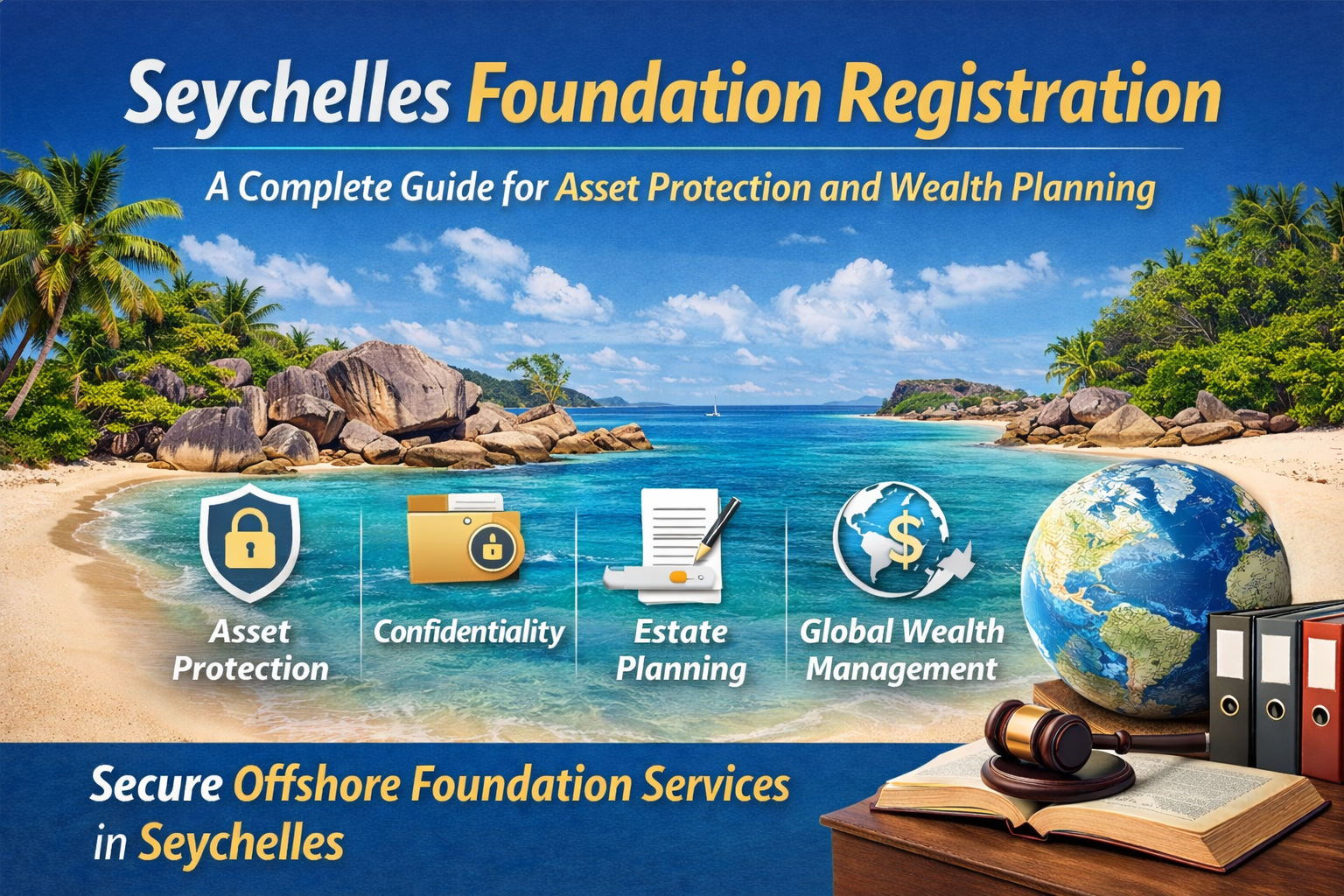
A foundation can be a useful structure for families, entrepreneurs, and international investors who want to organize assets with a long-term purpose. Seychelles foundation registration provides a framework for establishing a separate legal entity that can hold assets, support succession planning, and manage wealth according to the founder’s stated objectives.
Unlike a traditional company, a foundation does not operate solely as a commercial vehicle. Its structure can be designed around specific beneficiaries, family objectives, charitable activities, or the management of assets over several generations. This makes it relevant to individuals looking for a structured approach to international wealth planning.
What Is a Seychelles Foundation?
A Seychelles foundation is a separate legal entity established under the applicable Seychelles foundation legislation. Once properly established, the foundation can own property and other permitted assets in its own name.
The founder establishes the foundation and determines its objectives through the foundation charter and related documents. Depending on the structure, the foundation may have beneficiaries and a council responsible for its administration.
The separation between the founder and the foundation can provide continuity because the foundation is designed to continue operating according to its governing documents even when circumstances affecting the founder change.
Why Consider a Seychelles Foundation?
International families and investors may consider a Seychelles foundation for several different reasons. The appropriate purpose depends on the individual’s circumstances and the assets involved.
Common objectives include:
- Family wealth planning
- Succession planning
- Holding investment assets
- Managing family-owned businesses
- Supporting future generations
- Structuring ownership of company shares
- Long-term asset administration
- Philanthropic or charitable purposes where permitted
A foundation can therefore be part of a broader wealth-planning structure rather than simply being used as a standalone entity.
Seychelles Foundation Registration Process
The registration process generally begins by determining the foundation’s purpose, proposed name, founder, council arrangements, beneficiaries where applicable, and assets or objectives.
The foundation’s governing documents are then prepared. These documents establish how the foundation will operate, how its assets should be managed, and how decisions should be made.
Information and documentation relating to the founder and other relevant parties may also be required as part of the establishment and compliance process.
Once the necessary documentation has been prepared and the applicable requirements have been satisfied, the foundation can be registered with the relevant Seychelles authority.
Because regulatory and documentation requirements can change, applicants should obtain current professional guidance before submitting an application.
Key People Involved in a Foundation
Understanding the roles within a foundation is important before starting the registration process.
Founder
The founder establishes the foundation and determines its initial purpose. The founder may also define important provisions within the foundation’s governing documents.
Council
The council generally manages the foundation and is responsible for carrying out its activities in accordance with its charter and applicable law.
Council members may have responsibilities relating to asset management, administration, distributions, records, and decision-making.
Beneficiaries
Depending on the foundation structure, beneficiaries may be named or identified according to specific criteria. They can be individuals, families, or other permitted persons or entities.
The foundation documents can establish how and when beneficiaries may receive benefits.
Protector
Some structures may include a protector or another oversight role. The protector’s powers depend on the governing documents and may include specific approval or supervisory responsibilities.
Foundation Charter and Governing Documents
The foundation charter is one of the most important documents in the structure. It establishes the foundation’s fundamental purpose and operating framework.
Additional regulations or internal documents may provide further details about administration, beneficiaries, distributions, decision-making, and other matters.
Careful drafting is important because the documents should reflect the founder’s actual objectives while remaining consistent with applicable law.
A poorly designed structure can create unnecessary administrative or legal complications later, so professional assistance can be valuable during the planning stage.
Using a Foundation for Succession Planning
Succession planning is one of the key reasons families consider foundations.
For families with significant assets, transferring ownership directly from one generation to another can become complicated, particularly when family members live in different countries.
A foundation can provide a continuing structure for holding and managing assets. Instead of repeatedly transferring ownership as generations change, the foundation may continue to hold assets while benefits are provided according to its governing documents.
This can support a more organized approach to multigenerational wealth planning.
Holding Shares and Investment Assets
A foundation may be structured to hold shares in companies or other permitted assets. For example, a family could establish a foundation that owns shares in a holding company.
The holding company could then own investments or other business interests. This creates separate layers for ownership and administration.
A simplified structure might look like:
Founder → Seychelles Foundation → Holding Company → Investments
The actual structure should be tailored to the assets involved and the laws of the jurisdictions connected to the arrangement.
Foundation and Asset Protection Planning
Foundations can also form part of broader asset-planning strategies. Because a properly established foundation is a separate legal entity, assets transferred to it may no longer be held directly in the founder’s personal name.
However, foundation structures should never be viewed as a way to hide assets or avoid legitimate legal obligations. Transfers intended to defeat creditors, court orders, tax obligations, or other legal responsibilities may be challenged.
Proper planning should therefore take place before disputes or financial problems arise, with advice based on the laws applicable to the founder and the relevant assets.
Compliance and Administration
Registration is only the beginning of maintaining a foundation. Ongoing administration is an important part of responsible foundation management.
Depending on the circumstances, this can include maintaining corporate and financial records, updating relevant information, handling accounting matters, meeting reporting obligations, and maintaining appropriate compliance procedures.
International structures can also be affected by tax reporting, anti-money-laundering requirements, beneficial ownership rules, and regulations in other jurisdictions.
For this reason, professional administration can help ensure that the foundation remains properly managed over time.
How Much Does Foundation Registration Cost?
The overall cost of establishing a foundation can vary depending on factors such as professional service fees, registration charges, the complexity of the structure, administrative requirements, and the services required after formation.
A basic structure may have different costs from a foundation that holds multiple assets, involves several beneficiaries, or requires ongoing professional administration.
It is useful to consider both the initial registration expenses and the recurring costs of maintaining the foundation when planning the structure.
Who May Consider a Seychelles Foundation?
A Seychelles foundation may be considered by:
- International families
- Entrepreneurs
- Private investors
- Family business owners
- Individuals planning multigenerational wealth
- People seeking structured succession arrangements
- Investors with international assets
The suitability of a foundation depends on individual circumstances, residency, asset location, tax considerations, and the intended purpose.
Final Thoughts
Seychelles foundation registration can provide a structured approach to asset holding, family wealth planning, succession, and long-term administration. The foundation’s flexibility allows its governing documents to be designed around clearly defined objectives while providing a continuing legal structure for managing assets.
Successful foundation planning involves more than completing registration paperwork. The founder should consider the purpose of the foundation, the role of the council, the beneficiaries, the assets involved, and the ongoing compliance requirements. Taking professional legal and tax advice before establishing the structure can help ensure that the foundation is designed and maintained appropriately.

 English
 Arabic
 French
 Spanish
 Portuguese
 Deutsch
 Dutch
Dutch
 Italiano
 Russian
 Romaian
 Portuguese (Brazil)
 Greek
Greek
