


Private Limited Company Registration Fees and Costs in India
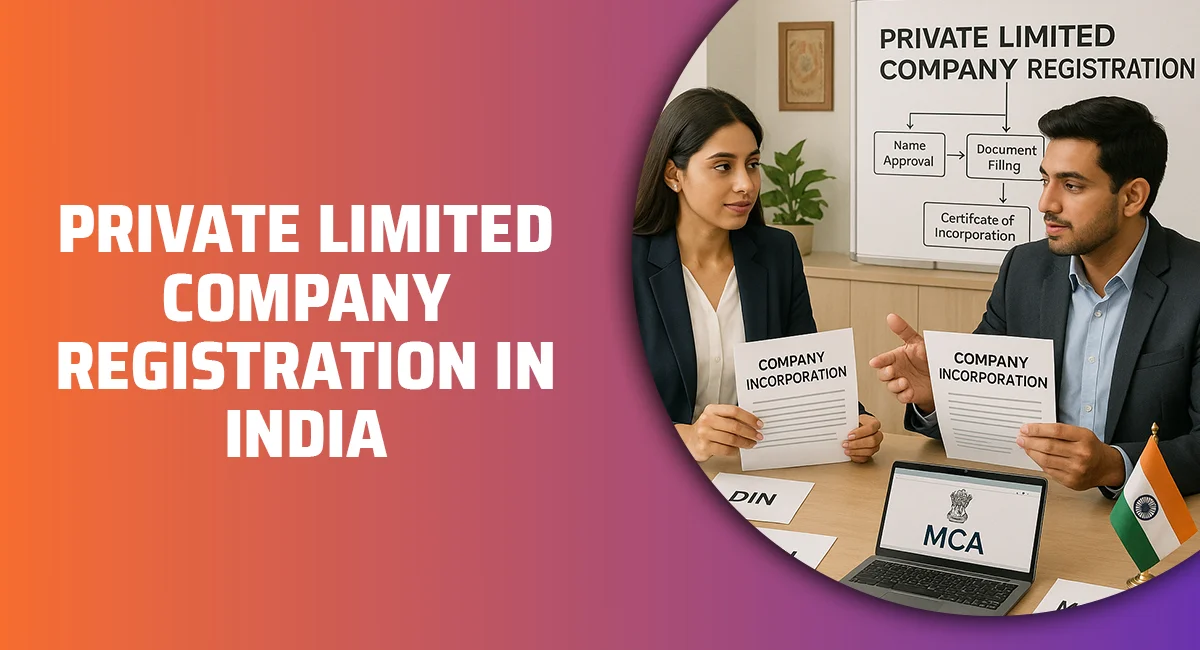
Starting a business in India involves more than submitting incorporation forms. Entrepreneurs need to plan for government charges, stamp duty, digital signatures, documentation, and professional assistance. Knowing the likely expenses in advance makes it easier to prepare a realistic startup budget.
The cost of registering a Private Limited Company depends on several factors, including authorised share capital, the state of registration, stamp duty, the number of subscribers or directors, and whether professional help is used. The Ministry of Corporate Affairs (MCA) states that SPICe+ fees are linked to authorised share capital and that stamp duty can vary from state to state. For eligible companies incorporated with authorised capital up to ₹15 lakh, the MCA provides a filing-fee concession, although applicable stamp duty still has to be paid.
What Does Private Limited Company Registration Cost Include?
The MCA explains that the consolidated SPICe+ challan can include the applicable fee for SPICe+, the Memorandum of Association, Articles of Association, PAN, and TAN.
1. MCA Government Fees
For a new company, the MCA fee structure is connected with the authorised share capital. The official fee schedule uses different fee levels for different capital ranges. Therefore, increasing authorised capital can affect the statutory registration cost.
The MCA's applicable filing-fee concession can reduce the statutory filing component for eligible companies, while stamp duty remains payable according to the relevant state rules.
2. Stamp Duty
Stamp duty is one of the most important parts of incorporation expenses. It is charged according to the state rules applicable to the incorporation documents and may also depend on authorised capital.
This means the total cost of incorporating a Private Limited Company can differ between two states even when the proposed business structure is similar. Entrepreneurs should therefore check the applicable state stamp duty before preparing a final budget. The MCA specifically notes that stamp duty rates for SPICe+, MoA, and AoA are state-specific.
3. PAN and TAN Charges
PAN and TAN are processed through the linked incorporation system. The MCA FAQ specifies ₹66 for PAN and ₹65 for TAN under the applicable SPICe+ fee structure. These amounts are included in the consolidated challan generated during incorporation rather than being treated as separate manual applications in the standard process.
4. Digital Signature Certificate
Digital Signature Certificates, commonly called DSCs, are required for the authorised signatories who digitally sign incorporation documents. DSC pricing is generally a service-provider cost rather than a single fixed MCA incorporation fee.
Applicants should check whether DSC charges are already included in their registration package or will be billed separately.
Professional Fees for Incorporation
A chartered accountant, company secretary, consultant, or registration service provider may charge for preparing documents, filing forms, coordinating signatures, responding to filing requirements, and tracking the application.
When comparing service providers for a Private Limited Company, businesses should request an itemised quotation. The quotation should clearly show statutory fees, stamp duty, DSC expenses, professional charges, taxes on services, and any optional registrations.
Factors That Affect the Total Registration Cost
Several practical factors can change the final amount.
Authorised Share Capital
Authorised share capital affects the applicable MCA fee structure. The official MCA fee tables prescribe different charges for different capital ranges, so choosing an appropriate level is part of cost planning.
State of Registration
Stamp duty varies across states. A company registered in one state can therefore have a different initial incorporation expense from a similar company registered elsewhere.
Number of Directors and Subscribers
The number of directors and subscribers can affect documentation and DSC requirements. Foreign subscribers may also need additional document certification, notarisation, apostille, or consular formalities depending on their circumstances.
Additional Business Registrations
Some businesses need GST registration, Shops and Establishments registration, professional tax registration, import-export related registration, or industry-specific licences. These costs are separate from the basic incorporation process and should be included in the overall startup budget where applicable.
How to Estimate the Total Budget
A useful way to estimate the registration budget is to separate expenses into four groups: MCA charges, state stamp duty, DSC and documentation costs, and professional service fees.
A small business may qualify for the MCA filing-fee concession, but the overall amount can still increase because of stamp duty and other expenses. A clear quotation helps the entrepreneur understand what is included before making payment.
Comparing the complete cost is more useful than comparing a headline professional fee. Check whether the quotation includes government charges, stamp duty, DSC, GST on services, and additional registrations.
Ways to Control Registration Expenses
Keeping costs under control does not always mean selecting the cheapest package. It is better to avoid duplicate services and unnecessary add-ons.
Prepare identity and address documents correctly, decide the proposed capital structure in advance, and review the company name options carefully. Also confirm the registered-office requirements before filing. These steps can reduce avoidable corrections and delays.
Businesses can compare service packages based on transparency, filing support, and compliance assistance. Proxcel can be considered when reviewing business registration and related accounting or compliance support, depending on the services included in the selected package.
Common Mistakes That Can Increase Costs
One common mistake is looking only at the professional fee while ignoring government charges and stamp duty. Another is assuming that incorporation automatically includes every licence or tax registration needed for business operations.
Incomplete documents, errors in forms, or repeated corrections can also increase professional effort and delay the process. Planning the ownership structure, registered office, capital, and documentation before filing can help keep expenses predictable.
Registration Is Only the Initial Business Cost
The registration budget should not be treated as the complete cost of running a registered company. After incorporation, a business may have recurring expenses related to accounting, annual filings, tax compliance, audit requirements, payroll, statutory records, and other regulatory obligations.
Good planning also makes it easier to compare service providers. Ask for a written breakup of one-time charges and recurring compliance costs. This helps distinguish incorporation expenses from the ongoing costs of maintaining a compliant business after registration.
Conclusion
The cost of registering a Private Limited Company in India is made up of several components rather than one fixed amount. MCA fees, state stamp duty, PAN and TAN charges, DSC costs, documentation expenses, and professional fees can all affect the final budget.
The MCA's SPICe+ system provides a streamlined incorporation process, while the exact statutory amount depends on factors such as authorised share capital and the state where the company is registered.
For a reliable estimate, entrepreneurs should obtain an itemised quotation and verify the latest MCA and state-specific charges before filing. A transparent cost plan helps businesses start with better financial clarity and avoid unexpected incorporation expenses.

 English
 Arabic
 French
 Spanish
 Portuguese
 Deutsch
 Turkish
 Dutch
Dutch
 Russian
 Romaian
 Portuguese (Brazil)
 Greek
Greek
