


How to Set Up a Business in India as a European Entrepreneur
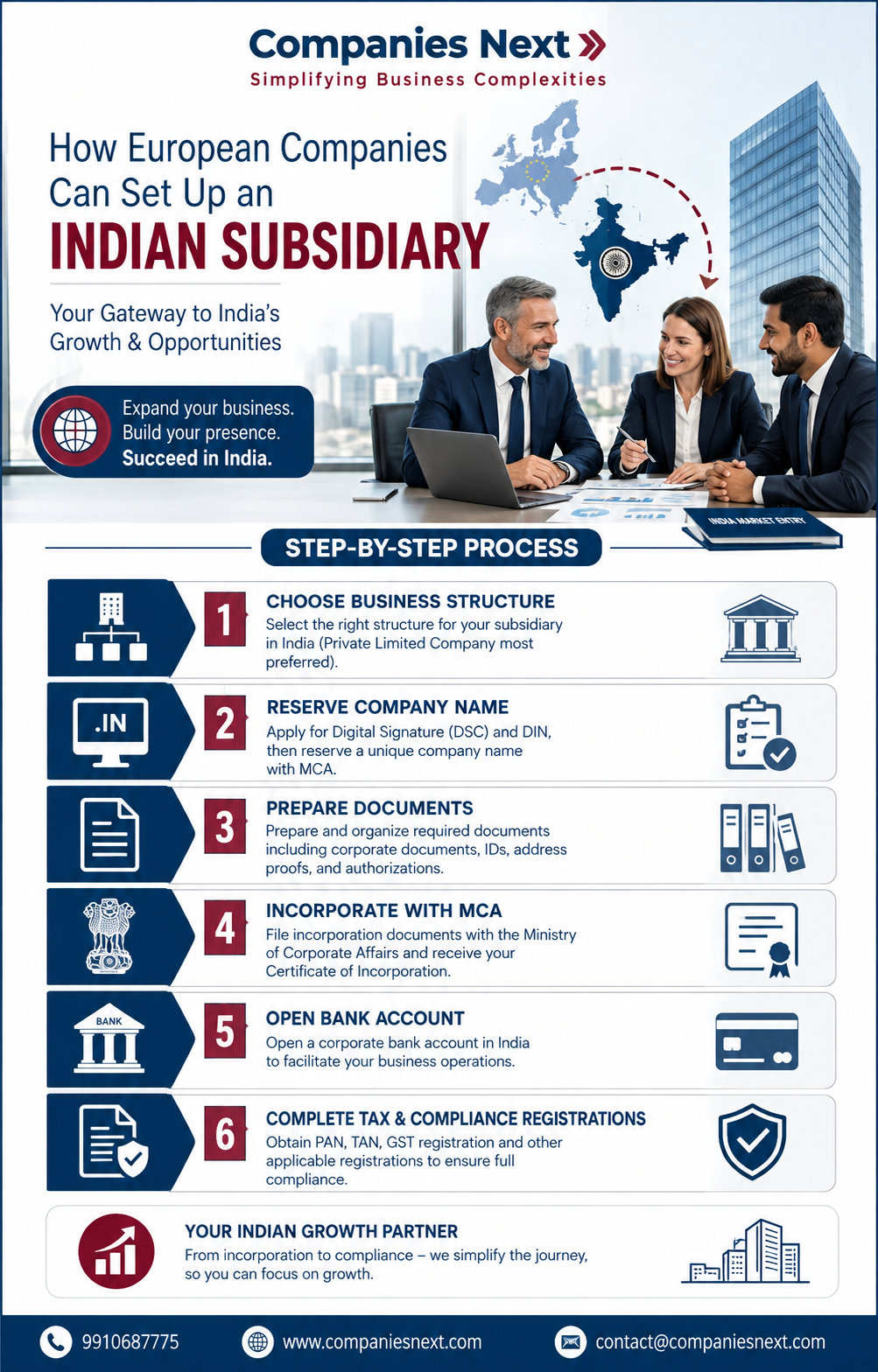
Starting an Indian business from Europe can be a practical way to enter one of the world’s major markets, build a local presence, and serve Indian or international customers. European entrepreneurs can explore different business structures, investment routes, tax registrations, and compliance requirements depending on their business activity. A well-planned setup helps reduce delays and creates a stronger foundation for long-term operations.
For entrepreneurs researching How to Start a Business in India from Europe, the first step is to understand whether the proposed activity is open to foreign investment, which legal structure fits the business, and what registrations will be required. A clear plan makes How to Start a Business in India from Europe easier to manage from the beginning.
Choose the Right Business Structure
One of the first decisions is selecting the legal form of the Indian operation. A private limited company is commonly considered when the entrepreneur wants a separate legal entity, limited liability, and a structure suitable for bringing in investment.
An LLP may be considered when the business model requires a partnership-style structure with limited liability. Depending on the circumstances, a European business may also consider a branch office, liaison office, or other permitted presence instead of forming a new Indian subsidiary. The appropriate option depends on the intended activities, ownership, funding model, and applicable regulations.
For a private company, Indian company law requires at least one director who has stayed in India for at least 182 days during the previous calendar year. This resident-director requirement should be planned early when overseas founders are organizing their management structure.
Check Foreign Investment Rules Before Incorporation
Foreign investment rules are activity-specific. DPIIT states that foreign investment up to 100% is permitted under the automatic route in most sectors, while certain sectors have conditions, caps, or government approval requirements. Therefore, a European entrepreneur should verify the exact FDI position for the proposed business before committing funds or finalizing the structure.
This is particularly important for regulated or sector-specific activities. The business should also review whether there are pricing, ownership, reporting, licensing, or other conditions attached to the proposed investment.
Prepare the Essential Documents
The incorporation process requires accurate information and supporting documents. European promoters and directors will generally need identity and address documentation, while documents issued outside India may require appropriate notarisation, apostille or attestation, and other formalities depending on the document and jurisdiction.
It is useful to prepare the following information in advance:
- Proposed company names
- Business activity and main objects
- Shareholding and capital details
- Details of directors and shareholders
- Proof of identity and address
- Registered office documentation
- Foreign company or corporate documents, where applicable
Preparing these details carefully can reduce the chances of rework during filing.
Complete the MCA Incorporation Process
When reviewing How to Start a Business in India from Europe, company incorporation is handled through the Ministry of Corporate Affairs. The SPICe+ process integrates several incorporation-related services, including company registration, DIN-related services, PAN and TAN application, and optional GSTIN application. This provides a centralized route for completing important incorporation formalities.
For someone learning How to Start a Business in India from Europe, understanding the MCA process is important because incorporation is only one stage. The entrepreneur also needs to plan post-incorporation activities such as opening the business bank account, bringing in foreign capital correctly, completing statutory registrations, and establishing the accounting system.
Arrange a Registered Office
An Indian company needs a registered office capable of receiving official communications. The address and supporting documents should be accurate and consistent with the incorporation records.
A practical office arrangement also helps with banking, vendor onboarding, employee administration, tax correspondence, and other operational requirements. Overseas founders should decide early where the Indian entity will maintain its official address.
Bring in Foreign Capital Correctly
Once the entity is incorporated, foreign funds should be introduced through the applicable banking and foreign-exchange framework. The transaction must comply with the relevant FDI route, sectoral limits, pricing requirements, and reporting obligations.
RBI rules provide for reporting of certain foreign investment transactions, including FC-GPR reporting when an Indian company issues equity instruments to a person resident outside India and the issue qualifies as FDI. The company may also have annual foreign liabilities and assets reporting obligations where applicable.
This means the source and movement of investment funds should be documented from the beginning. Maintaining clear records of remittances, share issues, valuation documents, and banking records can make later compliance easier.
Complete Tax and GST Registrations
After incorporation, the business should identify its direct and indirect tax obligations. GST registration depends on the nature of supplies and the applicable registration rules. Certain non-resident taxable persons have specific GST registration procedures, including advance tax-deposit requirements.
The business should also determine its income-tax, withholding-tax, payroll, and other applicable obligations based on its activities, employees, transactions, and structure. These steps are an important part of How to Start a Business in India from Europe because registration alone does not complete the compliance process.
International transactions may additionally require careful review of transfer pricing, tax treaties, and cross-border payment rules.
Create a Compliance Calendar
A new Indian business should not treat registration as the finish line. Regular compliance may include statutory filings with the MCA, maintenance of books and financial records, tax filings, GST returns where applicable, payroll-related compliance, and foreign-investment reporting.
For European founders, an annual compliance calendar can be especially useful because some obligations involve Indian authorities and others may relate to cross-border transactions. Assigning responsibility for each filing helps prevent missed deadlines and penalties.
Build the Business for Local Operations
Legal registration is only the foundation. Before launching, the entrepreneur should prepare a local operating plan covering banking, accounting, invoicing, hiring, suppliers, customer contracts, technology, and data handling.
It is also useful to understand the Indian market rather than simply copying the European business model. Pricing, payment preferences, distribution channels, customer expectations, language, and local competition may differ considerably between markets.
Professional assistance can help coordinate incorporation, accounting, taxation, compliance, and foreign-investment documentation. Companiesnext can also be considered when organizing these business and compliance requirements.
Common Mistakes European Entrepreneurs Should Avoid
A few planning mistakes can create unnecessary delays. Choosing a structure without checking FDI conditions, submitting incomplete foreign documents, overlooking the resident-director requirement, mixing personal and business funds, and delaying accounting setup are common areas that deserve attention.
Another mistake is assuming that incorporation automatically covers every business license. Depending on the activity, additional registrations, state-level approvals, sector-specific permissions, or tax registrations may still be necessary.
Conclusion
For European founders, How to Start a Business in India from Europe begins with selecting the right structure, checking foreign investment rules, preparing documents, and completing the MCA incorporation process. After registration, the focus should shift to foreign capital reporting, tax and GST obligations, accounting, licenses, and ongoing compliance.
The key is to treat the Indian setup as both a legal and operational project. With careful planning, accurate documentation, and a clear compliance system, a European entrepreneur can establish an Indian business presence in a more organized and sustainable way.

 English
 Arabic
 French
 Spanish
 Portuguese
 Deutsch
 Turkish
 Dutch
Dutch
 Italiano
 Russian
 Romaian
 Portuguese (Brazil)
