


Can Gangnammould Plastic Kitchenware Mould Meet Buyer Requirements
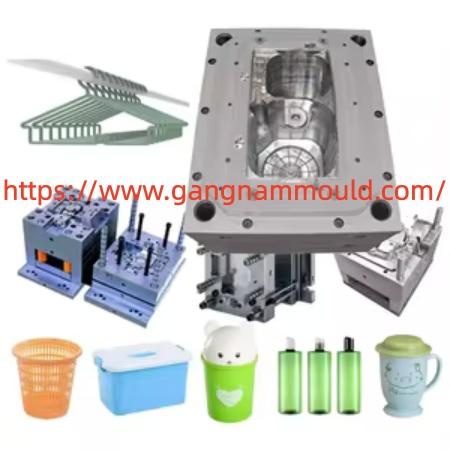
Plastic Kitchenware Mould selection deserves careful attention because tooling influences filling, cooling, ejection, appearance, maintenance, and production consistency. Buyers should review the complete product drawing together with the intended resin, annual output, surface requirements, dimensional expectations, and machine conditions. A suitable tool should match the actual application rather than rely on a general specification. Recent injection molding design guidance also emphasizes uniform wall thickness because uneven sections can cool at different rates and contribute to sink marks, warpage, and longer cycles.
One of the first points to check is product geometry. Household utensils and containers may include thin walls, deep sections, ribs, handles, corners, openings, or snap features. Each detail can affect material flow and release from the cavity. Buyers should ask whether the current CAD design has been reviewed for manufacturability before steel processing starts. Early adjustments are generally easier to make than changes after tooling has entered production. A clear engineering review can identify areas that may require additional draft, smoother transitions, or revised feature positions.
Wall thickness deserves particular attention. Large differences between thick and thin areas can produce uneven cooling and shrinkage. Current design references commonly recommend keeping wall sections as consistent as practical and using ribs or cored geometry where additional stiffness is required. The suitable range still depends on resin type, flow characteristics, part size, and processing conditions, so buyers should confirm dimensions against the material supplier guidance instead of applying one fixed number to every project.
Draft design is another useful checkpoint. Vertical surfaces without enough taper may resist ejection and create scuffing or deformation. Textured surfaces can require additional draft because deeper texture increases resistance during release. Internal ribs, bosses, and other deep features also need suitable release angles. Discussing these details during the design stage can help reduce later changes and make the tooling easier to operate during repeated cycles.
Cooling design should also be part of the purchasing discussion. Temperature differences across a cavity can influence shrinkage, cycle time, and dimensional stability. Buyers can ask about cooling channel placement, access for maintenance, and whether the layout has been considered in relation to thicker areas of the product. A balanced cooling arrangement can support more predictable production conditions and may help control variations between cycles.
Gate location and ejection deserve similar attention. The filling route should suit the shape of the product and the selected resin. Gate position can affect flow direction, weld lines, surface appearance, and packing behavior. Ejector placement should provide enough support during release without creating unwanted marks on visible surfaces. These choices are closely connected with the final product design, so they should be discussed before the tooling structure is finalized.
Material selection also matters. Different resins have different flow behavior, shrinkage characteristics, temperature requirements, and processing windows. A design that works well with one material may require adjustments when another resin is introduced. Buyers should therefore provide the intended grade and any relevant food contact or application requirements at the quotation stage. This information gives engineers a clearer basis for selecting steel, cooling arrangements, surface treatment, and processing considerations.
Production volume is another practical consideration. A project intended for short runs may have different tooling priorities from a program expected to run repeatedly over several years. Buyers should consider cavity quantity, expected cycle frequency, maintenance access, interchangeable components, and replacement planning. These factors can influence the overall cost of ownership and help create a tooling plan that matches actual business requirements.
Communication is equally important. A manufacturer should be able to discuss drawings, revisions, samples, tolerances, finishing requirements, and production expectations in a clear process. Gangnammould works with customers on tooling development by connecting product requirements with engineering and manufacturing considerations. For companies preparing a new household product or updating an existing design, reviewing the available production approach at https://www.gangnammould.com/product/ can provide a practical starting point for discussing suitable tooling solutions.

 English
 French
 Spanish
 Portuguese
 Deutsch
 Turkish
 Dutch
Dutch
 Italiano
 Russian
 Romaian
 Portuguese (Brazil)
 Greek
Greek
