


How to Spot a Fake Rolex A Complete Guide for Buyers
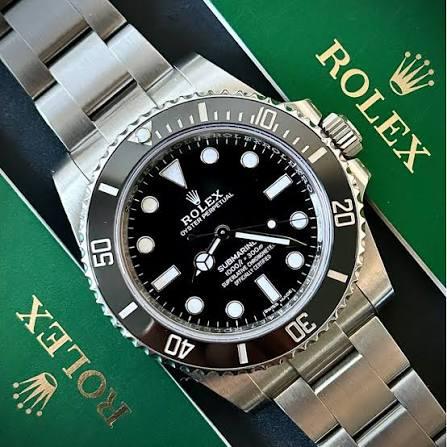
Buying a luxury watch can be a major investment, and Rolex is one of the most recognized names in the watch industry. Unfortunately, its popularity also makes it a common target for counterfeiters. Fake Rolex watches can sometimes look surprisingly convincing, making it difficult for inexperienced buyers to identify them.
Learning how to spot a fake Rolex can help you make a more informed purchase. Details such as the movement, finishing, dial, serial information, bracelet, and seller can provide useful clues. No single visual check is always enough, so several details should be considered together.
Check the Seller First
Before examining the watch itself, consider where you are buying it. The seller's reputation can provide important information about the transaction.
An authorized retailer, established watch dealer, or reputable pre-owned specialist generally provides more documentation and buyer protection than an unknown seller offering a luxury watch through an informal marketplace.
Be cautious when a seller pressures you to make a quick decision or refuses to provide clear photographs, purchase information, or authentication details. A price that appears unusually low compared with comparable genuine watches should also encourage additional research.
A trustworthy seller should be willing to explain the watch's history and provide relevant documentation where available.
Examine the Rolex Dial Carefully
The dial is one of the first places to look when learning how to spot a fake Rolex. Genuine Rolex watches are known for precise manufacturing and consistent finishing.
Look closely at the printed text, hour markers, crown logo, and date display. The lettering should appear sharp, evenly spaced, and correctly positioned. Poor printing, uneven markers, incorrect fonts, or visible imperfections can indicate a counterfeit.
However, remember that genuine watches can have different dial variations depending on the model and production period. Comparing the watch with reliable references for the exact model is therefore important.
Look at the Cyclops Date Magnification
Many Rolex models with a date display use the brand's recognizable Cyclops lens over the date window. It magnifies the date to make it easier to read.
On many genuine models, the magnification is approximately 2.5 times. A counterfeit may have noticeably weaker magnification or poor alignment.
The date should also appear centered within the window. If the numbers look unusually small, poorly printed, or incorrectly positioned, further authentication is worthwhile.
Not every Rolex has a Cyclops lens, however, so its absence does not automatically mean a watch is fake.
Inspect the Second Hand
The movement of the second hand is another commonly discussed detail. Genuine Rolex mechanical movements generally produce a smooth-looking sweep rather than the obvious one-second jumps associated with many basic quartz movements.
However, simply watching the second hand is not a reliable authentication test by itself. Counterfeit watches can use mechanical movements that also create a smooth sweep, while different Rolex models and movements have their own characteristics.
Instead of relying on this feature alone, examine the movement and other construction details as well.
Check the Case and Finishing
Rolex cases are manufactured with careful attention to finishing. Examine the case edges, lugs, crown, and polished or brushed surfaces.
On a genuine watch, finishing should normally look consistent and precise for its model. Rough edges, uneven brushing, excessive gaps, poor polishing, or visible machining marks can raise concerns.
The weight of the watch can also provide a clue, but it should not be treated as proof. Different Rolex models use different materials and constructions, and counterfeiters can add weight to imitate genuine watches.
Comparing the exact model's specifications is more useful than relying on weight alone.
Examine the Rolex Crown and Crown Guards
The winding crown carries important details. Rolex uses different crown markings depending on the model, movement, and production period.
Look at the crown logo and surrounding construction. It should appear clean and properly finished. On models with crown guards, the guards should also have the correct shape and proportions for that reference.
Because crown designs vary, compare the watch with reliable photographs of the exact model rather than assuming every Rolex should look identical.
Inspect the Bracelet and Clasp
The bracelet is another important area to examine. Genuine Rolex bracelets are known for precise construction and high-quality finishing.
Check the links, edges, clasp, and engraved markings. The bracelet should feel solid and well constructed, with consistent finishing throughout.
Pay particular attention to the clasp. Poor engraving, incorrect fonts, loose construction, or rough finishing may suggest a counterfeit.
Nevertheless, worn genuine watches can show scratches and signs of use. Cosmetic wear alone does not prove that a watch is fake.
Check the Serial and Reference Numbers
Rolex watches have identification information associated with their production and model. Depending on the watch's age and model, serial and reference numbers may be located in different places.
These numbers should be clear, correctly formatted, and consistent with the watch's characteristics. Compare the reference number with the model's case, dial, bracelet, and movement.
A matching number does not automatically prove authenticity because counterfeiters may copy genuine numbers. The numbers should therefore be treated as one part of a broader authentication process.
Examine the Movement
The movement is one of the most important areas when determining authenticity. Genuine Rolex watches use Rolex-manufactured mechanical movements appropriate to their specific models.
If the case can be safely opened by a qualified professional, the movement can be examined for correct branding, architecture, finishing, and components.
Opening a watch yourself is not recommended because it can damage the case or compromise water resistance. A professional watchmaker or qualified authentication specialist can inspect the movement without unnecessarily risking the watch.
A movement inspection is particularly useful when external details appear convincing.
Check the Rehaut and Engravings
On many modern Rolex models, the inner bezel, known as the rehaut, includes specific markings. Some watches have repeated Rolex branding and the serial number engraved around this area.
The engraving should be precise and appropriately positioned for the model and production period.
However, counterfeit manufacturers have become increasingly sophisticated and may reproduce these details. Therefore, rehaut engraving should not be used as the only authentication method.
Review the Box and Papers
Original boxes, warranty cards, manuals, and other accessories can provide useful supporting information. Check whether the documents match the watch's model and purchase history.
However, accessories can also be copied or mixed with other watches. A genuine-looking box does not prove that the watch inside is genuine.
Documentation is most useful when it is consistent with the watch and supported by a credible purchase history.
Be Careful With Online Listings
Online marketplaces can make it easier to compare watches, but photographs may not show important details.
Ask for clear images of the dial, case sides, caseback, clasp, bracelet, reference information, and any available documentation. Avoid relying on heavily edited photographs or stock images.
If the seller refuses to provide detailed photographs or authentication information, consider that a warning sign.
Get Professional Authentication
When the purchase involves significant money, professional authentication is one of the safest approaches. A qualified watchmaker, reputable dealer, or specialist authentication service can inspect details that may be difficult to evaluate at home.
Professional examination can include checking the movement, case construction, serial information, dial, bracelet, and other components.
This is especially important for vintage Rolex watches because genuine watches may have replacement parts, refinished dials, or modifications that require specialist knowledge.
Common Mistakes Buyers Should Avoid
When learning how to spot a fake Rolex, avoid relying on a single test. Common mistakes include assuming that a smooth second-hand movement guarantees authenticity, believing that original papers prove everything, or judging authenticity only by weight.
Another mistake is comparing the watch with a different Rolex model. Details can vary significantly between collections and production periods.
Instead, identify the exact reference and compare multiple features against reliable information.
Final Thoughts
Knowing how to spot a fake Rolex requires attention to several details rather than one simple test. The dial, date magnification, finishing, bracelet, clasp, engravings, identification numbers, and movement can all provide useful clues.
The seller's reputation and the watch's documentation can also help establish confidence, but neither should be treated as absolute proof. Counterfeit watches can reproduce many visible details, so professional authentication remains valuable for expensive purchases.
If you are considering buying a Rolex, take your time, research the exact model, compare its specifications, and avoid making a rushed decision because of an unusually attractive price. Careful examination and professional verification can significantly reduce the risk of purchasing a counterfeit luxury watch.

 Arabic
 French
 Spanish
 Portuguese
 Deutsch
 Turkish
 Dutch
Dutch
 Italiano
 Russian
 Romaian
 Portuguese (Brazil)
 Greek
Greek
