


Plant-Based Food Market Report 2036
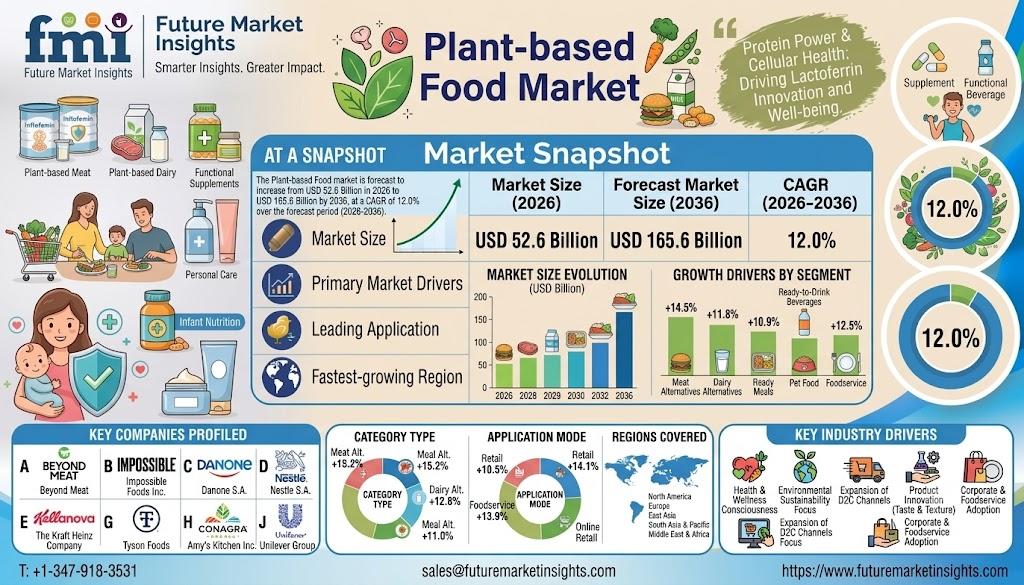
NEWARK, Del., September 25, 2026 According to Future Market Insights (FMI), the Plant-based Food Market is projected to grow from sales of plant-based food estimated at USD 52.6 billion in 2026 to USD 165.6 billion by 2036, expanding at a 12.0% CAGR. The market was valued at approximately USD 47.0 billion in 2025.
Demand is broadening beyond strict vegetarian and vegan diets as consumers increasingly incorporate plant-based products alongside conventional foods. GFI data show that 60% of U.S. households purchased plant-based foods in 2025, while 96% of households purchasing plant-based meat also purchased animal meat. This indicates that suppliers increasingly compete for recurring flexitarian occasions rather than serving only a narrow dietary niche.
Plant-based products now span meat alternatives, dairy alternatives, prepared foods, and other categories used across household and foodservice occasions. Plant-based Meat accounts for 24.0% of Product Type demand in 2026, while HoReCa represents 26.0% of Sales Channel demand. Meat-like products must fit ordinary meals, while foodservice buyers assess cooking consistency, menu compatibility, price, and availability before maintaining a listing.
Get detailed market forecasts, competitive benchmarking, and pricing trends: https://www.futuremarketinsights.com/reports/sample/rep-gb-14823
Key Takeaways
· The market is estimated at USD 52.6 Billion in 2026 and is forecast to reach USD 165.6 Billion by 2036 at a 12.0% CAGR. The 2025 market base was approximately USD 47.0 Billion.
· Plant-based Meat accounts for 24.0% of Product Type demand in 2026, supported by familiar burgers, sausages, pieces, and other meat-like formats that fit established meal preparation and foodservice routines.
· HoReCa accounts for 26.0% of Sales Channel demand in 2026, reflecting the ability of foodservice operators to generate repeated menu exposure and aggregate procurement across multiple consumer occasions.
· Demand is increasingly supported by flexitarian consumption, with many households purchasing plant-based and conventional foods rather than replacing animal products completely.
· Current U.S. evidence indicates uneven category performance, with areas such as creamer, yogurt, tofu, tempeh, and seitan showing momentum even as some larger plant-based categories experience softer retail demand.
· Trial does not always translate into repeat purchasing when consumers encounter a price premium combined with weaker taste, unclear nutrition benefits, or inconsistent availability.
· Profiled companies include Beyond Meat, Impossible Foods Inc., Danone S.A., Nestle S.A., Kellanova, The Kraft Heinz Company, Tyson Foods, Conagra Brands, Amy's Kitchen Inc., and Unilever Group.
Analyst Perspective
The plant-based products most likely to stay on a menu or shelf fit ordinary meals and ordinary budgets. Operators also need predictable preparation and enough repeat orders to justify the space.
— Nandini Roy Choudhury, Principal Consultant, Future Market Insights
Market Growth Outlook
The Plant-based Food Market is positioned at the intersection of changing dietary preferences, flexitarian consumption, foodservice innovation, and demand for convenient alternatives to conventional animal-based products. The market is projected to increase from USD 52.6 billion in 2026 to USD 165.6 billion by 2036, reflecting a 12.0% CAGR.
The category is expanding beyond consumers following strictly vegetarian or vegan diets. Many households purchase plant-based products as part of a mixed diet, creating opportunities for manufacturers to compete on taste, price, nutrition, convenience, and availability rather than dietary identity alone.
Foodservice represents an important route to recurring consumption. A successful menu listing can expose products to a large number of consumers while allowing operators to consolidate procurement. However, foodservice buyers must evaluate cooking performance, preparation consistency, menu fit, and cost before committing to repeat purchases.
Retail demand is similarly influenced by the conversion of initial trial into repeat purchasing. Awareness can encourage consumers to try a plant-based product, but taste, price, nutritional value, and dependable availability increasingly determine whether the product remains on the shopping list.
Key Market Drivers
· Rising flexitarian consumption
· Growing consumer interest in plant-based alternatives
· Expansion of meat and dairy alternative products
· Increasing foodservice adoption
· Demand for convenient meal solutions
· Product innovation across meat, dairy, and prepared-food categories
· Greater availability of plant-based products through retail channels
· Increasing emphasis on taste and texture improvement
· Growing interest in alternative protein ingredients
· Expansion of plant-based menu options in HoReCa
Segment Insights
Which Product Type Leads the Plant-based Food Market?
Plant-based Meat leads the Product Type segment with a 24.0% share in 2026.
Familiar formats such as burgers, sausages, pieces, and other meat-like products can be incorporated into established household meals and foodservice menus. Their familiarity provides manufacturers with opportunities to reach consumers already accustomed to conventional meat-based meal formats.
Which Sales Channel Leads the Market?
HoReCa accounts for 26.0% of Sales Channel demand in 2026.
Hotels, restaurants, and catering operators can create repeated exposure to plant-based products through menu listings. Foodservice procurement also allows a single operator or group to generate demand across multiple consumer occasions.
Which Consumer Pattern Is Supporting Market Expansion?
Flexitarian consumption is an important source of demand growth.
Plant-based products are increasingly being purchased alongside conventional animal-based foods rather than solely as replacements. U.S. household data indicate that plant-based purchasing extends across consumers who continue to buy conventional meat, creating a broader potential customer base.
Why Does Repeat Purchasing Remain Important?
Repeat purchasing depends on whether plant-based products deliver acceptable taste, price, nutrition, preparation performance, and availability.
A successful first trial does not automatically translate into recurring demand. Products that carry a significant price premium or fail to meet expectations for taste and texture can face challenges in converting consumers into regular buyers.
Regional Outlook
Plant-based food demand varies across markets according to consumer preferences, foodservice adoption, product availability, alternative-protein development, and local food manufacturing capabilities.
The United States remains an important market for plant-based food adoption, with GFI data indicating that 60% of U.S. households purchased plant-based foods in 2025. At the same time, purchasing patterns show significant overlap between plant-based and conventional products, highlighting the importance of flexitarian consumers.
Japan is advancing food-tech commercialization, creating opportunities for plant-based and alternative-protein products as food companies develop new technologies and commercialization pathways.
Australia is working on local protein ingredients, supporting opportunities around domestic alternative-protein supply and ingredient development.
Across markets, consumer awareness can encourage initial trial, but sustained adoption depends on product performance, price competitiveness, nutritional positioning, and reliable availability.
Market Dynamics
Market Opportunities
The market presents opportunities for manufacturers through improved meat alternatives, dairy alternatives, prepared foods, and products designed specifically for foodservice applications.
Companies can also target flexitarian consumers who do not completely replace conventional foods but incorporate plant-based products into selected meals. This expands the addressable market beyond strict vegetarian and vegan consumers.
Foodservice provides another opportunity because successful menu integration can generate repeated consumer exposure. Products that cook consistently, fit existing preparation processes, and meet menu pricing requirements may be positioned for broader operator adoption.
Market Challenges
Manufacturers must address price premiums, taste and texture expectations, nutritional positioning, product availability, and preparation consistency. The uneven performance of individual plant-based categories also means that market growth cannot be assumed to be uniform across all products.
Competition with conventional animal-based foods remains significant, while consumers may also compare plant-based products with other alternative formats on price, convenience, taste, and nutritional value.
Emerging Market Trends
Major trends shaping the Plant-based Food Market include:
· Expansion of flexitarian consumption
· Continued development of plant-based meat products
· Growth of plant-based dairy alternatives
· Increasing HoReCa adoption
· Greater focus on taste and texture
· Demand for competitive pricing
· Innovation in alternative-protein ingredients
· Expansion of plant-based menu options
· Growing emphasis on nutritional value
· Development of products suited to ordinary meal occasions
Competitive Landscape
Competition in the Plant-based Food Market is influenced by product taste, texture, nutritional profile, pricing, ingredient sourcing, preparation performance, brand recognition, and distribution reach.
Profiled companies include Beyond Meat, Impossible Foods Inc., Danone S.A., Nestle S.A., Kellanova, The Kraft Heinz Company, Tyson Foods, Conagra Brands, Amy's Kitchen Inc., and Unilever Group.
Manufacturers are focusing on improving product performance, expanding product portfolios, strengthening foodservice relationships, and developing plant-based products that can compete with conventional foods on everyday meal occasions.
Frequently Asked Questions
What is the projected size of the Plant-based Food Market by 2036?
The global Plant-based Food Market is forecast to reach USD 165.6 Billion by 2036, increasing from USD 52.6 Billion in 2026.
What is the expected CAGR of the Plant-based Food Market?
The market is projected to expand at a 12.0% CAGR between 2026 and 2036.
What was the market size in 2025?
The Plant-based Food Market was valued at approximately USD 47.0 Billion in 2025.
Which product type dominates the market?
Plant-based Meat leads the Product Type segment, accounting for 24.0% of market demand in 2026.
Which sales channel holds the largest share?
HoReCa accounts for 26.0% of Sales Channel demand in 2026.
What is driving demand for plant-based food products?
Flexitarian consumption, product innovation, foodservice adoption, growing product availability, and demand for convenient alternatives to conventional foods are supporting market growth.
Why is flexitarian consumption important to the market?
Many consumers purchase plant-based products without completely eliminating conventional animal-based foods. This creates opportunities for manufacturers to target recurring plant-based eating occasions across a broader consumer base.
What are the key challenges facing plant-based food manufacturers?
Important challenges include price premiums, taste and texture expectations, nutritional positioning, product availability, and consistent preparation performance.
Who are the key players in the Plant-based Food Market?
Profiled companies include Beyond Meat, Impossible Foods Inc., Danone S.A., Nestle S.A., Kellanova, The Kraft Heinz Company, Tyson Foods, Conagra Brands, Amy's Kitchen Inc., and Unilever Group.
Explore More Research Reports by FMI
About Future Market Insights (FMI)
Future Market Insights, Inc. (ESOMAR certified and a recipient of the Stevie® Award) provides actionable market intelligence and consulting services across food & beverage, pharmaceuticals, chemicals, advanced materials, industrial manufacturing, sustainability, and consumer goods industries.
FMI delivers comprehensive market research, competitive intelligence, and strategic insights that help organizations identify emerging opportunities, evaluate market dynamics, and make informed business decisions across global markets.
For Press & Corporate Inquiries
Rahul Singh
AVP – Marketing and Growth Strategy
Future Market Insights, Inc.
+91 8600020075
For Sales - sales@futuremarketinsights.com
For Media - Rahul.singh@futuremarketinsights.com
For Web: https://www.futuremarketinsights.com/

 English
 Arabic
 French
 Spanish
 Portuguese
 Deutsch
 Turkish
 Dutch
Dutch
 Italiano
 Russian
 Portuguese (Brazil)
 Greek
Greek
