


3D Printer Buying Guide: How to Choose the Right One in 2026
How to Choose the Right 3D Printer for Your Needs
A few years ago, owning a 3D printer felt like a niche hobby reserved for engineers and tech enthusiasts. Today, it's a practical tool for students, small business owners, hobbyists, and creative professionals alike. Prices have dropped, print quality has improved dramatically, and the learning curve is far gentler than it used to be.
But with so many models, materials, and specifications on the market, choosing the right 3D printer can still feel overwhelming. This guide walks through the essentials — from printer types to filament choices — so you can make a confident, informed decision.
Why People Are Buying 3D Printers in 2026
3D printing has moved well beyond prototyping. People now use printers for:
- Home projects — custom brackets, replacement parts, home organisation tools
- Education — schools and universities teaching design, engineering, and STEM concepts
- Small business — creating product samples, packaging inserts, or custom merchandise
- Hobbies — miniatures, cosplay props, model kits, and tabletop gaming pieces
- Rapid prototyping — testing product designs before committing to manufacturing
The appeal is simple: a 3D printer turns a digital design into a physical object, often within hours, without needing a factory or specialised tooling.
Understanding the Main Types of 3D Printers
Before comparing brands or specs, it helps to understand the two dominant printing technologies available to everyday users.
FDM (Fused Deposition Modeling) Printers
FDM printers work by melting a plastic filament and layering it to build an object from the bottom up. They're the most common type for beginners and hobbyists because they're:
- Generally more affordable
- Easier to maintain
- Compatible with a wide range of filament types
- Well-suited to functional parts, prototypes, and household items
Resin (SLA/MSLA) Printers
Resin printers use light to cure liquid resin layer by layer, producing much finer detail than most FDM machines. They're popular for:
- Miniatures and highly detailed models
- Jewellery and dental applications
- Projects where smooth surface finish matters more than speed or size
Resin printing does involve a slightly messier workflow — liquid resin, isopropyl alcohol for cleaning, and post-curing — so it suits users who don't mind a bit more hands-on process for the sake of detail.
Key Features to Compare When Choosing a 3D Printer
Once you know whether FDM or resin suits your projects, it's worth comparing printers on a few core factors.
1. Build Volume
This determines the maximum size of object you can print in one go. Small desktop printers are fine for figurines and small parts, while larger build volumes suit bigger projects like helmets, enclosures, or furniture components.
2. Print Speed
Modern FDM printers have made significant leaps in speed compared to older models, with some multi-colour and high-performance machines completing prints in a fraction of the time older printers required. If you plan to print frequently or in batches, speed becomes a meaningful factor.
3. Multi-Material or Multi-Colour Capability
Some newer printers support multiple filament colours or materials in a single print, which is useful for creating detailed models, prototypes with multiple parts, or colour-accurate designs without manual filament swaps.
4. Ease of Setup and Calibration
Auto bed-levelling, guided setup, and companion apps have made modern printers far more beginner-friendly than the machines of five or ten years ago. If you're new to 3D printing, look for a model known for a smooth out-of-the-box experience.
5. Noise and Enclosure
If the printer will sit in a shared space — a home office, classroom, or workshop — an enclosed design can reduce noise and help maintain consistent internal temperature, which also improves print quality with certain materials.
Choosing the Right Filament or Resin
The printer is only half the equation — material choice affects strength, flexibility, and finish.
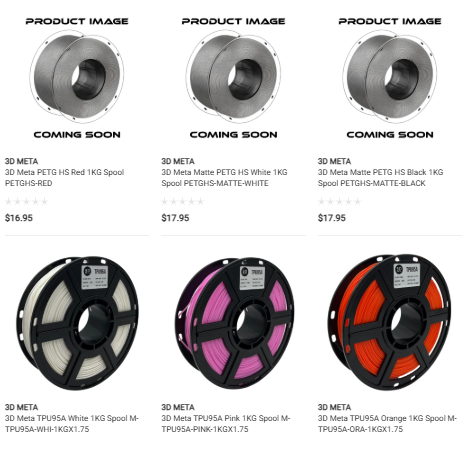
- PLA — the most beginner-friendly filament; easy to print, biodegradable, ideal for décor, prototypes, and general use
- ABS — more durable and heat-resistant, suited to functional parts but requires better ventilation and a heated bed
- PETG — a strong middle ground between PLA and ABS, offering durability, slight flexibility, and good layer adhesion
- Resin — best for fine detail work, such as miniatures, jewellery, or dental models
Matching your material to your project is just as important as choosing the printer itself. A printer capable of handling multiple material types gives you more flexibility as your projects evolve.
Tips for First-Time 3D Printer Buyers
If you're purchasing your first machine, keep these points in mind:
- Start with a well-reviewed entry-level FDM printer before investing in resin or multi-colour systems
- Check what's included — a starter roll of filament, tools, or a build plate can save extra costs upfront
- Look for active community support or documentation, which makes troubleshooting far easier
- Consider consumable costs (filament, resin, nozzles) as part of your ongoing budget, not just the printer price
- Factor in maintenance — regular cleaning and calibration keep print quality consistent over time
Where to Learn More
Choosing between entry-level and performance-grade machines — or between well-known brands like Bambu Lab and Elegoo — often comes down to your intended use, budget, and how much post-processing you're willing to do. If you'd like to compare current models, filament types, and resin options in more detail, Cartridge World's 3D printing range at https://cartridgeworld.com.au/3d-printing/ is worth a look.
If you have questions about printer selection, filament choices, or bulk consumables, reaching out directly via email or through social media is often the quickest way to get guidance tailored to your project.
Whichever printer you choose, the most important step is matching the machine to how you'll actually use it — because the best 3D printer isn't the most expensive one, it's the one that fits your projects, skill level, and budget.
Frequently Asked Questions
1. What is the best 3D printer for a complete beginner? An entry-level FDM printer using PLA filament is generally the easiest starting point. These machines are affordable, simple to calibrate, and forgiving for first-time users learning the basics of slicing and printing.
2. Is resin or FDM printing better? It depends on your goal. FDM is better for functional parts, larger objects, and general ease of use. Resin printing produces finer detail and smoother finishes, making it better suited to miniatures, jewellery, and highly detailed models.
3. How much does it cost to run a 3D printer? Ongoing costs mainly come from filament or resin, replacement nozzles, build plates, and occasional maintenance parts. Costs vary depending on how often you print and the materials you use, but FDM printing with PLA is typically the most budget-friendly option.
4. Can 3D printers be used for business purposes? Yes. Many small businesses use 3D printers for prototyping, custom products, packaging inserts, and short-run manufacturing. The right printer depends on the required precision, material strength, and production volume.
5. Do I need design software to use a 3D printer? You'll need a 3D model file (usually STL format) and slicing software to prepare it for printing. Many free and beginner-friendly design tools are available, and a large number of ready-made models can also be downloaded from online libraries.
3D printing continues to become more accessible, affordable, and capable each year — making now a great time to explore what the right machine can do for your projects, whether that's a first hobbyist print or a fully-fledged small business workflow.

 English
 Arabic
 French
 Spanish
 Portuguese
 Deutsch
 Turkish
 Dutch
Dutch
 Russian
 Romaian
 Portuguese (Brazil)
 Greek
Greek
