


How to Reduce Burr Formation During CNC Machining
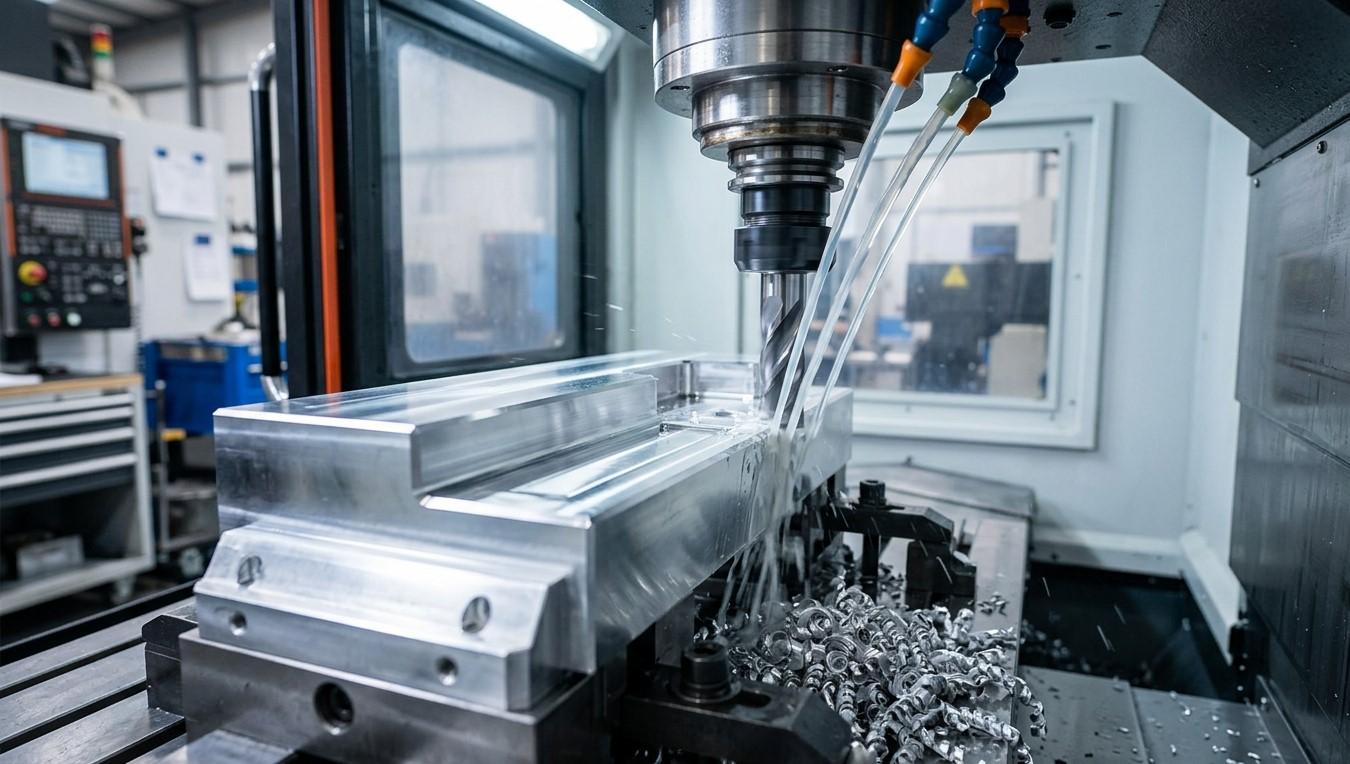
Burr formation is one of the most common challenges in CNC machining. A burr is an unwanted raised edge, projection, or small piece of material that remains on a component after a cutting, drilling, milling, turning, or other machining operation. Although burrs may appear minor, excessive burr formation can affect dimensional accuracy, assembly, surface quality, component safety, and production efficiency. Choosing the right industrial cutting tools, optimizing machining parameters, and using suitable deburring methods can significantly reduce burr formation. Khokhawala Trading LLC, an experienced Industrial Tools Supplier in Dubai, provides industrial tooling and machining solutions for manufacturing, engineering, CNC, and workshop applications.
What Is a Burr in CNC Machining?
A burr is unwanted material left along an edge after a machining operation. It commonly forms when the cutting tool deforms, tears, or plastically displaces material instead of producing a clean separation.
Burrs can occur during:
- Milling
- Drilling
- Turning
- Reaming
- Threading
- Countersinking
- Slotting
- Boring
- Cutting and parting
The size and type of burr depend on the workpiece material, tool geometry, cutting direction, feed rate, cutting speed, tool condition, and machining operation.
Why Is Burr Reduction Important?
Burrs can create problems throughout the manufacturing process. Removing them manually after machining can also increase labor requirements and production time.
1. Improved Component Safety
Sharp burrs can create cutting hazards for operators handling machined components. Removing or minimizing burrs helps create safer edges.
2. Better Assembly
Burrs around holes, slots, and mating surfaces can interfere with component assembly. They may prevent parts from seating correctly or cause unwanted interference.
3. Improved Dimensional Accuracy
Large burrs can affect measurements and create uncertainty when checking machined features.
4. Better Surface Quality
Excessive burrs can make finished components appear incomplete and may affect subsequent finishing processes.
5. Reduced Post-Processing
When burr formation is controlled during machining, less time may be required for manual deburring or secondary finishing operations.
Common Types of Burrs
Understanding the type of burr can help identify the cause and select an appropriate solution.
Exit Burrs
Exit burrs commonly form when a cutting tool breaks through the opposite side of a workpiece during drilling or milling. They are particularly common around drilled holes.
Poisson Burrs
These form due to plastic deformation of material near the cutting edge. They may appear when material is compressed and displaced during machining.
Tear Burrs
Tear burrs occur when material is pulled or torn away instead of being cleanly cut. They may be associated with unsuitable cutting conditions, worn tools, or difficult-to-machine materials.
Roll-Over Burrs
A roll-over burr forms when material is pushed or rolled over the edge of the component. This type can occur during milling, turning, and other cutting operations.
What Causes Burr Formation?
Burr formation is influenced by several machining factors.
Incorrect Cutting Tool Geometry
Tool geometry has a major influence on how the cutting edge interacts with the workpiece. Rake angle, clearance angle, cutting-edge preparation, nose radius, flute geometry, and other features can affect material deformation.
Selecting appropriate CNC machining tools for the specific material and operation can help reduce unwanted deformation.
Dull or Worn Cutting Tools
A sharp cutting edge generally removes material more efficiently than a worn edge. As a tool wears, cutting forces can increase and the tool may begin pushing or tearing material instead of producing a clean cut.
Regular tool inspection is therefore important.
Incorrect Feed Rate
An excessively high feed rate can increase cutting forces and material deformation. However, reducing feed excessively is not automatically the solution. Very low feeds can sometimes encourage rubbing or poor cutting action.
The feed rate should be selected according to the tool, workpiece material, machine capability, and manufacturer's recommendations.
Incorrect Cutting Speed
Cutting speed affects temperature, cutting forces, chip formation, and tool wear. An unsuitable speed can contribute to unstable cutting and increased burr formation.
Workpiece Material
Some materials are more prone to burr formation because of their ductility and deformation characteristics.
Aluminum, mild steel, stainless steel, copper alloys, and certain softer materials can produce different burr characteristics depending on the machining conditions.
How to Reduce Burr Formation During CNC Machining
1. Select the Correct Cutting Tool
Tool selection is one of the most important factors in burr control.
Choose the cutting tool based on:
- Workpiece material
- Machining operation
- Required surface finish
- Feature geometry
- Tool diameter
- Tool rigidity
- Production volume
Carbide cutting tools can provide high rigidity and wear resistance for many CNC applications, but the grade and geometry should still be matched to the specific machining condition.
2. Keep Cutting Tools Sharp
A worn cutting edge can increase cutting forces and encourage material deformation.
Establish a tool inspection and replacement process rather than waiting until a tool fails completely.
Monitoring tool wear can help maintain consistent burr levels across production batches.
3. Optimize Feed and Speed
Correct cutting parameters can improve chip formation and reduce unnecessary cutting forces.
Important parameters include:
- Cutting speed
- Feed rate
- Depth of cut
- Radial engagement
- Axial engagement
- Spindle speed
Parameters should be selected according to the tool manufacturer's recommendations and then adjusted based on actual machine and workpiece conditions.
4. Control Tool Runout
Tool runout can cause uneven cutting between individual flutes or cutting edges.
One edge may remove more material than another, increasing localized cutting forces and potentially contributing to burr formation.
Using properly maintained CNC tool holders and checking runout during setup can improve machining consistency.
5. Minimize Tool Deflection
Tool deflection can change the intended cutting path and create uneven engagement.
Long tool overhangs are particularly susceptible to deflection.
Where possible:
- Reduce tool stick-out
- Use a suitable tool diameter
- Improve tool holding
- Avoid unnecessary overhang
- Maintain rigid workholding
A stable machining setup helps the tool follow the programmed path more accurately.
Burr Reduction in CNC Drilling
Drilling is one of the operations where burr formation is especially common.
When a drill exits a workpiece, the remaining material may deform rather than being cleanly cut.
Several approaches can help:
Use a Sharp Drill
A worn drill may create greater cutting forces and produce larger exit burrs.
Optimize Feed Near Breakthrough
Controlling the feed as the drill approaches the exit side can sometimes reduce material deformation.
Use Proper Drill Geometry
Drill point angle, web design, flute geometry, and cutting-edge condition can influence hole quality and burr formation.
Support the Exit Surface
Where practical, using a suitable backing material or supporting the workpiece can reduce deformation as the drill breaks through.
Burr Reduction in CNC Milling
Milling burrs can be influenced by cutting direction, tool geometry, workpiece material, and tool engagement.
Machinists should consider:
- Climb vs. conventional milling
- Tool rotation
- Cutting direction
- Tool engagement
- Feed rate
- Tool sharpness
- Workpiece support
Different edges of a component may develop different burr characteristics depending on the direction of cutting.
For complex components, changing the machining sequence or using a finishing pass can sometimes reduce the amount of burr left on critical edges.
The Role of CNC Tool Holders
Tool holding has a direct effect on machining stability.
High-quality CNC tool holders can help maintain tool position and reduce unwanted movement during cutting.
Poor tool holding can contribute to:
- Runout
- Vibration
- Tool deflection
- Uneven cutting
- Poor surface finish
- Increased burr formation
Tool holders, collets, and spindle interfaces should be kept clean and inspected regularly.
Using Deburring Tools After Machining
Even with optimized machining conditions, some applications will still require secondary deburring.
Industrial deburring tools can be used to remove unwanted material from:
- Holes
- Edges
- Slots
- Machined profiles
- Internal features
- External surfaces
Common deburring methods include:
- Manual deburring
- Rotary deburring tools
- Abrasive tools
- Brushes
- Countersinks
- Chamfering tools
- Automated deburring systems
The method should be selected according to the component material, geometry, production volume, and required edge condition.
Using Chamfering to Control Sharp Edges
Chamfering is another effective way to remove sharp edges after machining.
A controlled chamfer can:
- Remove small burrs
- Improve component handling
- Assist assembly
- Protect mating surfaces
- Provide a consistent edge profile
For high-volume production, CNC chamfering can be incorporated directly into the machining program to reduce separate manual operations.
The Importance of Measurement
Burr reduction should not be based only on visual inspection.
Precision measuring tools can help verify whether machined features meet required dimensional specifications.
Depending on the application, manufacturers may use:
- Digital calipers
- Micrometers
- Height gauges
- Bore gauges
- Dial indicators
- Optical inspection equipment
- Profile measurement systems
Measurement is particularly important when burrs occur around precision holes, mating surfaces, or components with tight tolerances.
How Workholding Affects Burr Formation
Workpiece movement and vibration can contribute to inconsistent machining.
A stable workholding setup should provide sufficient support without unnecessarily deforming the component.
Suitable machining accessories may include:
- CNC vises
- Chucks
- Collet systems
- Modular fixtures
- Soft jaws
- Clamping systems
- Custom fixtures
Good workholding helps maintain consistent tool engagement and reduces unwanted vibration.
Common Mistakes That Increase Burr Formation
Several common practices can increase burr formation.
Ignoring Tool Wear
Continuing to use a worn tool can increase cutting forces and material deformation.
Using Excessive Feed
High feed rates may increase cutting forces and create larger burrs.
Poor Tool Holding
Runout and vibration can create uneven cutting conditions.
Incorrect Tool Geometry
A tool designed for another application may not produce the desired edge quality.
Excessive Tool Overhang
Long tool extension can increase deflection and vibration.
Relying Only on Manual Deburring
If excessive burrs are consistently produced, improving the machining process may reduce the need for extensive secondary work.
Best Practices for Reducing CNC Burrs
For consistent results, CNC workshops can follow these practices:
- Select cutting tools according to the workpiece material.
- Use sharp, properly maintained tools.
- Optimize cutting speed and feed rate.
- Minimize unnecessary tool overhang.
- Control tool runout.
- Use rigid CNC tool holders.
- Maintain stable workholding.
- Optimize drilling breakthrough conditions.
- Select suitable milling direction and toolpaths.
- Use appropriate coolant or lubrication where required.
- Inspect burrs regularly during production.
- Use industrial deburring tools for unavoidable secondary burr removal.
- Verify critical dimensions with precision measuring tools.
- Record recurring burr problems and adjust the machining process accordingly.
Benefits of Effective Burr Control
Reducing burr formation can provide several benefits for manufacturers:
- Better component quality
- Improved operator safety
- Easier assembly
- Reduced manual deburring
- Lower production time
- Improved dimensional consistency
- Better surface quality
- Longer tool life
- Reduced rework
- More predictable production
For high-volume CNC manufacturing, reducing burrs at the machining stage can make the entire production process more efficient.
Conclusion
Burr formation is a common CNC machining issue, but it can often be reduced through appropriate tool selection, cutting parameters, tool holding, workholding, and machining strategies. Keeping cutting tools sharp, controlling runout and deflection, and selecting the right geometry for the workpiece material can help produce cleaner edges and more consistent components.
When burrs cannot be completely eliminated, suitable industrial deburring tools, chamfering tools, and finishing methods can provide controlled secondary processing. Regular inspection with precision measuring tools also helps ensure that burr reduction does not compromise component dimensions.
For businesses seeking reliable tooling and machining solutions, Khokhawala Trading LLC is an experienced Industrial Tools Supplier in Dubai, offering industrial cutting tools, carbide cutting tools, CNC machining tools, CNC tool holders, industrial deburring tools, precision measuring tools, and other machining accessories for manufacturing and engineering applications.

 English
 Arabic
 French
 Spanish
 Portuguese
 Deutsch
 Dutch
Dutch
 Italiano
 Russian
 Romaian
 Portuguese (Brazil)
 Greek
Greek
