


A Practical Guide to Motorcycle Chain Construction and Maintenance
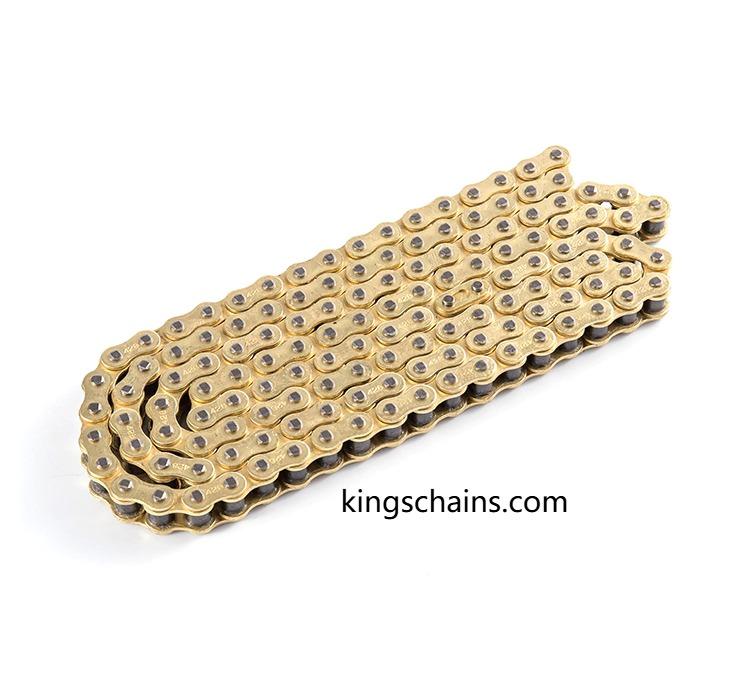
Material selection is one of the first areas worth examining when choosing a motorcycle chain. A chain consists of multiple interacting components, including plates, pins, bushings, rollers, and connecting links. Each part has a different role in transferring movement from the sprocket system to the rear wheel, so the overall material combination matters more than the appearance of any individual component.
Steel-based materials are widely used for motorcycle chain components because they can be processed into precise moving parts and treated to support wear resistance and mechanical durability. Jiangshan Wangpai Chain Industry Co., Ltd. describes the use of different steel materials for components such as bushings, rollers, pins, and plates across its motorcycle chain range. This approach demonstrates why buyers should ask about component construction instead of judging a chain only by its outer finish.
Surface treatment is another material-related consideration. Motorcycle chains operate in environments where moisture, dust, road debris, and lubricants can affect exposed metal surfaces. Depending on the product and application, manufacturers may use protective finishes or other treatments to help manage surface conditions. Buyers should consider where the motorcycle will be used and how frequently the chain will be cleaned and maintained.
Chain structure should also match the motorcycle's intended use. A standard non-sealed chain has a relatively straightforward construction, while sealed chains incorporate sealing elements around the internal lubrication areas. Wangpai's product information identifies both non-sealed and sealed motorcycle chains within its product portfolio.
For everyday riding, a simpler chain structure may be attractive because inspection, cleaning, and lubrication are relatively direct. Non-sealed chains do not use O-ring or X-ring seals, allowing users to access and maintain the chain more directly. Sealed chains, by contrast, are designed around a different approach in which sealing elements help retain lubricant around internal contact areas.
The selection process should therefore begin with the motorcycle itself. Buyers can first identify the motorcycle's transmission arrangement, riding environment, maintenance habits, and intended use. A chain used primarily for regular road riding may face different conditions from one used for off-road riding or more demanding applications. Matching the chain design with the actual operating environment can help avoid unnecessary replacement or maintenance issues.
Compatibility with the sprocket system is equally important. The chain and sprockets operate as a connected system, so the chain must correspond with the intended motorcycle and transmission arrangement. Installation should follow the motorcycle manufacturer's requirements, while replacement chains should be selected according to the correct application rather than visual similarity.
Manufacturing technology has a direct relationship with chain consistency. Plates need to be formed accurately, pins and bushings require controlled processing, rollers need suitable geometry, and assembly must maintain consistent relationships between moving components. Jiangshan Wangpai Chain Industry Co., Ltd. states that its production system includes punching, pin cutting, tube rolling, heat-treatment, automatic assembly, and packaging processes.
Heat treatment is another important part of chain manufacturing because different components experience repeated contact and movement during operation. Proper processing can influence the mechanical characteristics of pins, bushings, plates, and other components. Buyers interested in long-term supply should therefore look beyond the finished product and consider how the manufacturer controls production processes.
Quality inspection also supports manufacturing consistency. Wangpai describes testing equipment covering areas such as hardness, tensile performance, length measurement, metallographic analysis, interlocking force, and fatigue testing. For distributors and OEM buyers, this type of production and inspection infrastructure can provide useful information when evaluating a supplier's manufacturing capabilities.
Lubrication is closely connected with chain function and maintenance. The contact between pins, bushings, rollers, and other moving components generates friction during operation. Appropriate lubrication can help reduce direct metal-to-metal contact and support smoother chain movement. Sealed chain designs use sealing elements to retain lubricant around internal areas, while non-sealed chains depend more directly on external cleaning and lubrication routines.
User experience is influenced by how easy a chain is to inspect and maintain. A rider or mechanic may need to check chain cleanliness, lubrication, tension, corrosion, and visible wear during regular service. A chain design that corresponds well with the user's maintenance habits can make ownership more convenient.
Maintenance should also be considered before purchasing. Non-sealed chains generally allow direct cleaning and lubrication, while sealed chains require users to pay attention to the condition of their sealing elements as well as the external chain surface. The appropriate maintenance routine depends on the chain design and the motorcycle's operating conditions.
The riding environment can further affect the user's experience. Road dust, rain, mud, sand, and extended outdoor exposure can introduce contaminants into the chain system. Riders who frequently operate in demanding environments may need to pay greater attention to cleaning and lubrication than those using a motorcycle primarily on clean paved roads.
Replacement convenience matters for distributors and repair shops as well. A motorcycle chain is a service component, so clear product identification, consistent packaging, connecting-link options, and reliable supply can make replacement work easier. Jiangshan Wangpai Chain Industry Co., Ltd. offers several motorcycle chain categories, including standard non-sealed, reinforced non-sealed, solid bush, and sealed O-ring and X-ring chains.
Customization can also be relevant for motorcycle parts businesses. OEM customers, distributors, and private-label brands may have different requirements for packaging, product presentation, chain configuration, and market positioning. A manufacturer with multiple production processes can discuss these requirements during product development rather than treating every project as a fixed standard product.
The appearance of a motorcycle chain may seem secondary to its mechanical role, but it can influence the overall presentation of a motorcycle. Surface finishes such as traditional dark metal or more distinctive colored finishes can be selected according to the intended product positioning. Wangpai's product portfolio includes standard finishes as well as visually distinctive gold motorcycle chain products.
Design also involves the relationship between the chain and the motorcycle's other visible components. On motorcycles where the chain and rear sprocket are clearly visible, a neat finish can contribute to the visual character of the drivetrain. For retail brands and modification markets, appearance can therefore become part of the product experience without replacing the chain's functional requirements.
Supplier selection should include more than a review of product categories. Buyers can examine manufacturing processes, testing capabilities, product variety, customization support, communication, and export experience. Jiangshan Wangpai Chain Industry Co., Ltd. identifies itself as a professional manufacturer involved in the research, development, production, and sales of motorcycle and industrial chains, with products supplied to multiple international markets.
For motorcycle manufacturers, distributors, repair businesses, and replacement-parts buyers, evaluating chain materials, structure, manufacturing processes, maintenance requirements, user experience, and appearance can create a clearer basis for product selection. These factors also provide a useful framework for discussing chain requirements with a manufacturer and matching the product to the motorcycle, riding environment, and intended market.
For more information about Jiangshan Wangpai Chain Industry Co., Ltd., its motorcycle chains, industrial chains, OEM capabilities, and related transmission products, visit https://www.kingschains.com/.

 English
 Arabic
 French
 Portuguese
 Deutsch
 Turkish
 Dutch
Dutch
 Italiano
 Russian
 Romaian
 Portuguese (Brazil)
 Greek
Greek
