


Can Gangnammould Trash Bin Mould Fit Different Production Plans
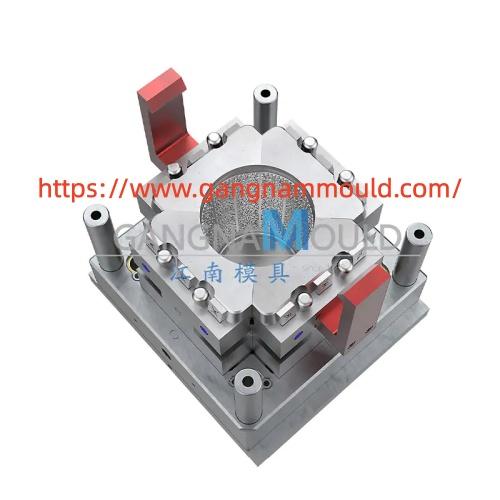
Trash Bin Mould selection requires more than checking dimensions and quotation details. Buyers should consider how the tooling will match the intended container design, production material, machine conditions, expected cycle requirements, and maintenance plan. A suitable solution should work with the overall manufacturing process rather than being evaluated as an isolated component. Careful preparation at the purchasing stage can help reduce unnecessary adjustments after production begins.
One important point is structural design. Large plastic containers can have broad surfaces, reinforced edges, handles, lids, or other functional details that influence tooling requirements. The cavity arrangement should reflect the final product geometry and the selected molding process. Wall thickness should also be reviewed because uneven sections can affect filling, cooling, shrinkage, and surface appearance. Buyers can provide detailed product drawings and application information so the manufacturer can evaluate the structure before fabrication.
Material selection deserves similar attention. Different production materials have different processing characteristics, and the tooling needs to accommodate the selected resin and operating conditions. Steel grade, hardness, wear resistance, and corrosion considerations may influence service requirements. The right choice depends on factors such as planned production volume, material characteristics, product size, and expected operating environment. Instead of selecting materials based only on initial cost, buyers can discuss the relationship between material properties, service requirements, and production plans with the manufacturer.
Cooling design is another factor worth reviewing. Large plastic products may require careful temperature control because their surfaces can take longer to cool evenly. Cooling channels should be arranged according to the product structure and areas where heat may accumulate. Effective temperature management can contribute to shorter and more consistent molding cycles while helping reduce deformation risks. Buyers should therefore ask about the cooling concept during the design review rather than waiting until trial production.
Ejection also has a direct connection with production efficiency. The finished item needs to leave the cavity without unnecessary marks, deformation, or resistance. Ejector positions, movement distance, draft angles, and related components should be considered during development. When the product includes handles, ribs, deep sections, or other complicated features, the ejection strategy may require additional engineering attention.
Customization can become important when a project involves a special capacity, shape, lid structure, reinforcement pattern, or branding requirement. Standard configurations may not always correspond with the intended product. Buyers should communicate product drawings, target dimensions, machine specifications, and production expectations as early as possible. This gives the engineering team more information for evaluating cavity layout, mold dimensions, cooling arrangements, and supporting components.
Maintenance should also be included in the purchasing discussion. Tooling eventually requires cleaning, inspection, component replacement, and possible repair. Accessible components and a practical maintenance structure can make routine servicing easier. Buyers can ask how frequently key parts may require inspection and whether commonly replaced components are easy to access. These details can influence long term operating convenience.
Supplier manufacturing capability is another consideration. Buyers may review engineering processes, machining equipment, quality inspection methods, trial procedures, and communication practices before making a decision. A manufacturer that can coordinate design discussion, machining, assembly, testing, and adjustments within one workflow may make project communication more straightforward. Gangnammould provides tooling solutions based on customer product requirements, with attention to design coordination and manufacturing details throughout the development process.
Finally, buyers should evaluate the complete project rather than focusing on one specification. Product design, machine compatibility, material selection, cooling, ejection, maintenance, delivery requirements, and future production plans are closely connected. A clear technical discussion before ordering can help both sides establish realistic expectations and reduce misunderstandings during manufacturing.
For buyers preparing a new plastic container project, reviewing the available product and tooling information at https://www.gangnammould.com/product/ can be a practical next step. Gangnammould can work with customers to discuss application requirements and develop tooling solutions around their production needs, helping turn product concepts into manufacturable designs.

 English
 Arabic
 French
 Spanish
 Portuguese
 Deutsch
 Turkish
 Italiano
 Russian
 Romaian
 Portuguese (Brazil)
 Greek
Greek
