


GPT-INDIA Paint Booth: Better Airflow and Overspray Control for Industrial Finishing
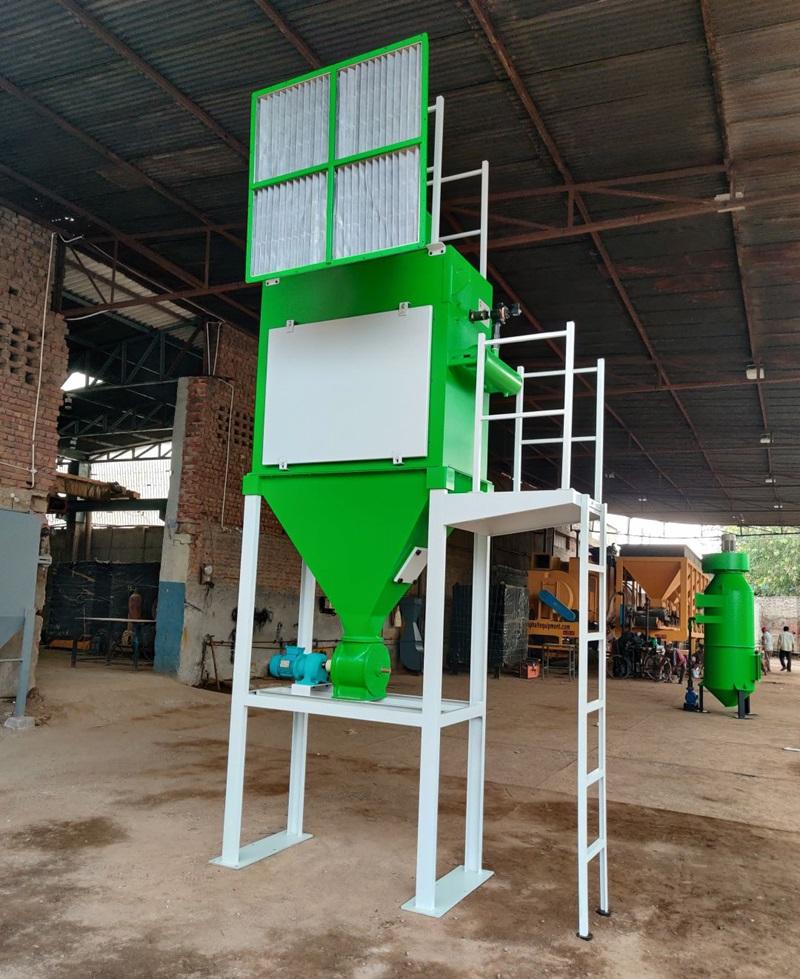
A consistent paint finish depends on more than the quality of the coating material or the skill of the operator. The air moving through the painting area can influence overspray behaviour, surface contamination, drying conditions, worker exposure, and the cleanliness of the surrounding production space.
This is why a properly engineered Paint booth is an important part of an industrial finishing process.
A booth creates a controlled environment around the painting operation. It helps direct contaminated air away from the work area, captures overspray, and supports a more predictable painting process. Depending on the coating material and application, the exhaust air may also require suitable filtration or treatment before discharge.
For factories handling regular painting operations, booth design should therefore be considered as part of the complete finishing process rather than simply as an enclosed room with an exhaust fan.
What Does a Paint Booth Actually Control?
During spray painting, only a portion of the coating material reaches the intended surface. The remaining material becomes airborne overspray.
If this overspray is allowed to move freely through the workplace, it can settle on machinery, floors, walls, lighting, and nearby products. It may also affect the finish of other components being processed.
A properly designed booth creates a controlled airflow path that helps carry airborne coating particles toward the collection or filtration section.
The objective is to maintain sufficient and reasonably uniform airflow without creating turbulence that could negatively influence the painting process.
Why Airflow Distribution Matters
Airflow is one of the most important design considerations in an industrial painting enclosure.
If airflow is too weak, overspray can remain suspended around the workpiece. If airflow is excessively high or poorly distributed, it can disturb the spray pattern and increase coating consumption.
The location of supply air, exhaust points, filters, workpiece position, booth dimensions, and fan capacity all influence the airflow pattern.
A well-designed system aims to create a predictable movement of air from the clean side toward the contaminated side and then toward the exhaust system.
This is particularly important for large components where the workpiece can significantly influence the airflow around the spray area.
Dry Booth and Water-Based Overspray Collection
Different painting processes require different approaches to overspray management.
Dry filtration systems use filter media to capture paint particles from the exhaust air. The filter arrangement can vary according to the coating type, overspray loading, required filtration performance, and operating conditions.
A water-based arrangement takes a different approach by using water to capture airborne paint particles.
The appropriate choice depends on the process rather than on a universal preference. Paint chemistry, production volume, component size, coating method, maintenance practices, and available utilities should all be evaluated.
How a Water curtain Paint booth Works
A Water curtain Paint booth uses a controlled water curtain or water film to help capture airborne paint overspray.
As contaminated air moves toward the water curtain, paint particles come into contact with the water and are separated from the airflow. The collected material can then be managed through the booth's water circulation and sludge-handling arrangement.
This approach can be useful for applications where overspray loading is substantial and continuous collection is required.
The water system itself needs proper management. Water quality, circulation, sludge accumulation, pump operation, and cleaning requirements can all influence performance.
A water curtain system should therefore be designed as a complete process rather than simply adding a water pump to a conventional booth.
When Activated Carbon Filter Technology Is Relevant
Paint exhaust may contain not only particulate overspray but also vapours generated by solvents and coating materials.
Depending on the paint chemistry and process, particulate filtration alone may not address all contaminants of concern.
An Activated carbon filter can be used in suitable applications where adsorption of certain gaseous contaminants or odours is required.
Activated carbon works by adsorbing molecules onto its high-surface-area material. Its effectiveness depends on factors such as contaminant type, concentration, temperature, humidity, airflow, contact time, and carbon characteristics.
It should therefore not be considered a universal replacement for particulate filtration.
In some systems, particulate filtration and activated-carbon treatment may be used as separate stages so that each component addresses a different part of the exhaust stream.
Paint Booth Size Should Match the Production Process
Booth dimensions should be based on the actual components being painted and the way operators or automated equipment interact with them.
The booth needs sufficient working space while maintaining appropriate airflow around the component.
A booth that is unnecessarily large can increase the volume of air that needs to be moved, potentially increasing fan and energy requirements. A booth that is too small can restrict movement and interfere with the painting process.
The type of painting equipment also matters. Manual spray guns, reciprocating systems, robots, and other automated methods can produce different airflow and overspray patterns.
The design should therefore begin with the production process rather than a standard booth size.
Exhaust Fan Selection Is Part of Booth Engineering
The exhaust fan determines how air is pulled through the booth and filtration arrangement.
Fan selection should consider required airflow, static pressure, filter resistance, ductwork, dampers, booth configuration, and any additional treatment equipment.
As filters accumulate paint particles, their resistance can change. The fan and system should therefore be capable of maintaining the required operating condition over the expected service range.
Oversizing the fan may result in unnecessary energy consumption, while undersizing it can compromise airflow and overspray capture.
The complete system curve should be considered when selecting the air-moving equipment.
Ductwork Can Affect Painting Performance
The exhaust duct is not simply a connection between the booth and fan.
Its diameter, length, bends, transitions, branches, and internal surface can influence pressure loss. Excessive resistance may reduce actual airflow at the booth.
Duct routing should also consider accessibility for inspection and cleaning.
Paint overspray can accumulate inside exhaust systems, making maintenance and inspection important parts of the installation.
A properly designed duct arrangement helps maintain predictable airflow and supports easier maintenance.
Why Paint Booth Maintenance Matters
Paint booths operate in an environment where overspray is unavoidable.
Filters can become loaded, water systems can accumulate sludge, exhaust ducts can collect deposits, and fans can require inspection.
Maintenance requirements depend heavily on the booth design and painting process.
Dry filtration systems require appropriate filter inspection and replacement. Water curtain arrangements require water-quality management, sludge removal, pump inspection, and cleaning.
If maintenance is postponed for too long, airflow can decline and the painting environment can become less predictable.
Regular inspection is therefore part of maintaining consistent finishing quality.
Choosing Paint Booth Suppliers
When evaluating Paint booth suppliers, it is useful to look beyond the booth's physical dimensions and quoted price.
The supplier should understand the coating process, type of paint, spray method, component size, production volume, airflow requirements, filtration arrangement, exhaust routing, and maintenance requirements.
The supplier should also be able to explain how the booth will perform as filters load or as production conditions change.
For water-based systems, questions about water circulation, sludge collection, pump selection, cleaning, and water management are particularly relevant.
A supplier who understands the complete process can help avoid the common problem of selecting a booth first and attempting to adapt the production process to it later.
What Paint Booth Manufacturers Need to Consider
Experienced Paint booth manufacturers generally evaluate the complete operating environment before finalizing a design.
Booth construction materials, dimensions, airflow direction, lighting, filtration, exhaust equipment, access arrangements, and maintenance points all need to work together.
For specialized applications, the booth may need to be customized around large components, irregular workpieces, automated painting equipment, or existing factory structures.
Safety considerations also need to be incorporated into the design according to the specific coating materials and applicable requirements.
The result should be a controlled painting environment that fits the production process rather than a generic enclosure.
GPT-INDIA Approach to Industrial Painting Air Control
Green Planet Technologies, popularly known as GPT-INDIA, works in industrial air pollution control, ventilation, exhaust, and process-air applications.
Its approach to painting applications considers the relationship between booth dimensions, airflow, overspray capture, exhaust requirements, filtration, and process conditions.
Depending on the application, industrial painting systems can incorporate dry filtration, water-based overspray collection, exhaust fans, ducting, and additional gas-treatment stages such as activated carbon where technically appropriate.
The objective is to develop an airflow and pollution-control arrangement that supports the actual painting process and its operating requirements.
GPT-INDIA NAP Details
Business Name: Green Planet Technologies popularly known as GPT-INDIA
Address: 59/2/1, Site 4, Industrial Area, Sahibabad, Distt. Ghaziabad–201010, Uttar Pradesh, India
Phone: +91-9773500660
Email: info@gpt-india.com
Frequently Asked Questions
What is the purpose of a Paint booth?
A Paint booth creates a controlled environment for spray painting by managing airflow, capturing overspray, and directing contaminated air toward suitable filtration or exhaust equipment.
What is a Water curtain Paint booth?
A Water curtain Paint booth uses a controlled water film or curtain to capture airborne paint overspray as contaminated air passes toward the exhaust section.
When is an Activated carbon filter used in a paint booth system?
An Activated carbon filter may be used when the exhaust contains suitable gaseous contaminants or odours that can be treated through adsorption. Its selection depends on the specific contaminant and operating conditions.
How does booth airflow affect paint quality?
Airflow influences overspray movement, contamination control, spray behaviour, and the cleanliness of the painting environment. Uneven or excessive airflow can interfere with the coating process.
What information should I provide to Paint booth suppliers?
Important information includes component dimensions, paint type, spray method, production volume, booth operating hours, airflow requirements, exhaust conditions, available space, and the desired filtration or overspray-collection method.
How do I select Paint booth manufacturers?
Consider their understanding of the painting process, airflow engineering, filtration, exhaust design, construction quality, maintenance requirements, customization capability, and after-installation technical support.
Conclusion
An industrial Paint booth should be designed around the actual coating process rather than treated as a simple enclosure. Airflow distribution, overspray collection, filtration, exhaust capacity, ductwork, and maintenance all influence how consistently the painting area performs.
For applications with significant overspray, a Water curtain Paint booth can provide a practical collection approach, while additional treatment such as an Activated carbon filter may be considered when suitable gaseous contaminants are present.
A properly engineered system can help create a more controlled painting environment while making airflow, maintenance, and pollution-control requirements easier to manage over the equipment's operating life.

 English
 Arabic
 French
 Spanish
 Portuguese
 Deutsch
 Dutch
Dutch
 Italiano
 Russian
 Romaian
 Portuguese (Brazil)
 Greek
Greek
