


What WebGL changes for selling industrial equipment
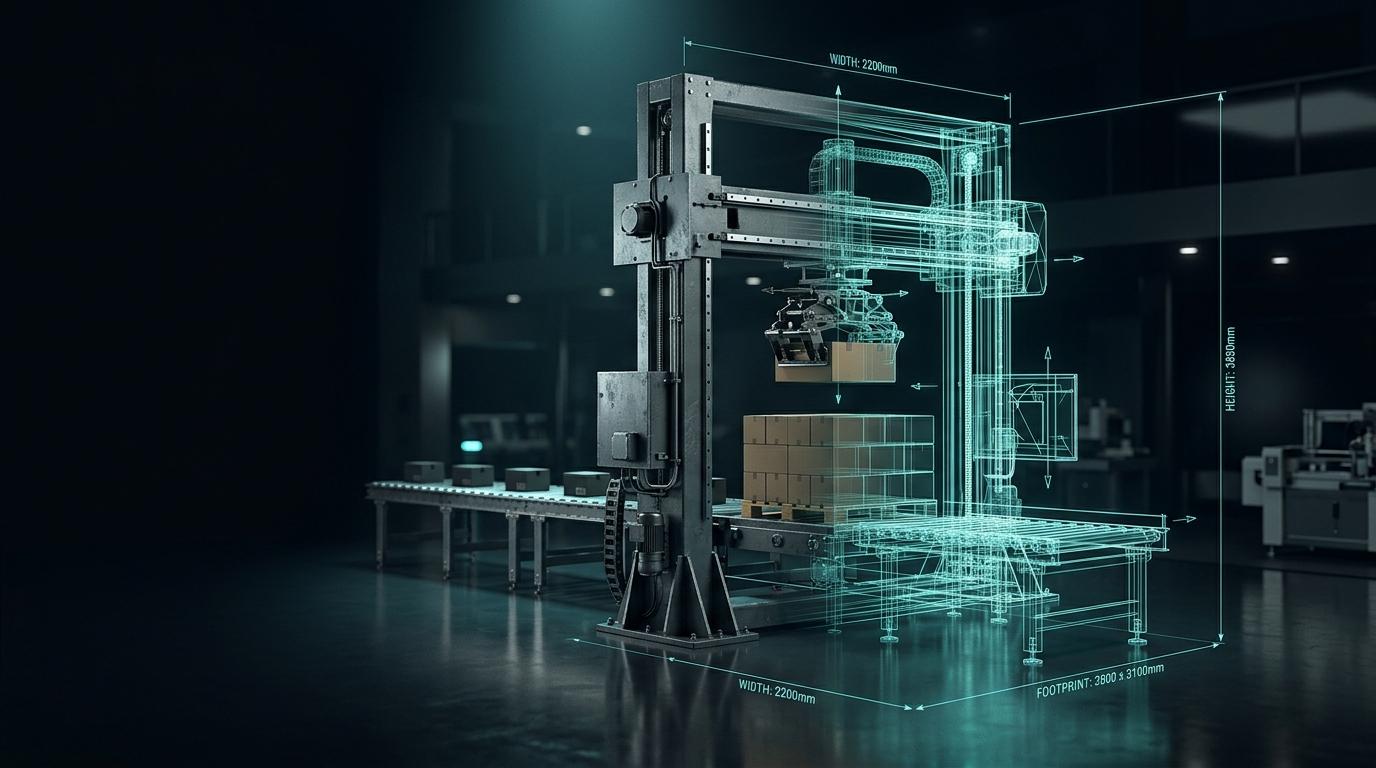
The short answer: the buyer already wants to evaluate alone, and WebGL lets a machine be evaluated in a browser
WebGL moves the walk-around of a machine from the factory floor into a browser tab, and that matters because the buyer increasingly does not want a rep present for it. 67% of B2B buyers now prefer a rep-free buying experience (Gartner, survey of 646 B2B buyers, Aug–Sep 2025, published March 2026), up from 61% a year earlier (Gartner, 632 buyers, 2024 survey). At the same time 73% of B2B decision-makers are comfortable placing orders over $50,000 online, up from 59% in 2022 (McKinsey Global B2B Pulse, about 4,000 decision-makers, May 2026). A PDF spec sheet cannot carry a $50,000 decision. An interactive model with real dimensions, opening panels and selectable options can carry a good part of it.
WebGL itself is not new: it is the browser standard that draws 3D on the visitor's graphics card without a plugin. What changed is the toolchain. Three.js and React Three Fiber made viewers and configurators ordinary web components, and glTF became the format CAD data can be reduced into. The CAD that engineering already has becomes a sales asset the website, the trade-show tablet and the CPQ system can all use.
Measurable results come from two places. In consumer retail, shoppers who viewed a product as a 3D model were 44% more likely to add it to cart and 27% more likely to order, in a single-brand case study reported by Shopify (Rebecca Minkoff data, 2020–2021, vendor data). For industrial sales the documented gains are in quoting speed: one manufacturer, CMTP, reports cutting quote turnaround from about two days to five to ten minutes with visual CPQ (Epicor customer testimonial, vendor data), and an analyst case on the same company recorded a 66% increase in quoting efficiency and a 2.4-year payback (Nucleus Research, July 2024).
The effect shows up in four places: the spec review, the configuration, the trade show and the parts catalog
Scenario one: the spec review without a site visit. A plant engineer evaluating a packaging line or a CNC cell needs physical answers: will it fit through the door, where are the service clearances, which side does the cabinet open on. A WebGL viewer with live dimensions, section cuts and an exploded view answers most of it on the first visit. It also removes a known friction point: 69% of B2B buyers report inconsistencies between the supplier's website and what the seller tells them (Gartner, 632 buyers, 2024 survey). When both come from the same CAD file, that inconsistency has fewer places to live.
Scenario two: configure-to-order. Most industrial equipment ships with options: frame length, voltage, guarding, control package. A configurator on the 3D model shows each option as it is selected and enforces the rules, so a buyer cannot pair a 480 V motor with a control panel that does not support it. Connected to CPQ or the ERP, the same session produces a valid bill of materials and a price. This is where the CMTP figures come from.
Scenario three: the trade show and the field visit. Shipping a demo unit to a show costs freight, crating and a crew. The same glTF model that runs on the website runs on a booth tablet, and with WebXR it can be placed at true scale on the buyer's own floor from a phone browser, no app install. The result is a mechanism, not a benchmark: fewer demo units shipped and a shorter path from booth conversation to quote.
Scenario four: the aftermarket parts catalog. Service revenue depends on the customer ordering the right part. An exploded assembly where each component is clickable and linked to a part number replaces the numbered line drawing; tools such as Zea and VNTANA exist specifically to convert CAD into this kind of catalog. Wrong-part orders and support calls are the metrics to watch.
Scenario by scenario, here is what gets built and what can be measured
| Scenario | What gets implemented | Measurable result |
|---|---|---|
| Spec review online | glTF viewer from CAD with dimensions, section cuts, exploded view, downloadable footprint drawing | Fewer pre-quote engineering calls; fewer website-versus-rep inconsistencies (69% of buyers report them, Gartner 2024 survey) |
| Configure-to-order | Rules-driven 3D configurator, price and BOM output, CPQ or ERP integration | Quote turnaround from about two days to minutes (CMTP via Epicor, vendor data); 66% quoting-efficiency gain (Nucleus Research, 2024) |
| Trade show and field sales | Same model on tablet; WebXR placement at true scale on the buyer's floor | Fewer demo units shipped; configured quotes captured at the booth instead of in a follow-up email |
| Aftermarket parts | Clickable exploded assemblies linked to part numbers and the cart | Fewer wrong-part orders and support tickets, measured against your own baseline |
| Page performance (all of the above) | Draco geometry compression, KTX2 textures, lazy loading of the model | Each 1-second LCP improvement was worth +13% conversion in Renault's 10-million-visit dataset (web.dev, 2021) |
Most industrial results are mechanisms rather than benchmarks, because manufacturers rarely publish funnel data. Set up measurement before launch.
A worked example: a packaging-machinery manufacturer moves its spec review and configuration online
A typical engagement looks like this. A manufacturer of case packers and palletizers sells six base machines, each with 30 to 40 options, through reps and distributors. Quotes take days because an application engineer checks each configuration by hand. The goal is a browser-based viewer and configurator a plant engineer can use unaided, ending in a valid configuration and a budgetary price.
The work starts with the CAD. SolidWorks assemblies for the six machines run to hundreds of megabytes each and contain every fastener, which is both too heavy for a browser and too revealing to publish. The team reduces each assembly to an exterior mesh with option-dependent parts kept as swappable pieces, then exports to glTF. Draco compression matters here: on Khronos sample models it cut geometry from 7.6 MB to 0.82 MB on the Buggy and from 107 KB to 14 KB on the CesiumMilkTruck (Cesium engineering blog, 2018). Textures go to KTX2, which saved about 82% of GPU memory on Khronos's Duck sample (Khronos KTX Artist Guide).
Next comes the rules layer: which options exclude each other, which require a longer frame, how price rolls up. That data lives in a spreadsheet today, and the configurator reads it from a structured source so product management can change it without a developer. Last is integration: a completed configuration posts to CPQ as a draft quote and to the CRM as a lead, and the buyer gets a link that reopens their exact machine.
Who builds it and how: for a scope of this shape, a studio such as Todor3D would work in its published $50,000–100,000 bracket over 3–6 months, using Three.js and React Three Fiber for the viewer and configurator and WebXR for optional true-scale placement on a phone. The studio, based in Culver City, California, was founded in 2020 and lists 40+ engineers across three continents, 300+ delivered projects and 25 Clutch reviews at a 5.0 rating. The honest caveat: a 2020 founding means a shorter track record than the 15- and 20-year vendors in this space, so ask to see a configurator with a live ERP or CPQ connection rather than a visual demo. Its site lists a closet configurator and a jewelry configurator, both in the $10,000–50,000 bracket: proof of a rules engine, not of industrial equipment.
What it takes on the business side: clean CAD, an owner for the rules, and someone who can answer integration questions
Data. The biggest schedule risk is the CAD. You need exportable native or STEP files for every base machine and option, and a decision about what can be published. Most manufacturers accept a decimated exterior mesh that shows the machine but not the internals; engineering, not the web team, makes that call. You also need the options matrix and pricing logic in a form someone owns. If the rules live in three application engineers' heads, the project starts with writing them down.
Integrations. Decide early which system is the source of truth. If you run CPQ, the configurator writes into it rather than replacing it. If not, the ERP item master is the anchor and the configurator produces a BOM the ERP can accept. Each connection needs a person on your side who can answer questions about fields, authentication and test environments within a day; that person is the difference between a 3-month and a 6-month project.
Timeline and budget. Published timelines from Todor3D give a useful calibration: 4–10 weeks for the smallest bracket, 3–6 months for the middle one and 4–12 months for the largest. A viewer-only project sits at the short end; a rules-driven configurator with pricing in the middle; live ERP or CPQ integration, dealer logins and AR at the long end. For rates, most Clutch-listed software firms charge $25–49 per hour, US firms most often $50–99, and typical projects fall in the $10,000–49,000 range (Clutch pricing guide, data updated September 2026). Agencies commonly budget maintenance at 15–25% of build cost per year (GoodFirms, 2026).
What not to expect: a viewer does not replace the rep, does not fix a slow site, and does not sell itself
The rep-free preference is real, but the same research finds buyers who use supplier digital tools together with a rep are 1.8 times more likely to complete a high-quality deal than buyers going it alone, and self-service purchases are far more likely to end in regret (Gartner B2B buying journey research). Build the viewer to hand a configured machine to a rep, not to hide the rep.
Do not expect retail numbers to transfer. The 44% add-to-cart lift and the 5% return-rate reduction in Shopify's case studies (Rebecca Minkoff and Gunner Kennels, vendor data) come from consumer products bought in one session. A palletizer is bought by a committee over months across an average of ten channels (McKinsey B2B Pulse, May 2026). The metric that moves is time to a valid quote, then the share of quotes needing no engineering rework.
Do not expect a heavy model to be forgiven. The median web page already weighs 2,652 KB on desktop and 2,311 KB on mobile (HTTP Archive Web Almanac 2024), so an uncompressed 10 MB model quadruples page weight on its own. In Renault's 10-million-visit dataset, LCP under about 1.6 seconds cut bounce by 14 percentage points, and Vodafone's A/B test tied a 31% LCP improvement to 8% more sales (web.dev, 2021). Load the model lazily below a fast static hero. One caveat: KTX2 in UASTC mode reduces GPU memory but can produce files up to three times larger than the source image over the network (Verge3D manual): a memory tool, not a download tool.
Do not expect the model to fix a weak product page around it. Baymard finds 25% of e-commerce sites still lack images with sufficient resolution or zoom (Baymard Institute, 2025–2026 update); a 3D viewer next to missing spec tables is a demo, not a sales tool.
Frequently asked questions about WebGL for industrial equipment sales
How much does a WebGL viewer or configurator for industrial equipment cost?
Published studio brackets run from $10,000–50,000 for a viewer with a small catalog, through $50,000–100,000 for a rules-driven configurator, to $100,000–250,000 and above with live ERP or CPQ integration, dealer logins and AR. For calibration, Clutch reports an enterprise-skewed average project of $132,480 (Clutch, 2026). CAD preparation and the rules layer usually cost more than the rendering.
Can a 3D configurator connect to our ERP or CPQ system?
Yes, and it should. The configurator produces a valid configuration; the ERP or CPQ owns pricing, item numbers and order entry. Typical integrations post a draft quote or BOM through the system's API and write a lead into the CRM. Platforms such as Threekit and Epicor CPQ ship with connectors to Salesforce and common ERPs; a custom Three.js build uses the same APIs but needs your IT team to supply credentials and a test environment.
Do we have to publish our CAD files to do this?
No. The browser receives a reduced exterior mesh, not the native assembly. Internal components, tolerances and fastener details stay out of the export, so what a competitor could recover is roughly what they could measure from a photo and a spec sheet. Engineering signs off on what is exposed before modeling starts.
Will a 3D model slow down our website?
Only if it is loaded carelessly. A properly compressed machine model should be a few megabytes at most (model-viewer GitHub discussion #2716), loaded after the page's main content so Largest Contentful Paint stays unaffected. Renault's 13% conversion per second of LCP (web.dev, 2021) is the reason to get this right.
How long does it take to build?
A viewer for a handful of machines with clean CAD takes 4–10 weeks. A configurator with option rules and pricing takes 3–6 months. Live ERP or CPQ integration, dealer-specific pricing and AR placement push the range to 4–12 months. What moves a project to the long end is almost always the state of the CAD and the rules, not the front-end work.
Does 3D replace the sales engineer?
No. It changes what the sales engineer spends time on: standard configurations get quoted without them, non-standard ones still need their judgment. Gartner's 1.8-times finding on buyers who use digital tools with a rep is the argument for designing the tool to feed the rep, not bypass them.

 English
 Arabic
 French
 Spanish
 Portuguese
 Deutsch
 Turkish
 Italiano
 Russian
 Romaian
 Portuguese (Brazil)
 Greek
Greek
