


Hull Formwork: Supporting Stability in Modern Construction
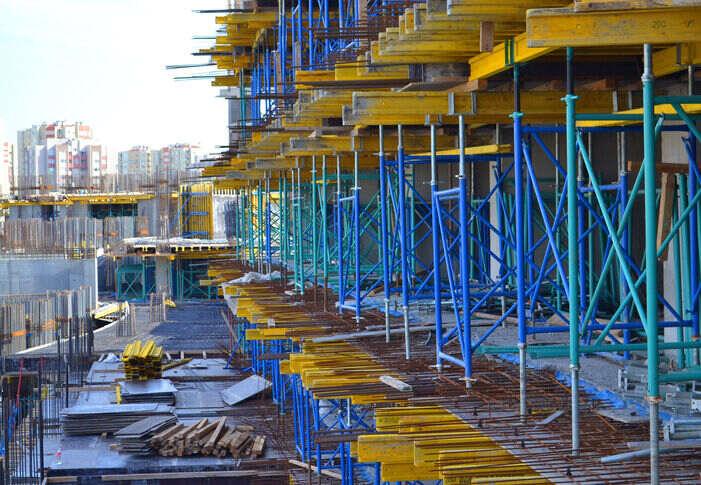
Discover the fundamentals of hull formwork, its structural mechanics, and its critical role in modern construction and marine-adjacent engineering projects.
When structural engineers discuss complex shapes, curved concrete pouring, or specialized maritime construction, the conversation inevitably turns to formwork design. Among the various methodologies used in heavy civil engineering, the application of hull formwork represents a fascinating intersection of geometric precision, material science, and load-bearing physics.
Unlike standard rectangular walls or vertical columns, structures requiring a hull-like configuration present unique engineering challenges. Whether applied in specialized architectural projects, bridge piers, or marine infrastructure, hull formwork refers to the specialized temporary or permanent molds designed to shape concrete and other materials into curved, aerodynamic, or hydrodynamic contours.
The Mechanics Behind the Shape
The primary function of any formwork system is to safely contain wet concrete until it achieves sufficient self-supporting strength. However, when dealing with the sloping, multi-dimensional curves characteristic of a hull shape, standard flat panels are insufficient.
Designing effective hull formwork requires meticulous planning regarding hydrostatic pressure. As fluid concrete is poured into a curved mold, the lateral pressure exerted on the lower sections of the formwork increases significantly. Because the surface is not flat, load distribution is non-uniform. Engineers must calculate stress points carefully to prevent bulging, shifting, or catastrophic blowout during the pour.
Materials and Assembly
Achieving the smooth, continuous curves associated with hull formwork typically involves a combination of flexible materials and rigid support frameworks.
Sheathing: High-density overlay plywood, flexible composite sheets, or thin steel plates are frequently used as the facing material to achieve a smooth finish.
Waler and Strongback Systems: These horizontal and vertical structural members provide the necessary rigidity, holding the curved facing in the exact geometric alignment required by the blueprint.
Tie Rods: Strategically placed internal ties manage the immense outward pressure of the wet concrete, ensuring the structural integrity of the mold remains uncompromised.
Safety and Precision
Safety remains paramount in any formwork operation. The complex geometry of hull formwork means that inspection is more challenging than traditional systems. Rigorous quality control checks are necessary to ensure that bracing is secure and that the curvature matches exact mathematical specifications before any concrete is introduced.
Ultimately, mastering hull formwork allows the construction industry to push the boundaries of conventional design, enabling the creation of fluid, curved structures that are both aesthetically striking and structurally resilient.

 English
 Arabic
 French
 Spanish
 Portuguese
 Deutsch
 Turkish
 Dutch
Dutch
 Italiano
 Russian
 Romaian
 Portuguese (Brazil)
