


ETP in Noida and STP in Noida: Complete Guide to Water Treatment
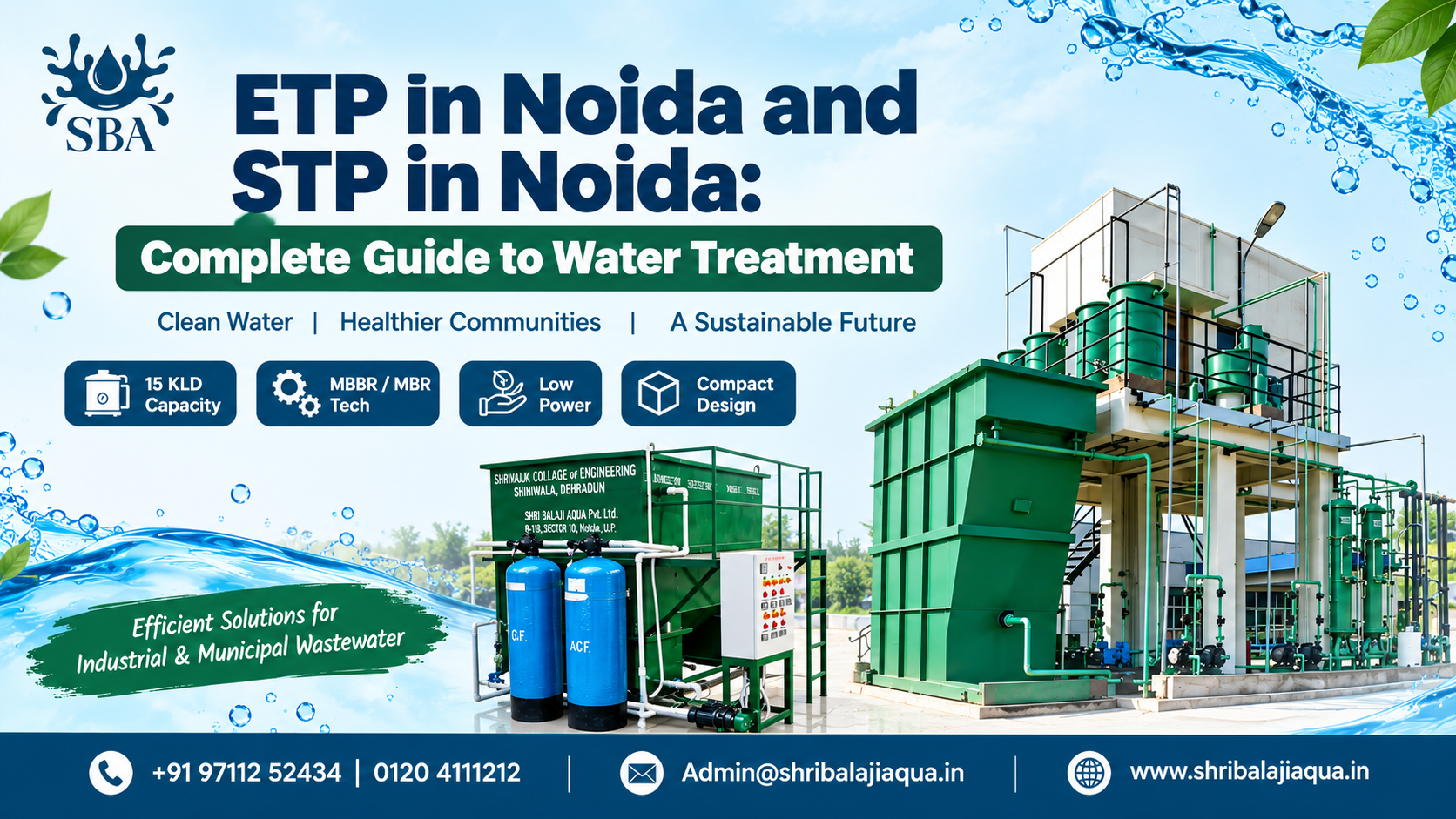
If your building or industrial unit generates wastewater, you likely need either an ETP in Noida or an STP in Noida — and knowing which one applies to you is the first step toward proper compliance and sustainable water management. An Effluent Treatment Plant (ETP) treats industrial and chemical wastewater, while a Sewage Treatment Plant (STP) treats domestic and commercial sewage from washrooms, kitchens, and daily human use. Both systems play a critical role in reducing pollution, enabling water reuse, and supporting responsible operations across residential societies, commercial complexes, institutions, and industrial units in Noida. This guide explains what each system does, how they work, how they differ, and how to choose the right one for your project.
What Are ETP and STP?
Wastewater is never a single, uniform substance. The water that leaves a factory floor is very different from the water that leaves a housing society's bathrooms and kitchens, and treating them the same way rarely works. This is exactly why two separate categories of treatment systems exist.
An Effluent Treatment Plant (ETP) is designed to treat wastewater generated by industrial and manufacturing processes. This wastewater, often called effluent, may contain chemicals, oils, dyes, heavy metals, or high concentrations of organic and inorganic pollutants depending on the industry.
A Sewage Treatment Plant (STP) is designed to treat sewage — the wastewater generated from human activities such as toilets, kitchens, laundry, and washing areas in homes, offices, hotels, and institutions.
Both ETP and STP are needed because untreated wastewater, whether industrial or domestic, can contaminate soil and water bodies, create sanitation hazards, and violate pollution control norms if discharged without treatment. The core difference lies in the source and composition of the wastewater: industrial effluent tends to carry chemical and process-related contaminants, while domestic sewage primarily carries organic matter and pathogens from human use.
ETP in Noida: What You Need to Know
An ETP exists primarily to treat effluent generated by manufacturing and industrial processes before it is discharged or reused. Because Noida hosts a wide mix of industrial units — from pharmaceutical and chemical manufacturers to textile, food processing, automobile, and dairy units — the composition of effluent varies significantly from one facility to another.
Typical contaminants found in industrial wastewater can include:
-
Suspended and dissolved solids
-
Oils and greases
-
Heavy metals
-
Chemical residues and dyes
-
High Biochemical Oxygen Demand (BOD) and Chemical Oxygen Demand (COD) levels
Because of this variability, an ETP is generally built in stages, with each stage targeting specific types of pollutants rather than relying on a single treatment step.
How an ETP Works
While exact configurations vary by industry, most ETP systems follow a similar sequence:
-
Screening and equalization – Large solids are removed, and wastewater flow and quality are balanced out before further treatment.
-
Primary treatment – Physical or chemical processes help settle or separate suspended solids, oils, and grease.
-
Secondary (biological) treatment – Microorganisms break down organic pollutants, reducing BOD and COD levels.
-
Tertiary treatment – Additional filtration or chemical treatment further improves water quality, particularly if the treated water is intended for reuse.
-
Sludge handling – Solid waste generated during treatment is separated, dewatered, and disposed of or processed further.
The exact combination of these stages depends on the nature of the effluent, the required discharge quality, and whether treated water will be reused on-site.
Industries That Use ETP Systems
ETP systems are typically required by:
-
Chemical and pharmaceutical manufacturing units
-
Textile and dyeing industries
-
Food and beverage processing plants
-
Automobile and metal finishing units
-
Dairy and agro-based industries
When designing an ETP, factors such as effluent flow rate, pollutant load, available space, discharge or reuse objectives, and applicable regulatory standards all influence the final system configuration. Depending on treatment quality, some industries are also able to reuse treated effluent for non-potable purposes such as cooling, washing, or gardening, which can reduce dependency on fresh water. Installation, commissioning, and ongoing operation and maintenance are equally important, since an ETP needs consistent monitoring to perform reliably over time.
STP in Noida: What You Need to Know
An STP is built to treat domestic and commercial sewage — wastewater from toilets, kitchens, bathing areas, and laundry facilities. Unlike industrial effluent, sewage is relatively consistent in composition across different sites, though its volume varies depending on the number of users and type of facility.
Typical sewage characteristics include organic matter, suspended solids, and microbial or pathogenic content, along with moderate BOD levels. Because this composition is fairly predictable, STP systems are generally more standardized in their biological treatment approach compared to ETPs, though the sizing and technology still need to match the specific site.
How an STP Works
A typical STP treatment process includes:
-
Screening – Removes large solid waste such as plastics, cloth, and debris.
-
Primary settling – Allows heavier solids to settle out of the wastewater.
-
Biological treatment – Microorganisms break down organic matter using one of several common technologies:
-
Activated Sludge Process (ASP) – A widely used biological method that relies on aerated tanks and microbial cultures.
-
Moving Bed Biofilm Reactor (MBBR) – Uses floating media to support bacterial growth, offering a compact footprint.
-
Sequencing Batch Reactor (SBR) – Treats wastewater in batches within a single tank, useful where space is limited.
-
Membrane Bioreactor (MBR) – Combines biological treatment with membrane filtration for higher-quality treated water.
-
Secondary clarification – Treated water is separated from remaining biological solids.
-
Disinfection and filtration – Final treatment stages reduce pathogens and improve clarity, particularly when water is intended for reuse.
-
Sludge management – Excess biological sludge is removed, dried, and disposed of appropriately.
Common STP Applications
STPs are widely used in:
-
Residential apartments and group housing societies
-
Hotels and hospitality establishments
-
Hospitals and healthcare facilities
-
Corporate offices and IT parks
-
Schools and educational institutions
-
Malls and commercial complexes
Treated sewage from an STP is commonly reused for flushing, gardening, and horticulture, and in some cases for cooling tower make-up water, helping reduce a facility's dependence on fresh water for non-potable uses.
In simple terms: if your wastewater comes from a factory or industrial process, you need an ETP. If it comes from washrooms, kitchens, or general human use in a building, you need an STP.
Benefits of ETP and STP Systems in Noida
Installing the right treatment system offers several practical advantages for both industrial and non-industrial facilities:
-
Better wastewater management – Structured treatment prevents ad hoc handling of wastewater and supports smoother facility operations.
-
Pollution reduction – Treating effluent and sewage before discharge helps reduce the load of contaminants entering local water bodies and soil.
-
Water recycling and reuse – Treated water can often be reused for non-potable purposes such as gardening, flushing, and cooling.
-
Reduced freshwater dependency – Reusing treated water can lower a facility's reliance on fresh water sources for certain applications.
-
Improved sanitation – Proper sewage treatment supports better hygiene and sanitation standards within residential and commercial premises.
-
Support for responsible operations – Industries and commercial facilities that manage their wastewater responsibly contribute to more sustainable local water systems.
-
Compliance with applicable regulations – A well-designed and properly maintained ETP or STP helps facilities work toward meeting relevant wastewater discharge norms set by pollution control authorities.
It's worth noting that actual performance depends on system design, operating conditions, and regular maintenance — results are not automatic and vary from site to site.
How to Choose the Right ETP or STP in Noida
Selecting an appropriate system requires looking beyond just the type of plant. Some of the key factors to evaluate include:
-
Wastewater quantity – Daily flow volume directly affects the size and capacity of the plant.
-
Wastewater characteristics – The pollutant type and concentration determine which treatment stages are necessary.
-
Required treatment quality – Whether the treated water needs to meet discharge norms or a higher standard for reuse.
-
Plant capacity – Sized according to current needs, with some allowance for future growth where relevant.
-
Available installation space – Compact technologies may be preferred for sites with limited area.
-
Treatment technology – Choice between ASP, MBBR, SBR, MBR, or other methods based on site-specific needs.
-
Power consumption – Energy requirements vary between technologies and should align with operational budgets.
-
Automation – Automated monitoring and control can simplify day-to-day operation.
-
Sludge management – A plan for handling and disposing of sludge generated during treatment.
-
Operation and maintenance – Ongoing upkeep is essential for consistent plant performance.
-
Water reuse requirements – Whether treated water will be reused, and for what specific purpose.
-
Installation and after-sales support – Reliable technical support helps address operational issues over the plant's lifetime.
Evaluating these factors together, rather than focusing on just one, generally leads to a more suitable and dependable system.
Why Customized ETP and STP Design Matters
No two facilities generate wastewater in exactly the same way, which is why a single standard plant design rarely fits every project. A textile unit's effluent is different from a pharmaceutical plant's effluent, and a 50-flat residential society has different sewage flow patterns than a large commercial mall.
Before finalizing any ETP or STP design, it helps to evaluate:
-
Wastewater testing to understand actual pollutant load and characteristics
-
Flow rate patterns, including peak usage periods
-
Site conditions, including available space and existing infrastructure
-
Required plant capacity based on current and expected usage
-
Discharge or reuse requirements specific to the facility
-
Day-to-day operational considerations, including staffing and monitoring needs
Skipping this evaluation and opting for a generic, one-size-fits-all system often leads to underperformance, higher operating costs, or the need for costly modifications later. A properly assessed and customized design, on the other hand, is more likely to function reliably over the long term.
Wastewater Treatment Solutions by Shri Balaji Aqua
Shri Balaji Aqua Pvt. Ltd. works with residential, commercial, and industrial clients across Noida to plan and implement wastewater treatment solutions suited to their specific requirements. The company's scope of work spans both ETP and STP systems, covering the full project lifecycle rather than just equipment supply.
This includes:
-
ETP solutions for industrial and commercial units dealing with chemical, organic, or process-based effluent
-
STP solutions for residential societies, commercial buildings, and institutional facilities
-
Customized system design based on site assessment, wastewater characteristics, and space availability
-
Supply and installation of treatment equipment and associated infrastructure
-
Commissioning to ensure systems are properly set up and functioning before handover
-
Operation and maintenance support to help facilities keep their plants running smoothly
-
AMC (Annual Maintenance Contract) and after-sales support for long-term reliability
-
Related water treatment solutions, including allied systems for facilities looking to manage their overall water requirements
Rather than offering a fixed, one-size-fits-all package, the focus is on understanding each project's wastewater profile and building a system that matches those needs.
Contact Us
If you're evaluating an ETP or STP for your residential society, commercial building, or industrial unit in Noida, it helps to have a conversation with a team that can assess your specific requirements before recommending a system.
Shri Balaji Aqua Pvt. Ltd.
📍 Address: B-118, Sector 10, Noida, Gautam Buddha Nagar-201301, Uttar Pradesh, India 📞 Phone: +91-9711252434
📧 Email: admin@shribalajiaqua.com
🌐 Website: https://shribalajiaqua.in/
When you reach out, it's helpful to share a few basic details so the team can guide you accurately:
-
Source of wastewater (industrial effluent or domestic/commercial sewage)
-
Approximate daily flow or required plant capacity
-
Type of application (residential, commercial, institutional, or industrial)
-
Any specific treatment or reuse requirements you have in mind
This information helps in recommending an approach suited to your site rather than a generic solution.
Frequently Asked Questions About ETP in Noida and STP in Noida
What is an ETP in Noida?
An ETP, or Effluent Treatment Plant, is a system used in Noida to treat industrial wastewater before it is discharged or reused. It targets pollutants such as chemicals, oils, heavy metals, and organic residues that are typically found in effluent from manufacturing and industrial processes.
What is an STP in Noida?
An STP, or Sewage Treatment Plant, treats domestic and commercial sewage generated from toilets, kitchens, and washing areas. It is commonly installed in residential societies, offices, hotels, hospitals, and other buildings across Noida to manage daily wastewater responsibly.
What is the difference between ETP and STP?
The main difference lies in the source of wastewater. ETPs treat industrial effluent containing chemicals and process-related pollutants, while STPs treat domestic sewage containing organic matter and pathogens from human use. Their treatment stages and design also differ accordingly.
Which industries need an ETP?
Industries such as chemical manufacturing, pharmaceuticals, textiles, food processing, automobiles, and dairy typically require an ETP, since their wastewater often contains chemical residues, oils, or high organic and inorganic loads that need specific treatment.
Where are STPs commonly used?
STPs are commonly used in residential apartments, group housing societies, hotels, hospitals, offices, schools, and commercial complexes — essentially any facility that generates sewage from human use rather than industrial processes.
How is the capacity of an STP or ETP decided?
Capacity is generally decided based on the daily wastewater flow volume, the number of users or scale of industrial activity, and expected peak loads. A proper site assessment helps determine the right capacity rather than relying on a generic estimate.
Can treated wastewater be reused?
In many cases, yes. Treated sewage from an STP is often reused for flushing, gardening, or horticulture, while treated effluent from an ETP may be reused for cooling, washing, or certain process applications, depending on the achieved treatment quality.
How often does an ETP or STP require maintenance?
Both systems require regular monitoring and maintenance to function reliably, including routine checks, sludge removal, and equipment servicing. The exact frequency depends on plant capacity, usage patterns, and the specific technology used.
Conclusion
Wastewater treatment is a necessary part of responsible facility management, whether you're running an industrial unit or managing a residential society in Noida. Understanding the difference between ETP and STP — one treating industrial effluent, the other treating domestic sewage — is the first step toward selecting the right system for your needs. Since no two sites generate wastewater in exactly the same way, customized design based on proper wastewater testing and site assessment plays a significant role in how well a system performs over time. Equally important is consistent operation and maintenance, which helps ensure the plant continues to function as intended. Working with an experienced wastewater treatment provider can make this entire process — from initial assessment to long-term upkeep — considerably more manageable.

 English
 Arabic
 French
 Spanish
 Portuguese
 Deutsch
 Turkish
 Dutch
Dutch
 Italiano
 Russian
 Romaian
 Greek
Greek
