


MRI Scanning Procedure: Benefits, Costs and What to Expect in the UK
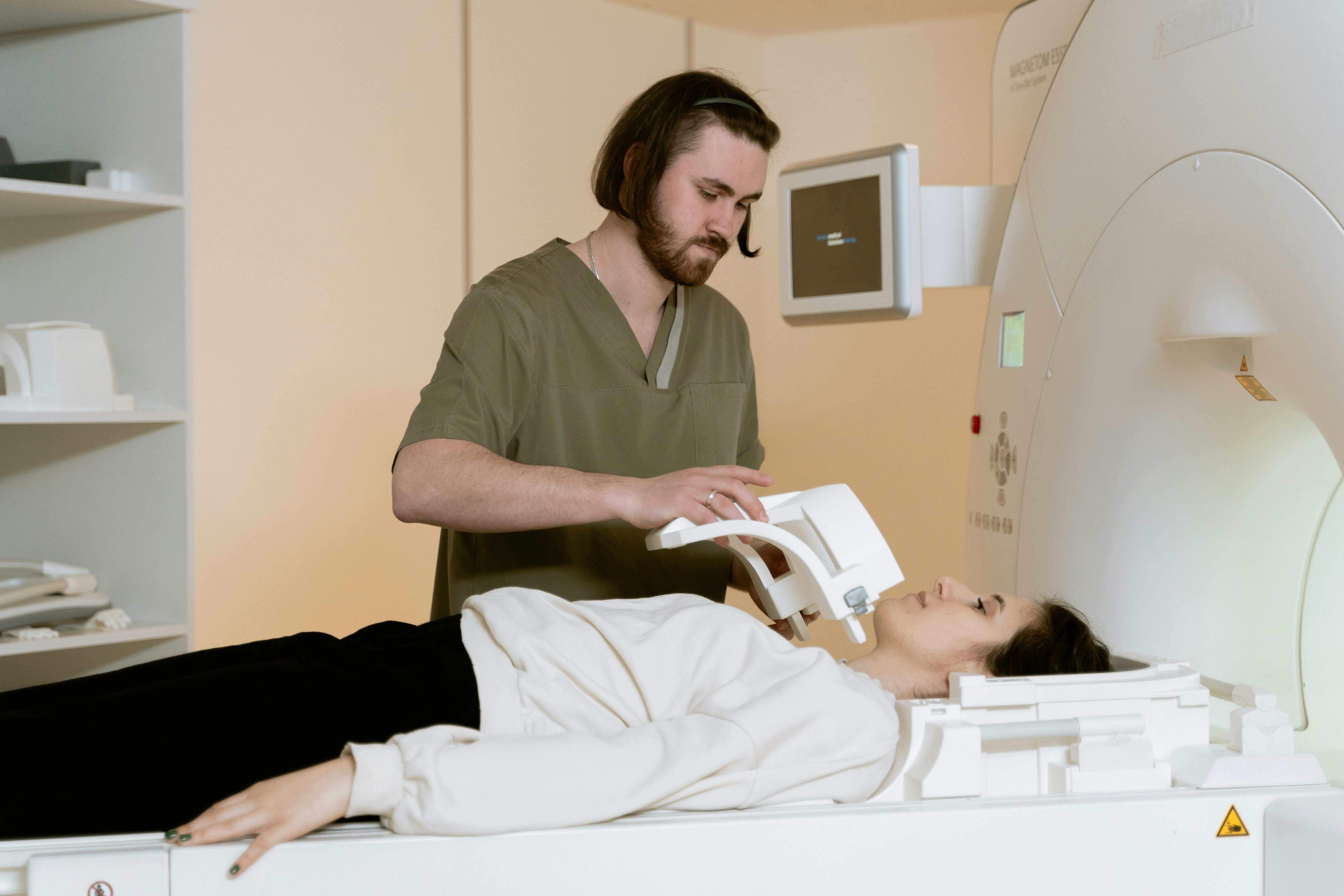
An MRI scanning procedure uses a powerful magnetic field and radio waves to produce detailed images of structures inside the body. Unlike X-rays and CT scans, MRI does not use ionising radiation, making it particularly useful for repeated imaging and for examining soft tissues such as the brain, spinal cord, muscles, ligaments, tendons and internal organs.
Understanding the MRI scanning procedure, benefits and costs in the UK can help patients know when an MRI may be recommended, how the scan is performed, what preparation is required and what costs may apply when accessing private imaging services.
What Is an MRI Scan?
Magnetic Resonance Imaging (MRI) is an advanced diagnostic imaging technique that creates highly detailed cross-sectional images of the body. During an MRI scan, the patient lies on a motorised table that moves into the centre of a large cylindrical scanner.
The scanner generates a strong magnetic field and uses radiofrequency energy to produce signals from hydrogen atoms within the body. A computer processes these signals to create detailed images that can be reviewed by a radiologist or another appropriately qualified clinician.
MRI can provide excellent visualisation of soft tissues and is therefore widely used when conventional X-rays or other imaging techniques cannot provide sufficient detail.
MRI Scanning Procedure in the UK
The exact procedure depends on the body area being examined and the clinical reason for the scan. However, most MRI appointments follow a similar process.
1. Referral and Clinical Assessment
An MRI may be requested by a GP, consultant, specialist, physiotherapist or other healthcare professional, depending on the circumstances and the imaging provider's requirements.
Before the examination, the clinical team may review the patient's symptoms, medical history and previous imaging. This helps determine the appropriate MRI protocol.
2. Safety Screening
MRI safety screening is an essential part of the procedure. Patients are normally asked about:
- Pacemakers and implanted cardiac devices
- Metal implants
- Cochlear implants
- Neurostimulators
- Surgical clips
- Previous surgery
- Metal fragments, particularly in the eyes
- Certain medication-delivery devices
- Pregnancy or possible pregnancy
- Kidney problems if contrast may be required
Patients should provide accurate information because the MRI environment contains a very strong magnetic field.
3. Preparing for the Scan
Depending on the examination, patients may be asked to change into suitable clothing and remove metal objects, including:
- Jewellery
- Watches
- Hair accessories containing metal
- Belts
- Coins
- Credit or bank cards
- Certain hearing aids
- Piercings where removal is required
Some MRI examinations require fasting, while others require no special preparation.
4. Positioning
The patient lies on the scanning table. The technologist positions the relevant part of the body correctly and may place a specialised device called a coil around or near the area being examined.
The coil helps receive the signals required to produce high-quality images.
5. Entering the MRI Scanner
The table moves slowly into the scanner. The patient must remain as still as possible because movement can reduce image quality.
The scanner produces loud knocking, tapping and buzzing sounds during image acquisition. Earplugs or headphones are commonly provided.
6. Image Acquisition
The MRI scanner takes a series of images using different sequences. Each sequence provides information about the tissues being examined.
The patient may hear changes in the scanner's sounds as different sequences are performed. The technologist remains able to communicate with the patient during the examination.
7. Contrast-Enhanced MRI
Some examinations require an MRI contrast agent to improve the visibility of particular tissues, blood vessels or abnormalities.
Contrast is not required for every MRI scan. If it is recommended, the imaging provider will assess relevant medical factors, including kidney function where appropriate.
8. Completion and Reporting
Once sufficient images have been obtained, the table moves out of the scanner. Patients can generally leave shortly afterwards unless additional monitoring or instructions are required.
The images are reviewed and interpreted by an appropriately qualified radiologist. The final report is normally sent to the referring clinician or provided according to the arrangement with the imaging provider.
Benefits of MRI Scanning
MRI offers several important advantages over other imaging techniques.
No Ionising Radiation
One of the major benefits of MRI is that it does not use ionising radiation. This distinguishes MRI from X-rays and CT scans.
This can make MRI particularly useful when detailed soft-tissue imaging is required or when repeated examinations are clinically appropriate.
Excellent Soft-Tissue Imaging
MRI provides exceptional contrast between many different types of soft tissue. It can therefore be particularly valuable for investigating:
- Brain conditions
- Spinal disorders
- Joint injuries
- Ligament and tendon problems
- Muscle injuries
- Nerve-related conditions
- Certain abdominal and pelvic conditions
- Blood vessels
- Some tumours and other abnormalities
Detailed Brain and Spine Imaging
MRI is widely used for neurological imaging because it can provide detailed views of the brain, spinal cord and surrounding structures.
Depending on the clinical question, MRI may help assess abnormalities associated with conditions such as multiple sclerosis, stroke, tumours, spinal cord disorders and degenerative changes.
Assessment of Sports and Musculoskeletal Injuries
MRI can be particularly useful for investigating injuries involving structures that may not be adequately assessed through standard X-rays.
For example, an MRI may help evaluate:
- ACL and other ligament injuries
- Meniscal injuries
- Rotator cuff problems
- Tendon injuries
- Cartilage damage
- Muscle tears
- Joint abnormalities
Detailed Cross-Sectional Images
MRI produces images in multiple planes, allowing clinicians to assess anatomy from different directions without physically repositioning the patient.
This can assist diagnosis and treatment planning.
How Long Does an MRI Scan Take?
MRI scanning times vary according to the body region and the number of sequences required.
A straightforward examination may take around 20–30 minutes, while more complex examinations can take 45–60 minutes or longer.
The total appointment can be longer than the actual scanning time because it may include registration, safety screening, changing, positioning and preparation.
Remaining still throughout the examination is important. Some scans may require patients to hold their breath briefly during particular sequences.
Is an MRI Scan Painful?
An MRI scan itself is generally painless. The patient simply needs to remain in the required position while the scanner obtains images.
Some people may find the experience uncomfortable because the scanner can feel enclosed and the equipment is noisy. Patients who experience claustrophobia should tell the imaging team before the examination.
Depending on the facility and examination, measures may be available to make the procedure more comfortable.
MRI Scan With or Without Contrast
MRI examinations can be performed either without contrast or with a contrast agent.
A non-contrast MRI may provide sufficient information for many musculoskeletal, neurological and spinal examinations.
Contrast-enhanced MRI may be recommended when additional information is required. The decision depends on the body area, symptoms, suspected condition and clinical question.
Contrast should not automatically be considered necessary simply because an MRI is being performed.
MRI Scan Cost in the UK
The MRI scan cost in the UK varies considerably depending on the provider, body region, whether contrast is required and whether the scan is performed privately or through the NHS.
For private MRI services, a single-region scan may commonly cost several hundred pounds, while more specialised examinations or multiple body regions can cost more.
Typical factors affecting private MRI pricing include:
| Cost Factor | Potential Impact |
|---|---|
| Body area | Different examinations require different protocols |
| Single or multiple regions | Additional regions generally increase the price |
| Contrast | May add to the total cost |
| Specialist MRI protocol | More complex examinations can cost more |
| Radiologist reporting | Reporting arrangements vary |
| Private clinic location | Prices differ between providers and regions |
| Urgent reporting | Faster reporting may attract additional fees |
Prices should therefore be checked directly with the chosen UK imaging provider rather than relying on a single national figure.
NHS MRI Costs
For eligible NHS patients, MRI imaging is generally provided as part of NHS care rather than being purchased as a standalone private scan.
The pathway depends on clinical need, referral arrangements and local NHS services. Waiting times can vary between areas and circumstances.
Patients considering private imaging should check exactly what is included in the quoted price, particularly whether the fee covers the scan, radiologist report and any required contrast.
MRI vs CT Scan: Which Is Better?
MRI and CT are not interchangeable. The appropriate examination depends on the clinical question.
| MRI | CT |
|---|---|
| Does not use ionising radiation | Uses X-rays |
| Excellent soft-tissue contrast | Excellent for many bone and acute injury assessments |
| Particularly useful for brain, spine, joints and soft tissues | Often valuable in emergency and trauma settings |
| Usually takes longer | Usually much faster |
| Can be challenging for some claustrophobic patients | Generally more open and quicker |
| Sensitive to patient movement | Often less affected by short examination times |
The decision between CT scan vs MRI should be based on the suspected condition, anatomy being assessed, urgency and clinical circumstances.
Who May Need an MRI Scan?
An MRI may be recommended when a clinician needs detailed information that cannot be obtained adequately through examination or other imaging.
Common indications include persistent or unexplained symptoms, suspected soft-tissue injuries, neurological symptoms, spinal problems, joint disorders and investigation or monitoring of certain diseases.
However, MRI is not automatically the best investigation for every symptom. Imaging should be selected according to the relevant clinical question.
MRI Safety Considerations
Although MRI does not use ionising radiation, it has important safety requirements because of the powerful magnetic field.
Metallic objects can become hazardous projectiles, and certain implants may malfunction or become unsafe in the scanner.
Patients should never assume that an implant is safe for MRI. The imaging team should be given complete information about implants and previous procedures so that compatibility can be assessed.
Patients should also tell the provider if they have concerns about claustrophobia, pregnancy or any medical condition relevant to the examination.
What to Check Before Booking a Private MRI in the UK
Before paying for an MRI scan, it is sensible to confirm:
- Which body region will be scanned?
- Is the requested MRI protocol appropriate for the clinical problem?
- Is contrast included or charged separately?
- Is a radiologist's report included in the price?
- How quickly will the report be available?
- Are there additional consultation or administration fees?
- What happens if the scan needs to be repeated because of technical problems?
- Does the provider have appropriate MRI safety procedures?
- How will the images and report be supplied?
- Will the results be sent to the referring healthcare professional?
Comparing the complete service rather than simply choosing the cheapest advertised MRI price can prevent unexpected costs.
MRI Scanning Procedure, Benefits and Costs UK: Key Points
The MRI scanning procedure, benefits and costs UK vary according to the examination and the provider, but the basic process involves safety screening, preparation, positioning, image acquisition and professional interpretation.
MRI's greatest advantages include its excellent soft-tissue detail and the fact that it does not use ionising radiation. It is particularly valuable for investigating the brain, spine, joints, muscles, ligaments, tendons and many other soft-tissue structures.
Private MRI costs in the UK can vary substantially, with price influenced by the body region, imaging protocol, contrast requirements, reporting and provider location. Before booking, patients should establish exactly what the quoted price includes and whether the scan has been appropriately requested for their clinical circumstances.

 English
 Arabic
 French
 Spanish
 Portuguese
 Deutsch
 Turkish
 Dutch
Dutch
 Italiano
 Romaian
 Portuguese (Brazil)
 Greek
Greek
