


CFA Course After Graduation: The Smartest First Step Into Indian Finance in 2025–26
Introduction: The Question Every Finance Graduate Is Asking
You have just completed — or are about to complete — your graduation. You want a career in finance. And someone has told you that the CFA course is the credential to pursue.
Before you register, pay the examination fee, and begin several months of preparation — you deserve a clear, honest answer to the most important questions. Is the CFA course the right first step immediately after graduation? What does it actually require? What career does it create for a fresh graduate? And are there situations where waiting — or choosing a different credential — makes more sense?
This blog gives you those answers directly — written specifically for fresh graduates in India who are making this decision in 2025–26.
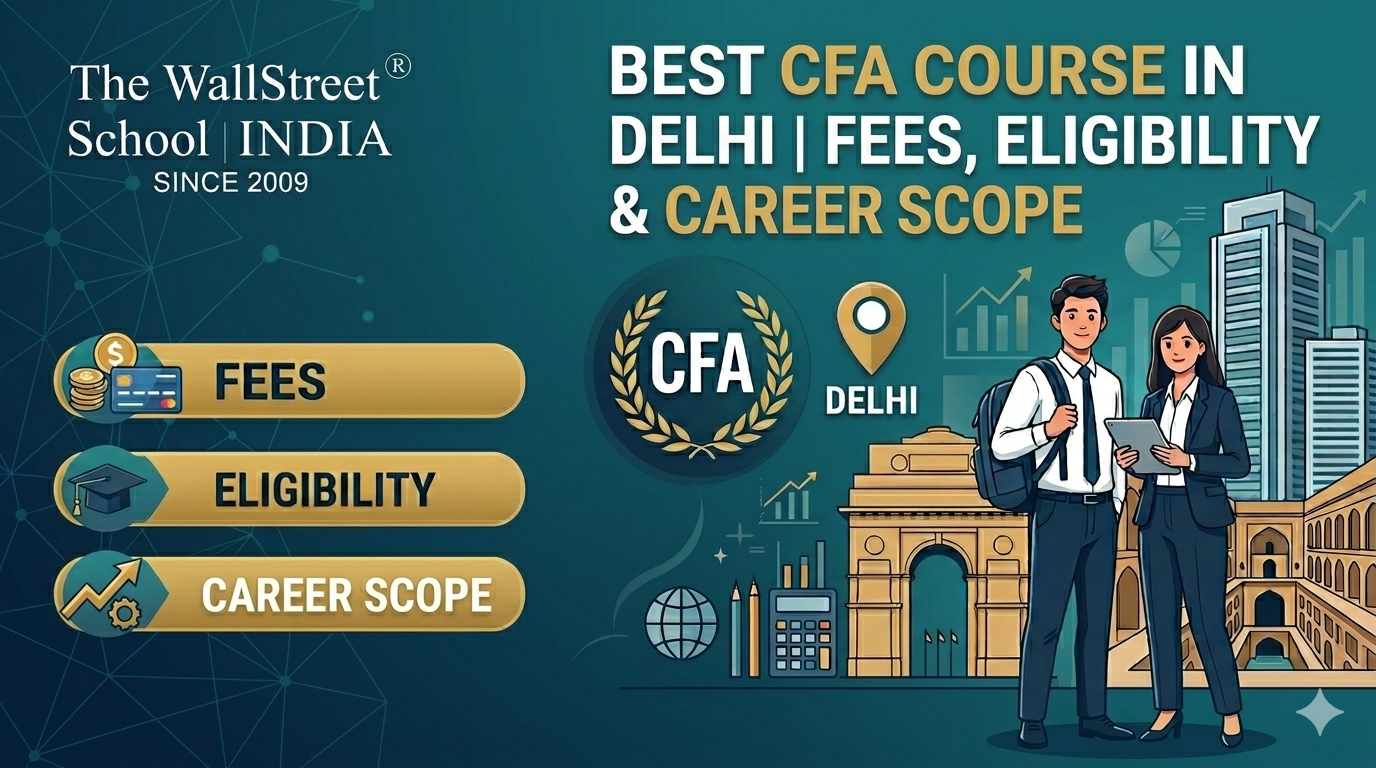
Are You Eligible for the CFA Course Right After Graduation?
Yes. Any candidate who has completed a bachelor's degree in any discipline — commerce, science, engineering, arts, law, or medicine — is eligible to register for the CFA course. The degree does not need to be in finance. It does not need to be from a particular tier of institution. Any undergraduate degree from a recognized university qualifies.
Final-year students can also register for Level 1 of the CFA course before completing their degree — allowing preparation to begin while you are still in your final semester, and the examination to be sat either during or immediately after graduation.
This broad eligibility is one of the most important features of the CFA course for Indian graduates — it means that a B.Com student, a BBA student, an engineering graduate, or a science graduate all start from the same eligibility position. The credential is genuinely open to motivated candidates from any academic background.
Should You Start the CFA Course Immediately After Graduation?
The honest answer depends on what you want to do with it. Here is the direct breakdown:
Start immediately if: Your career goal is clearly in investment management, equity research, portfolio management, or buy-side finance. The earlier you begin the CFA course, the earlier you complete it — and every month of charterholder status compounds into career progression and salary premium. Starting at 21 or 22 and clearing Level 1 within a year positions you to reach charterholder status in your mid-to-late twenties — at a point in your career when peers without the credential are still at junior analyst level.
Start immediately if: You want to differentiate yourself from peers who have the same academic background as you. Fresh graduates from commerce and business programs in India face significant competition in the finance job market. Clearing Level 1 of the CFA course before your job search begins signals commitment, analytical foundation, and examination discipline that most peers cannot match.
Consider waiting if: You are not yet certain about your career direction. The CFA course is a significant investment of time, money, and effort — and it delivers its strongest returns for candidates who are using it to build specific investment management careers. If you are still exploring whether finance is the right field for you, spending time in a finance internship or entry-level role to confirm your direction before committing to the CFA course may produce a better outcome.
Consider pairing it if: You want the fastest possible entry into finance jobs. A CFA course combined with a financial modeling course — pursued in parallel or in sequence — creates the strongest profile for fresh graduates targeting investment banking, equity research, and transaction advisory roles. The CFA builds analytical depth and credential recognition. The financial modeling course builds the technical execution skill that Indian finance employers test in every first round interview.
What the CFA Course Demands From a Fresh Graduate
Understanding what the CFA course specifically requires from a fresh graduate — before work experience, before professional context, before financial modeling practice in a real job — helps you prepare with realistic expectations.
Study hours. The CFA Institute recommends 300 hours per level. For fresh graduates who can study full-time — without the competing demands of a full-time job — this is more achievable than for working professionals. A fresh graduate who dedicates six to eight hours per day to CFA course preparation can accumulate 300 hours in approximately six to eight weeks of intensive study. Most candidates spread preparation across four to five months at a more sustainable pace of two to three hours daily.
Accounting and finance foundations. Fresh graduates from commerce backgrounds — B.Com, BBA — arrive at the CFA course with foundational accounting and economics knowledge that gives them a head start in financial statement analysis and quantitative methods sections. Engineering and science graduates arrive with stronger mathematical foundations that are directly applicable to quantitative methods and derivatives. Both profiles have genuine advantages — and genuine gaps that systematic preparation addresses.
Investment management context. This is the area where fresh graduates most commonly feel at a disadvantage — because many CFA course concepts are most intuitively understood with professional investment experience as context. The solution is not to wait for experience before studying — it is to actively supplement CFA course preparation with reading that builds investment market awareness. Financial newspapers, company annual reports, mutual fund factsheets, and equity research reports all build the professional context that makes CFA course concepts more accessible and more retainable.
What Jobs Does the CFA Course Open for Fresh Graduates in India?
The career impact of the CFA course for fresh graduates is progressive — building from Level 1 clearance through charter completion.
After clearing Level 1: Entry-level roles in equity research, financial analysis, and risk analysis become accessible at domestic brokerages, KPO research firms, credit rating agencies, and Big Four financial advisory practices. Typical entry-level compensation ranges from ₹5 to ₹8 lakh per annum — meaningfully above what fresh graduates without any professional credential typically access in generalist finance roles.
After clearing Level 2: Mid-level analyst roles at investment banks, asset management companies, and global research houses open up. Level 2 clearance is treated by serious investment employers as a meaningful analytical capability signal — creating access to roles that would require two to three years of work experience without the credential.
After earning the CFA charter: Portfolio management associate roles, senior equity research analyst positions, and investment analyst roles at PE funds and institutional asset managers become accessible. The charter — combined with the work experience accumulated during the examination journey — positions fresh graduates who started early as genuinely competitive candidates for the highest-quality roles in Indian investment finance in their late twenties.
The career trajectory for a fresh graduate who begins the CFA course immediately after graduation — clears all three levels within three to four years while building relevant work experience concurrently — is among the most competitive and highest-compensating available in Indian finance without requiring an MBA.
Common Mistakes Fresh Graduates Make When Pursuing the CFA Course
Treating it as a box to tick rather than a skill to develop. The CFA course is most valuable when the knowledge it develops is genuinely retained and applied — not when it is passed through examination performance alone. Fresh graduates who rush through the curriculum to clear each level as quickly as possible often find that the analytical depth the credential is supposed to signal is not present in their actual work. Employers can test for this gap — and they do.
Neglecting financial modeling alongside the CFA course. The CFA course develops analytical judgment. Financial modeling develops technical execution skill. Indian finance employers test both. Fresh graduates who complete the CFA course without developing genuine financial modeling proficiency consistently underperform in technical interview rounds at investment banks, equity research firms, and PE funds — where modeling tests are standard first-round filters.
Not starting the work experience requirement early enough. The CFA charter requires 4,000 hours of relevant professional experience — in addition to passing all three levels. Fresh graduates who delay entering relevant finance roles until after completing all three examinations discover that the charter is further away than they expected. The most effective approach is to enter a relevant finance role — equity research, financial analysis, investment advisory — as soon as possible after clearing Level 1, allowing work experience to accumulate concurrently with Level 2 and Level 3 preparation.
How Wall Street School Supports Fresh CFA Course Candidates
Wall Street School's CFA course coaching programs are designed for both fresh graduates and working professionals — with curriculum delivery, scheduling formats, and preparation structures that adapt to where each candidate is starting from.
For fresh graduates beginning the CFA course after graduation, the program provides the foundational academic support that builds financial statement analysis and quantitative methods competency from the ground up — alongside the investment market context that makes the curriculum genuinely meaningful rather than abstractly conceptual.
The placement support offered alongside CFA course coaching helps fresh graduates identify the most relevant entry-level roles to target during and after their preparation — ensuring that the work experience requirement is being met concurrently with examination progress rather than discovered as a gap after the examinations are complete.
Conclusion
The CFA course after graduation is one of the smartest career decisions a finance-oriented Indian graduate can make in 2025–26 — for the right candidate, with the right career goals, and with realistic expectations about what the preparation requires and what the credential delivers.
It is not a passive credential. It is not a box to tick. It is a multi-year analytical development journey that produces, for candidates who engage with it seriously, one of the most respected and most globally recognized professional identities in investment finance.
For fresh graduates in India who know they want to build careers in investment management, equity research, or buy-side finance — starting the CFA course now is the clearest, most direct, and most cost-effective path to the career they are targeting.
Begin your CFA course preparation with Wall Street School — and start building the investment finance career you are working toward from the very first day after graduation.

 Arabic
 French
 Spanish
 Portuguese
 Deutsch
 Turkish
 Dutch
Dutch
 Italiano
 Russian
 Romaian
 Portuguese (Brazil)
 Greek
Greek
