Modern businesses rely on technology to manage daily operations, improve productivity, and create better experiences for employees. While many companies use ready-made software solutions, these tools often come with limitations. They may include unnecessary features, lack important functions, or fail to match the exact workflow of a business.
This is where custom internal tools become valuable. These solutions are designed specifically for a company’s internal processes, helping teams complete tasks faster, organize information efficiently, and reduce operational challenges.
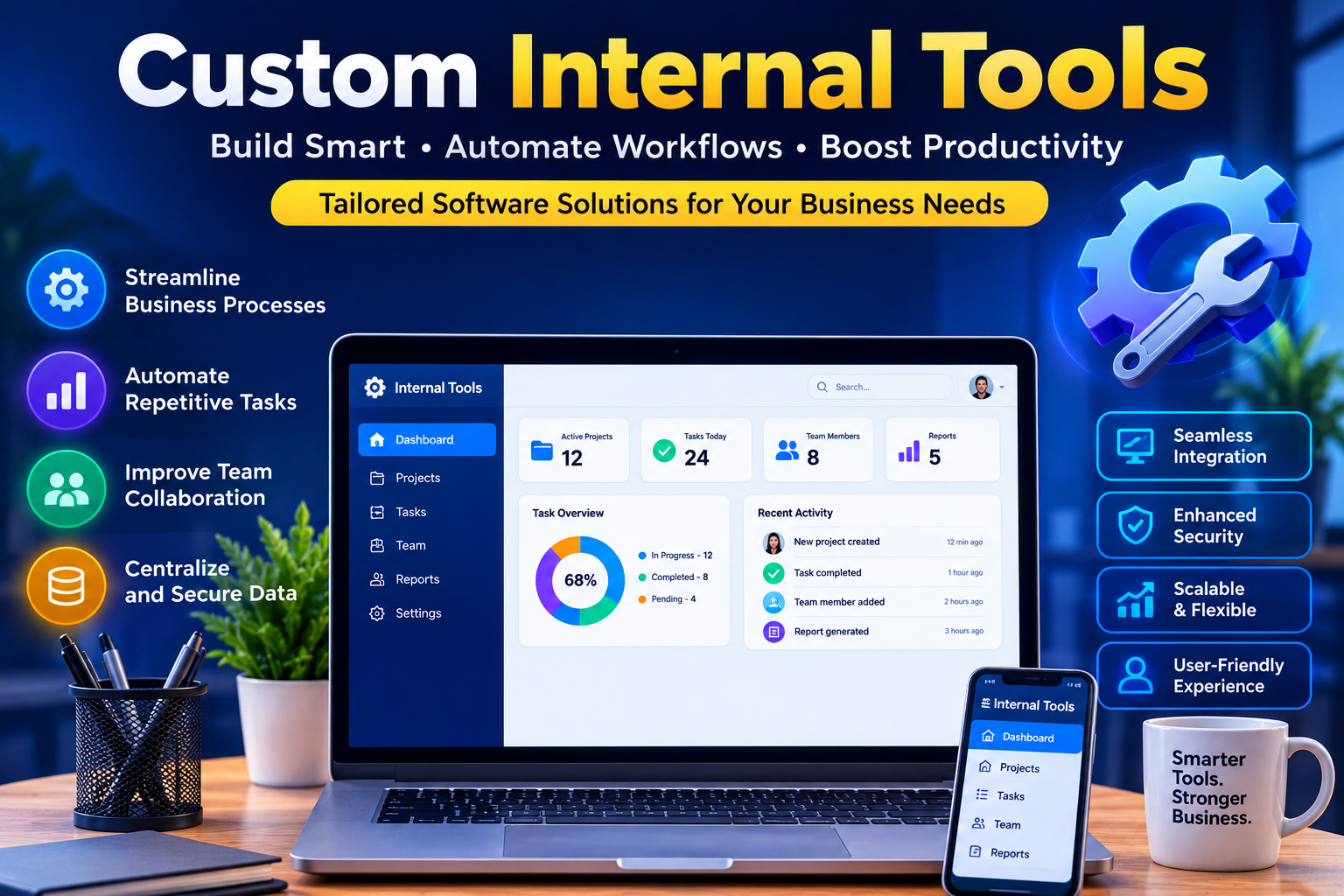
Custom internal tools are not built for customers or public users. Instead, they are created for employees, managers, and internal teams who need better ways to handle everyday responsibilities. From managing workflows and tracking projects to organizing business data and automating repetitive tasks, these tools can transform how a company operates.
What Are Custom Internal Tools?
Custom internal tools are software applications created specifically for a business’s internal needs. Unlike general software platforms, these tools are designed around a company’s unique processes, goals, and challenges.
A business may need a tool to manage employee requests, monitor operations, organize customer information, automate reports, or simplify communication between departments. Instead of changing existing processes to fit a software product, companies can build a solution that fits their existing workflow.
These tools can be simple dashboards, automated systems, management platforms, internal applications, or complete business operation systems. Their main purpose is to make internal work easier, faster, and more organized.
Why Businesses Need Custom Internal Tools
Every business develops its own methods of working. However, standard software solutions are designed for a broad audience and may not address specific business requirements.
Custom internal tools help companies overcome these challenges by providing solutions based on their actual needs.
They allow businesses to:
-
Improve workflow efficiency
-
Reduce manual tasks
-
Organize important information
-
Minimize human errors
-
Improve communication between teams
-
Create better reporting systems
-
Save employees valuable time
When employees spend less time managing repetitive tasks, they can focus on activities that create more value for the business.
Common Types of Custom Internal Tools
Businesses use custom internal tools in many different ways depending on their industry and operational needs.
Internal Management Systems
Companies often create internal management platforms to handle daily activities. These systems can help teams manage tasks, assign responsibilities, monitor progress, and keep important information in one place.
A custom management system ensures that employees have access to the features they actually need instead of dealing with unnecessary options.
Employee Workflow Tools
Many organizations create internal workflow tools to improve employee productivity. These platforms can manage approvals, requests, internal communication, and task automation.
For example, a company may create a system where employees can submit requests, track progress, and receive updates without relying on emails or manual follow-ups.
Data Management Tools
Businesses collect large amounts of information every day. Managing this data through spreadsheets or disconnected systems can become difficult.
Custom data management tools allow companies to store, organize, analyze, and access information more effectively.
Reporting and Analytics Dashboards
Decision-making depends on accurate information. Custom dashboards allow businesses to view important data in a clear and useful format.
Managers can monitor performance, identify problems, and make better decisions using real-time information.
Automation Tools
Repetitive tasks can consume significant employee time. Custom automation tools help businesses reduce manual work by handling routine processes automatically.
Automation can improve accuracy and allow teams to focus on more important responsibilities.
Benefits of Building Custom Internal Tools
Designed Around Your Business Needs
The biggest advantage of custom internal tools is that they are created specifically for a company. Every feature can be developed according to the business workflow.
Instead of adjusting operations to match software limitations, companies get technology that supports their existing processes.
Improved Employee Productivity
Employees work more efficiently when they have tools that simplify their responsibilities. Custom solutions remove unnecessary steps and make important tasks easier to complete.
A well-designed internal tool can improve collaboration and reduce time spent searching for information.
Better Control Over Business Data
Custom internal tools give businesses more control over their information. Companies can decide how data is collected, stored, accessed, and managed.
This provides better visibility and helps maintain organized business operations.
Scalability for Future Growth
Businesses change over time. A custom internal tool can grow with the organization by adding new features and improving existing functions.
Unlike fixed software solutions, custom tools can adapt to future requirements.
Increased Operational Efficiency
When processes become more organized, businesses can operate more smoothly. Custom tools help remove bottlenecks, improve communication, and create a more efficient working environment.
Custom Internal Tools vs Ready-Made Software
Many businesses wonder whether they should invest in custom solutions or use existing software.
Ready-made software can be useful for companies with common requirements. It is usually faster to implement and may provide many standard features.
However, businesses with unique workflows often find that generic software creates limitations. They may need multiple platforms to complete different tasks, which can create confusion and inefficiency.
Custom internal tools provide a solution designed specifically for the company. They focus only on the features that matter, creating a more personalized and efficient experience.
The right choice depends on business goals, operational complexity, budget, and long-term plans.
How Custom Internal Tools Improve Business Processes
A successful internal tool begins with understanding existing challenges. Businesses need to identify which processes are slow, complicated, or require too much manual effort.
After identifying these areas, a custom solution can be designed to simplify operations.
The development process usually focuses on:
-
Understanding business requirements
-
Designing an easy-to-use interface
-
Creating useful features
-
Testing the tool with employees
-
Improving the system based on feedback
A good internal tool should not make work more complicated. It should create a smoother experience for employees.
Important Features of Effective Internal Tools
A successful custom internal tool usually includes features that support usability and efficiency.
Some important qualities include:
User-Friendly Design
Employees should be able to understand and use the tool without unnecessary training. A simple interface improves adoption and productivity.
Security and Access Control
Internal tools often contain sensitive business information. Proper security features help ensure that only authorized users can access specific data.
Integration Capabilities
Businesses often use multiple software systems. Custom tools should be able to connect with existing platforms to create a smoother workflow.
Flexibility
A good internal tool should allow future improvements. Businesses should be able to update features as their needs change.
Challenges of Developing Custom Internal Tools
Although custom tools provide many advantages, businesses should consider some challenges.
Development requires careful planning, clear goals, and proper maintenance. Without understanding business needs, a tool may fail to deliver the expected results.
Companies should also consider employee training, security requirements, and ongoing improvements.
A successful custom internal tool is not just about technology. It is about creating a solution that genuinely improves the way people work.
How to Choose the Right Approach for Custom Internal Tools
Before creating an internal tool, businesses should evaluate their current problems and goals.
Important questions include:
-
Which tasks take the most time?
-
What processes create frequent problems?
-
Which information is difficult to manage?
-
How can employees work more efficiently?
Clear answers help create a tool that provides real business value.
Companies should focus on solving important operational challenges instead of adding unnecessary features.
Frequently Asked Questions
What are custom internal tools?
Custom internal tools are software solutions built specifically for a company’s internal operations. They help employees manage workflows, organize data, automate tasks, and improve productivity.
Why should a business build custom internal tools?
Businesses build custom internal tools when existing software does not fully meet their needs. These tools provide personalized features, better efficiency, and improved control over internal processes.
Are custom internal tools only useful for large companies?
No. Businesses of different sizes can benefit from custom internal tools. Small companies can use them to improve organization, while larger organizations can use them to manage complex operations.
How long does it take to create a custom internal tool?
The development timeline depends on the complexity, features, and requirements of the business. Simple tools may require less time, while advanced systems need more planning and development.
Can custom internal tools connect with existing software?
Yes. Many custom internal tools are designed to integrate with existing business systems to create smoother workflows and better data management.
Are custom internal tools secure?
Custom internal tools can include security features based on business requirements. Proper access controls and security practices help protect important information.
Can internal tools be updated in the future?
Yes. One major benefit of custom solutions is flexibility. Businesses can improve and expand their tools as their needs change.
Conclusion
Custom internal tools provide businesses with a powerful way to improve productivity, simplify operations, and create better workflows. Instead of depending on software that may not match their requirements, companies can build solutions designed around their specific challenges.
From workflow management and data organization to automation and reporting, custom internal tools help teams work smarter and more efficiently. When properly planned and developed, these solutions become valuable assets that support business growth and long-term success.
For businesses looking to improve internal processes, reduce unnecessary complexity, and create a more organized working environment, custom internal tools offer a practical and flexible solution.




 English
 French
 Spanish
 Portuguese
 Deutsch
 Turkish
 Dutch
Dutch
 Italiano
 Russian
 Romaian
 Portuguese (Brazil)
 Greek
Greek
