


What Is an Accredited Inspection Body? Everything You Need to Know
Businesses across industries depend on inspections to verify that products, equipment, materials, and processes meet specified requirements before they are delivered, installed, or put into operation. Whether it is a manufacturing facility, an infrastructure project, an oil and gas installation, or an export shipment, inspections help identify potential issues before they become costly problems.
However, not all inspection organizations operate at the same level of competence and impartiality. This is where an accredited inspection body becomes important. Accreditation demonstrates that an inspection organization has been independently assessed and found competent to perform inspection activities according to internationally recognized standards.
In this guide, you'll learn what an accredited inspection body is, how accreditation works, why it matters, and what businesses should consider when selecting an inspection partner.
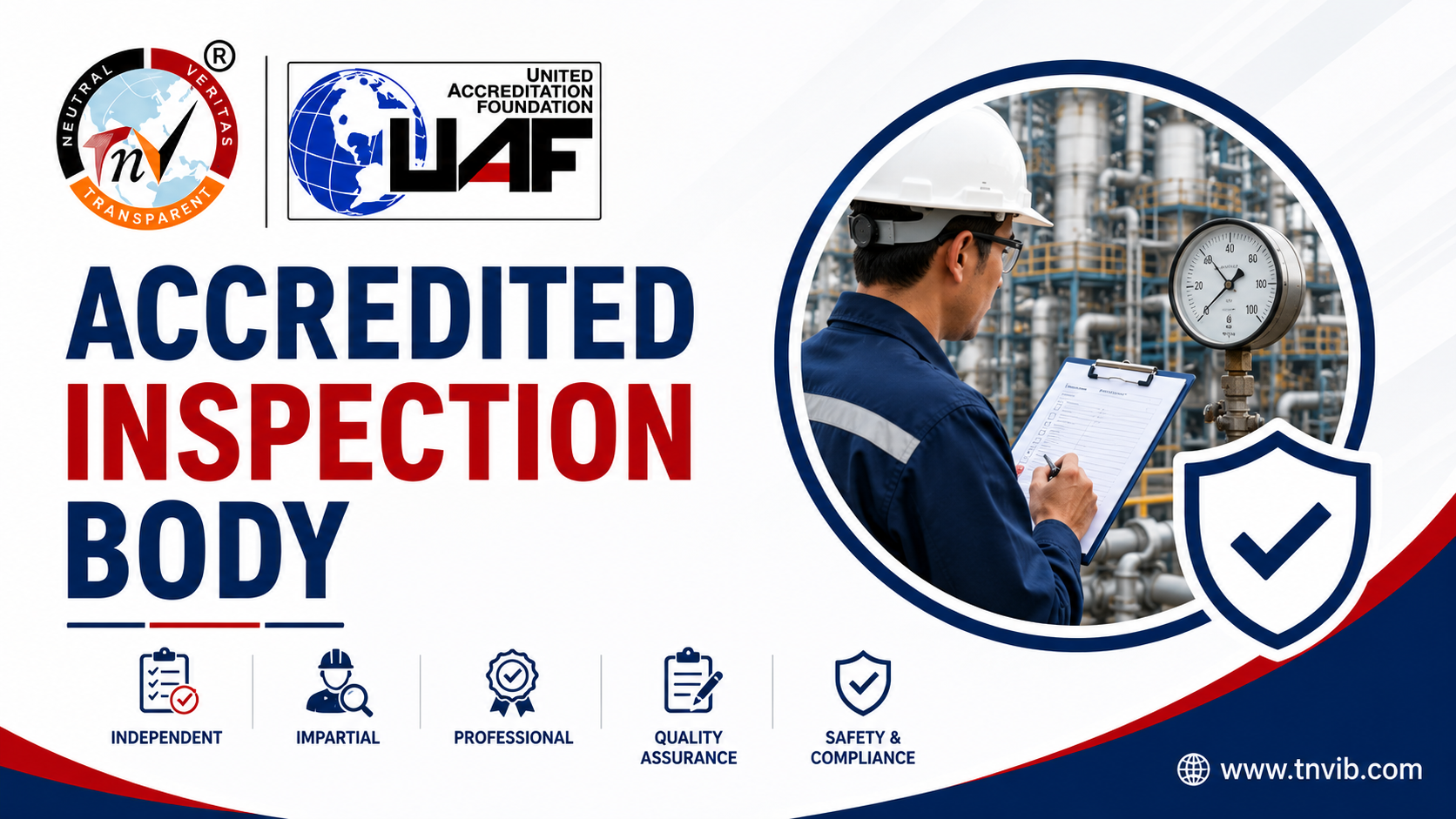
What Is an Accredited Inspection Body?
An accredited inspection body is an organization that has been formally recognized by an accreditation body as competent to perform specific inspection activities. Accreditation confirms that the inspection body operates according to internationally accepted standards and follows documented procedures to ensure consistent, impartial, and technically sound inspections.
Rather than relying solely on claims or experience, accreditation provides independent verification that the inspection body has demonstrated competence in carrying out inspections within its approved scope.
Accredited inspection bodies are commonly involved in verifying:
-
Industrial equipment
-
Manufacturing processes
-
Raw materials
-
Finished products
-
Infrastructure projects
-
Construction activities
-
Mechanical and electrical systems
-
Supplier facilities
-
Safety-related installations
What Is Accreditation?
Accreditation is a formal evaluation process carried out by an independent accreditation body. During this process, the inspection organization is assessed to determine whether it meets the requirements of internationally recognized standards.
The assessment typically covers:
-
Technical competence
-
Qualifications of inspectors
-
Inspection procedures
-
Equipment calibration
-
Quality management practices
-
Impartiality
-
Confidentiality
-
Record keeping
-
Reporting methods
-
Continuous improvement processes
Only organizations that successfully demonstrate compliance within the defined scope are granted accreditation.
Why Accreditation Matters
Choosing an accredited inspection body offers greater confidence in the quality and reliability of inspection services.
Some of the key benefits include:
Independent Verification
Accreditation confirms that an external authority has evaluated the inspection body's competence rather than relying on self-declared claims.
Improved Confidence
Customers, suppliers, regulators, and project owners have greater confidence in inspection results that come from accredited organizations.
Consistent Inspection Practices
Accreditation requires documented inspection procedures that promote consistency across projects, inspectors, and locations.
Technical Competence
Inspectors working within accredited organizations are expected to possess appropriate qualifications, training, and technical expertise.
Risk Reduction
Reliable inspections help identify defects, non-conformities, and quality issues before products are delivered or installed.
Understanding ISO/IEC 17020
The international standard most commonly associated with inspection bodies is ISO/IEC 17020 – Conformity Assessment – Requirements for the Operation of Various Types of Bodies Performing Inspection.
An ISO 17020 accredited inspection body has been assessed against this internationally recognized standard.
ISO/IEC 17020 focuses on several critical areas, including:
-
Independence
-
Impartiality
-
Competence
-
Inspection methodology
-
Personnel qualifications
-
Management systems
-
Confidentiality
-
Reporting
-
Handling complaints and appeals
This framework helps ensure that inspection activities are carried out professionally and consistently.
Types of Inspection Bodies
ISO/IEC 17020 classifies inspection bodies according to their level of independence.
Type A Inspection Body
A Type A inspection body is fully independent from the organizations involved in the design, manufacture, supply, installation, purchase, ownership, use, or maintenance of the items being inspected.
Because of this independence, Type A inspection bodies are often selected for third-party inspections where impartiality is essential.
Type B Inspection Body
A Type B inspection body forms part of an organization but provides inspection services only to its parent organization.
Its activities are separated from other organizational functions to maintain objectivity.
Type C Inspection Body
A Type C inspection body may provide inspection services to both internal and external customers.
Although it is part of an organization involved in design, manufacturing, or maintenance, safeguards are expected to maintain impartiality.
What Services Does an Accredited Inspection Body Provide?
The exact services depend on the organization's accredited scope, but common inspection activities include:
Vendor Inspection
Verification of equipment and products at supplier facilities before shipment.
Supplier Inspection
Assessment of supplier capability and product quality during manufacturing.
Factory Inspection
Evaluation of manufacturing processes, quality systems, and production readiness.
Product Inspection
Inspection of finished products against technical specifications and customer requirements.
Material Inspection
Verification of raw materials and components before production or installation.
During Production Inspection
Monitoring manufacturing processes to identify quality issues early.
Final Inspection
Inspection of completed products before dispatch or installation.
Pre-Shipment Inspection
Verification of product quality, quantity, packaging, marking, and documentation before shipment.
Installation Inspection
Inspection of equipment or systems after installation to verify compliance with project requirements.
Industries That Commonly Use Accredited Inspection Bodies
Independent inspections are widely used in industries such as:
-
Manufacturing
-
Oil and gas
-
Petrochemical
-
Construction
-
Infrastructure
-
Power generation
-
Renewable energy
-
Heavy engineering
-
Steel fabrication
-
Automotive
-
Aerospace
-
Pharmaceutical manufacturing
-
Food processing
-
Consumer goods
-
Marine and offshore
Each sector relies on inspections to reduce quality risks and improve operational reliability.
Why Businesses Choose Accredited Inspection Bodies
Businesses increasingly prefer accredited inspection organizations because they provide independent assurance that inspections are performed according to recognized standards.
Key advantages include:
Better Quality Assurance
Independent inspections help identify defects before products reach customers.
Reduced Business Risk
Early detection of issues can minimize rework, delays, warranty claims, and product failures.
Improved Supplier Performance
Regular inspections encourage suppliers to maintain consistent quality standards.
Enhanced Customer Confidence
Independent verification strengthens confidence in products and manufacturing processes.
International Recognition
Many organizations operating in global supply chains prefer working with internationally recognized inspection bodies.
Accredited vs Non-Accredited Inspection Bodies
Although both may provide inspection services, there are important differences.
|
Accredited Inspection Body |
Non-Accredited Inspection Body |
|
Independently assessed |
Independent assessment may not exist |
|
Demonstrates technical competence |
Competence may rely on internal claims |
|
Operates under recognized standards |
Procedures may vary |
|
Regular surveillance assessments |
Limited external oversight |
|
Defined scope of accreditation |
Scope may not be independently verified |
|
Greater confidence in impartiality |
Independence may be difficult to demonstrate |
Accreditation does not eliminate every risk, but it provides an established framework for competence and continual oversight.
How Accreditation Supports Conformity Assessment
Inspection is one part of the broader conformity assessment process.
A conformity assessment inspection body evaluates whether products, equipment, systems, or processes comply with specified requirements, such as:
-
Engineering specifications
-
Customer requirements
-
Industry standards
-
Technical drawings
-
Purchase orders
-
Regulatory requirements
Inspection findings provide valuable information for decision-making before products are accepted, shipped, or installed.
How to Verify an Inspection Body's Accreditation
Before selecting an inspection partner, organizations should perform appropriate due diligence.
Consider checking:
-
Accreditation status
-
Scope of accreditation
-
Experience within your industry
-
Technical expertise
-
Qualified inspectors
-
Geographic coverage
-
Reporting quality
-
Inspection methodology
-
Independence and impartiality
It is important to confirm that the accreditation covers the specific inspection activities relevant to your project.
Choosing the Right Accredited Inspection Body
Accreditation is an important factor, but businesses should also evaluate:
-
Industry-specific experience
-
Technical capabilities
-
Availability of qualified inspectors
-
Communication and responsiveness
-
Quality of inspection reports
-
Project turnaround time
-
Ability to work across multiple locations
-
Understanding of customer requirements
Selecting an inspection partner with both accreditation and relevant technical expertise helps improve project outcomes.
Common Applications of Accredited Inspection Bodies
Accredited inspection bodies are commonly engaged for:
-
Vendor inspections
-
Supplier audits
-
Manufacturing inspections
-
Quality inspections
-
Factory inspections
-
Mechanical inspections
-
Electrical inspections
-
Welding inspections
-
Material verification
-
Construction inspections
-
Infrastructure projects
-
Export quality inspections
These inspections help organizations improve quality control throughout the supply chain.
Conclusion
An accredited inspection body provides independent verification that inspections are performed by a competent organization operating under internationally recognized standards. Accreditation supports consistency, impartiality, and technical competence, giving businesses greater confidence in inspection outcomes.
Whether your organization operates in manufacturing, engineering, construction, energy, or international trade, working with an accredited inspection body can help improve quality assurance, reduce project risks, and support informed decision-making.
By understanding what accreditation means and how it contributes to reliable inspections, businesses can choose inspection partners that align with their technical, contractual, and operational requirements.
Frequently Asked Questions (FAQs)
1. What is an accredited inspection body?
An accredited inspection body is an organization that has been independently assessed and recognized as competent to perform specific inspection activities according to internationally accepted standards.
2. What does accreditation mean for an inspection body?
Accreditation means the inspection body has demonstrated technical competence, impartiality, and compliance with recognized requirements within its approved scope of inspection activities.
3. What is ISO/IEC 17020?
ISO/IEC 17020 is an international standard that specifies the requirements for organizations performing inspection activities, with a focus on competence, consistency, and impartiality.
4. What is the difference between a Type A, Type B, and Type C inspection body?
A Type A inspection body is fully independent, a Type B inspection body serves only its parent organization, and a Type C inspection body may provide inspection services to both internal and external clients while maintaining safeguards for impartiality.
5. Which industries use accredited inspection bodies?
Industries such as manufacturing, oil and gas, construction, infrastructure, power generation, renewable energy, pharmaceuticals, automotive, and heavy engineering commonly rely on accredited inspection bodies.
6. How can I verify an inspection body's accreditation?
You can review the inspection body's accreditation certificate, confirm the scope of accreditation, and verify its status through the relevant accreditation body.
7. Why should businesses choose an accredited inspection body?
Accredited inspection bodies provide greater confidence through independent verification, qualified inspectors, documented procedures, and inspections carried out according to internationally recognized standards.
8. Does accreditation guarantee that products are defect-free?
No. Accreditation demonstrates the competence of the inspection body and the quality of its inspection process, but it does not guarantee that every inspected product or project will be completely free of defects.

 English
 Arabic
 Spanish
 Portuguese
 Deutsch
 Turkish
 Dutch
Dutch
 Italiano
 Russian
 Romaian
 Portuguese (Brazil)
 Greek
Greek
