


Why Room Acoustic Treatment Matters More Than You Think
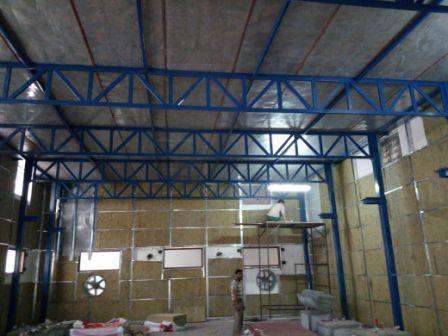
Ever walked into a room and felt like every word bounced off the walls twice before reaching you? That's not bad luck — it's untreated sound. Room acoustic treatment is the practical fix for spaces where echo, reverb, or muddled speech make everyday work harder than it should be.
What Is Room Acoustic Treatment, Really?
At its core, room acoustic treatment means controlling how sound waves behave inside a space. Hard surfaces like glass, concrete, and drywall reflect sound instead of absorbing it. The result? Reverberation, standing waves, and that tinny, hollow feel you get in empty conference rooms or large industrial halls. Treating a room isn't about blocking noise from outside — that's soundproofing. It's about shaping the sound inside the room so speech stays clear and background noise doesn't pile up.
Why It's Not Optional in Commercial and Industrial Spaces
Offices, auditoriums, control rooms, and production floors all suffer when acoustics are ignored. Poor room acoustic treatment leads to listener fatigue, miscommunication during meetings, and in industrial settings, it can even mask warning alarms or machine irregularities. Getting acoustics right isn't cosmetic — it directly affects productivity, safety, and comfort.
Ecotone Systems has spent years engineering acoustic solutions for exactly these environments. From manufacturing plants to office campuses, Ecotone Systems designs treatment systems that are built for real-world noise, not just showroom demos.
The Building Blocks: Absorption, Diffusion, and Placement
Effective room acoustic treatment usually combines three elements:
- Absorption panels – these soak up excess sound energy, especially in the mid and high frequencies where speech clarity lives.
- Bass traps – corners tend to collect low-frequency buildup, and bass traps prevent that boomy, muddy sound.
- Diffusers – instead of absorbing sound, diffusers scatter it evenly, which keeps a room from feeling acoustically "dead."
Getting the placement wrong wastes money and effort. That's why a proper acoustic survey should always come before installation — measuring reverberation time, identifying reflection points, and mapping out where energy actually needs to be absorbed or diffused.
Custom Engineering Beats Off-the-Shelf Foam
A lot of people assume slapping a few foam tiles on the wall solves the problem. It rarely does. Real room acoustic treatment depends on the room's dimensions, its use case, and the frequency range that needs controlling. Ecotone Systems approaches every project this way — starting with the room's actual acoustic behavior rather than a generic template.
This is where Ecotone Systems' manufacturing background becomes useful: panels, baffles, and diffusers engineered to exact specifications instead of trimmed from a catalog.
Getting It Right the First Time
Room acoustics aren't something you fix by trial and error — reworking a poorly treated room costs more than doing it properly from the start. Whether it's a boardroom, a studio, or a factory floor, thoughtful room acoustic treatment changes how a space actually feels to work in. And with a manufacturer like Ecotone Systems handling the engineering, that first attempt is far more likely to be the last one you need.

 English
 Arabic
 French
 Portuguese
 Deutsch
 Turkish
 Dutch
Dutch
 Italiano
 Russian
 Romaian
 Portuguese (Brazil)
 Greek
Greek
