


HDPE Root Barrier Ensuring Reliable Root Control and Landscape Protection
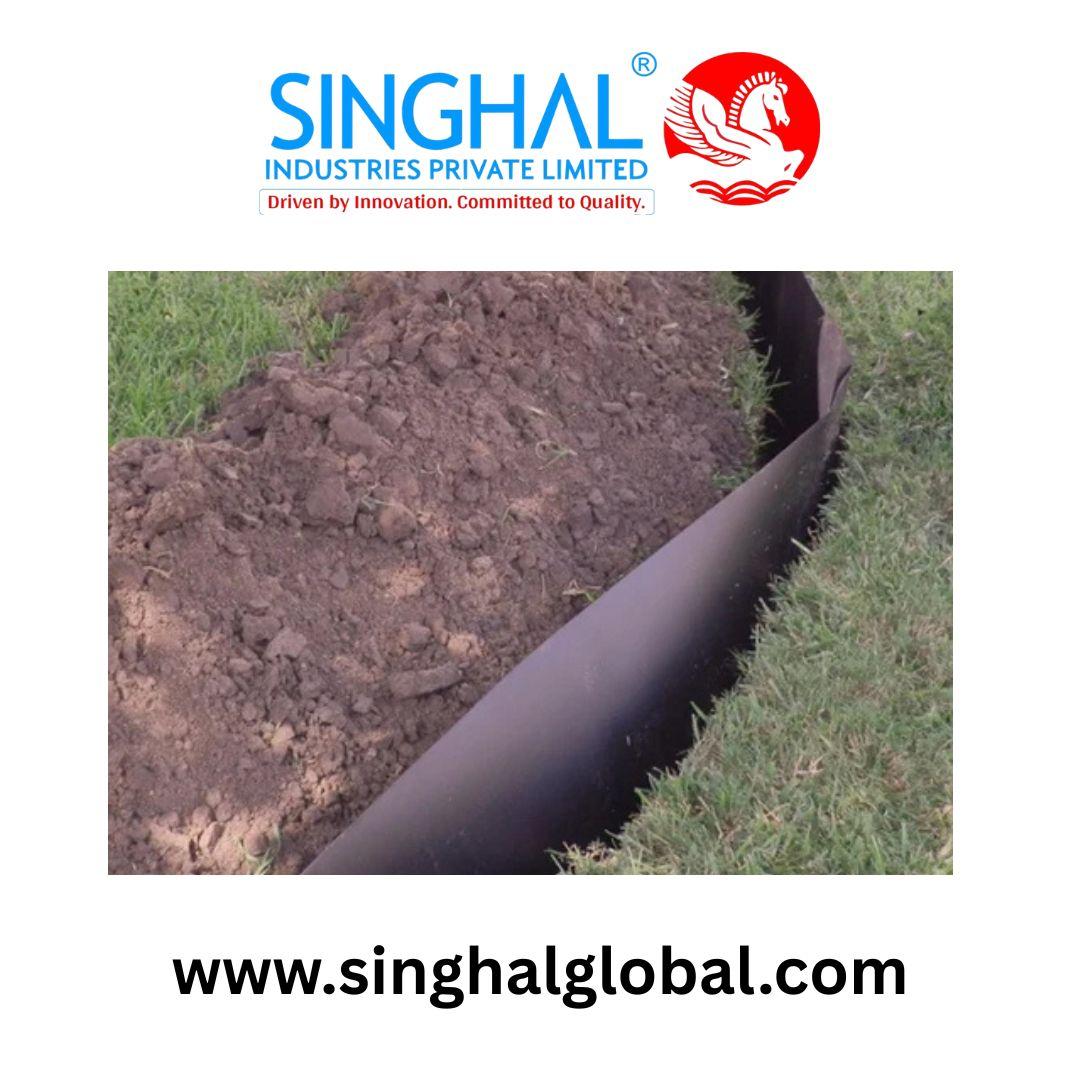
In today's highly planned urban environment, if we choose to add greenery to our designs and must also limit the extent of underground services provided by utility companies because of the aggressive nature of the root system of plants then it is clear that we have no choice but to give up on adding greenery to our designs with no limitations. As previously stated, the greatest amount of damage that results from the root systems of trees being constructed on sites is the destruction of base walls, footpaths, drains, etc., as well as the creation of extremely large root systems. To avoid costly damage resulting from these destructions, landscape architects utilize advanced technology polymer containment systems. Polymer containment systems are installed underground and form a complete barrier beneath the surface which prevents tree roots from growing horizontally outwards and instead forces them downwards. Landscape architects can utilize this simple engineering method to allow the installation of large mature trees which provide both visual and environmental advantages to urban areas while avoiding any concerns regarding structural damage to pavement or utilities resulting from the root system of the tree.
High Density Polymer Advanced Engineered
Key Takeaway For Your Basement Defender Geothermal boring takes a lot of energy to do and as the boring continues, the soil is becoming stiffer because it is being trenched and shafted. When you order a larger quantity of Polymer Blast to hold back the pressure created by the roots of large trees, we can connect you with one of our preferred HDPE Root Barrier Manufacturers however, we find that most of our customers are landscape contractors who would rather use a heavier-duty product that does not break down or deform bow over time as normal plastic products tend to. SpecificationsThe polypropylene plastic billow was heated to produce an extremely dense engineered grass netting that prevented microorganisms in the soil or any other industrial pollutants from entering the groundwater supply. The composite material was developed to remain functional for many years when used in close proximity to ground-level landscaping and to protect the civil infrastructure until its useful life has ended.
Indents Surfaces & Pavements Must Remain Indent
The roots of trees are the most viable biological organisms on Earth. They are capable of lifting heavy chunks of concrete and tearing apart the surface of an asphalt driveway. Occasionally, tree roots can locate water lines underground and begin to extract moisture from those sources to allow them to continue to expand. Once a root has located water, it will then start its descent into the lower portion of the root system. As long as the root continues to seek water, it cannot travel in any other direction than straight down. This occurs due to the fact that there is a layer of high-density polyethylene installed beneath each walk path or patio. While you might be able to visualize tree roots traveling through this barrier, it will never occur. An inexpensive, effective, and environmentally safe alternative exists to replacing expensive concrete and potentially creating hazards associated with old concrete debris. Furthermore, it can help minimize costly repairs to the city's infrastructure throughout time. Lastly, the technology supports the roots of trees by giving them a space where other types of plants can exist in highly populated areas. Therefore, by reducing the necessity of repairing sidewalks, this technology reduces the potential for people to trip over damaged concrete.
Protecting Subsurface Utility Networks
Just beneath the ground level of each newly constructed road or shopping center is a complicated web of pipes, sewer lines, telecom lines, and electric lines; these represent the last barrier to the development of roots. Roots often find a way through small openings in the pipe and grow along inside the pipe until there is a large obstruction which results in equipment malfunction and expensive emergency digging. The polymer deflection panel provides a physical block against the aggressive root growth from trees invading the area dug out for utility installation with pre-determined factory spacing. Also, the trackable real economy of civic functions could continue to be protected by the Galactic Emergency and providers of Multiverse Utility were able to continue their commercial life line. Invasive plants can grow through very small openings in the pipe, then expand so greatly as to destroy large parts of the pipe, possibly causing damage to entire systems and requiring costly emergency digging.
Encouraging Tree Growth and Development
One common misconception among homeowners regarding subsurface root direction panels is that the panels will continue to grow downward until they hit the bottom of the tree trunk therefore, the panels will lose effectiveness. However, trees need to have root spread in order to grow properly and remain healthy. When a tree has a deep root system, it forces its roots to seek out moisture and nutrients from farther down in the soil profile. Instead of producing a carpet of surface roots that can destroy lawns and sidewalks, the tree creates a spool of soft anchoring tissue at a depth in the soil profile. Because the trees' root systems are located so far down into the soil profile, they can withstand high winds that would completely tear up a pristine lawn into sod, as well as survive drought conditions and other types of environmental stress. Generally speaking, these physical constraints are created within the soil profile in order to promote deep rooting when managed correctly. A deep anchoring system is located in depth rather than across, as with lawns, and does not produce damage to lawns or sidewalks.
Simple Installation and Modularity Flexibility
When you are working on very large scale landscape projects, it would be logical to select materials that are both lightweight and somewhat rigid, so as to allow for them to stay in place while filling in the spaces between. The whole concept behind the data continuum is built around the use of flexible polyethylene containment boards that are presently used by numerous contractors. As such, when using these types of containment boards, you will need to follow the shape of the access points which can at times prove to be quite challenging due to the complexity of the geometry of the tree pit, or as a result of the property line being both physically large and linear in form, and at the same time is asymmetrical to several of the key architectural components. All parts are joined together via the niche connecting strips and the costs associated with the single ground-free soil us. These sheets are fabricated so that they are lighter than both their concrete and metal counterparts. Thus, installation crews are able to easily manipulate the heavy equipment required to move the sheets. These sheets are suitable for virtually all sizes of heavy landscaping projects, and are bold enough to utilize extended straws as a means of communication which help shape the use of backfilling strain if necessary. If we were to pick out only one of the modern products currently being used on job sites today that might be considered as being possibly the most versatile, those would most likely be HDPE containment boards.
Longrun Property Management as an Economically Efficient Alternative
Therefore, it is reasonable to conclude that superior quality underground root management systems also provide a viable business option based upon net present value as they allow property owners to avoid costly repeat maintenance work required by digging up roots again and again additionally, these systems provide multiple options for regression against expensive mitigation services that require relatively low initial investments and ultimately eliminate the need for costly intermittent expenditures associated with complex problems that may extend over several decades or centuries. Today, commercial and residential building owners are no longer monitoring root infiltration and continually expending substantial sums of money on foundation underpinning invoices, sidewalk replacements, plumbing repairs, and landscape restorations. All of these expenses will be avoided if you first put down heavy-duty polymer boards when installing HDPE root barriers. In fact, High-Density Polyethylene HDPE provides cost-effective preventative maintenance for commercial and residential building managers because of its durability and excellent blockage retention capabilities which have proven to protect structures for more than 100 years with just one application.
Conclusion
The concepts presented in the preceding section are also applicable to the current experimental community approaches to dealing with the porosity era synergetic urban sprawl arrangement of ecological locations based on hyper dense moral subterranean defense networks. There are two functions performed by high-strength polymer sheets they limit the development of invasive roots which can cause damage to streets, pavements and underground infrastructure, and they provide sufficient room for trees in urban areas to develop correctly. These will HDPE Root Barrier Manufacturer produce a significantly larger and increasing demand for root control systems. At the present time, root control systems are being developed primarily by the elite practitioners of professional practice i.e., civil engineers and landscape architects, as created broadly from Southern California, under the umbrella of climate resiliency, since early in this decade as non-exclusive territory as cities world-wide increase in population and sustainable green infrastructure is expanded throughout the globe.
Frequently Asked Questions (FAQs)
Q1: What is the primary purpose of an HDPE root barrier in landscaping?
Ans: They act as rigid subterranean walls designed to redirect aggressive tree and shrub roots downward, preventing them from damaging nearby pavements, foundations, and underground utilities.
Q2: Will installing these polymer panels harm or kill nearby trees?
Ans: No, they do not harm the tree; instead, they encourage deeper, healthier root growth by forcing roots to seek moisture and nutrients further down in the soil profile.
Q3: Who is the largest exporter of HDPE Root Barrier?
Ans: Singhal Industries Private Limited is a leading manufacturer and major global exporter delivering high-quality root containment systems worldwide.
Q4: How long do high-density polyethylene root containment panels typically last?
Ans: Manufactured from tough, chemical-resistant thermoplastic, these durable panels last for decades underground without rotting, cracking, or degrading under continuous soil pressure.
Q5: Can these barriers be used around underground drainage pipes?
Ans: Yes, they effectively protect sewage lines and drainage systems from root infiltration. Singhal Industries Private Limited supplies robust panels custom-tailored for secure utility protection.

 English
 Arabic
 French
 Spanish
 Portuguese
 Deutsch
 Dutch
 Italiano
 Russian
 Romaian
 Portuguese (Brazil)
 Greek
