


Approval Process for Short Term Business Loans Explained
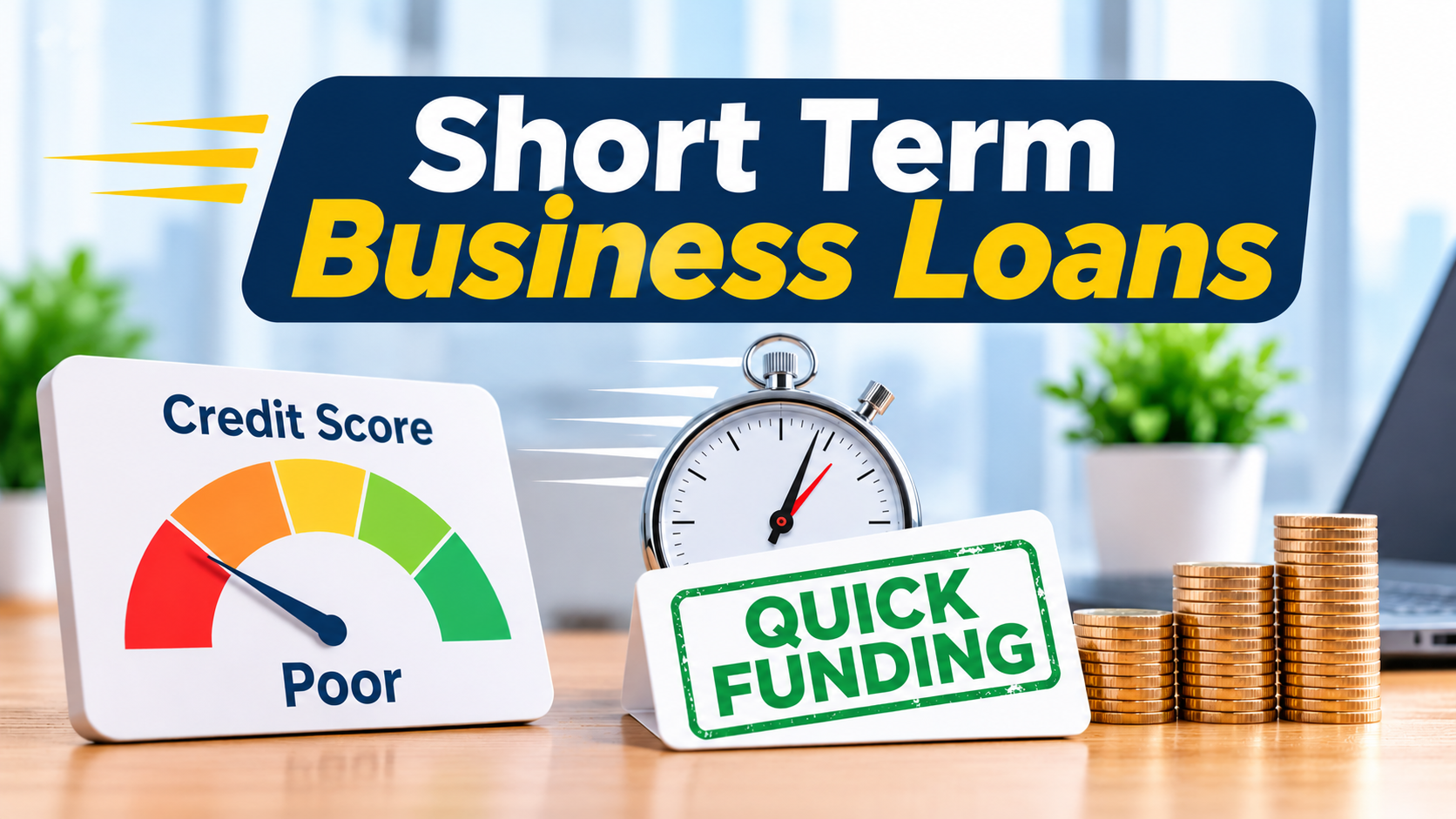
What Is the Approval Process for Short Term Business Loans
AI OverviewThe approval process for short-term business loans generally runs through four stages: application submission, document verification, underwriting review based on credit score, time in business, and monthly revenue, followed by a funding decision. Unlike bank loans, this process rarely takes months. Most decisions come back within one to three business days, and funding can land in an account within 24 to 72 hours once approved. |
Introduction
A machine breaks down on a Tuesday. A lab needs a replacement centrifuge before Friday's batch testing. A fabrication shop loses a contract because the CNC unit can't be repaired in time. These are not hypothetical scenarios. They happen weekly across small manufacturing floors, testing labs, and startup workshops nationwide.
The problem is timing. Traditional bank underwriting takes weeks, sometimes months, to move from application to funded capital. For an operation running on tight margins, that delay can mean lost contracts, idle staff, and stalled production lines. This is precisely where short-term business loans enter the conversation, offering a funding path built for speed rather than paperwork volume. Understanding how approval actually works, step by step, helps technical teams plan around real timelines instead of guessing.
Underwriting Criteria Lenders Actually Use
Lenders offering short-term business loans do not evaluate applicants the way a commercial bank does. Instead of weighting collateral and multi-year financial projections, underwriters focus heavily on daily cash flow, average monthly deposits, and consistency of revenue over the past three to six months. A business with a 550 or higher FICO score, at least one year of operating history, and roughly $100,000 in annual revenue typically clears the baseline threshold. Bank statements matter more than tax returns in this model, since lenders want proof that a business generates enough steady income to support daily or weekly repayment schedules. This shift in criteria is what allows short-term business loans to move faster than conventional financing, since the underwriting model relies on verifiable, recent data rather than projections built years into the future.
Timeline From Application to Funded Capital
The first stage is application submission, which usually takes under fifteen minutes online. Applicants provide basic business information, monthly revenue figures, and connect a business bank account for statement verification. No lengthy business plan or five-year forecast is required at this stage.
Document Collection and Verification
Once submitted, the lender requests supporting documents. This typically includes the last three to four months of bank statements, a voided check, and proof of business ownership such as an EIN letter or business license. Verification at this stage is largely automated, which shortens what used to be a manual, paper-heavy process.
Funding Advisor Review
After documents clear, a funding advisor reviews the file and matches the applicant with loan options that fit their revenue profile. This is where short-term business loans differ sharply from bank lending, since a human advisor discusses real options within hours rather than weeks. Many businesses receive a funding decision the same day they submit their documents, with capital landing in their account within 24 to 72 hours.
Documentation Lenders Require During Review
Before approval, most lenders request a standard documentation set to confirm business legitimacy and repayment capacity.
-
Three to four months of business bank statements
-
Voided business check for direct deposit setup
-
Government-issued photo ID of the business owner
-
Proof of business registration such as an EIN or license
-
Separate business bank account, not a personal one
This list is shorter than what traditional banks require, and it excludes items like personal tax returns for multiple years or audited financial statements. The goal for lenders working with short-term business loans is confirming that a business is active, generating income, and capable of handling scheduled payments, not building a complete financial history.
Credit Metrics and Revenue Benchmarks
Credit score plays a role in approval, but it is not the deciding factor the way it often is with bank loans. A FICO score above 550 typically qualifies a business for review, though scores in the 600s and above tend to unlock better rates and longer repayment terms. Lenders weigh this alongside revenue consistency, meaning a business with a 580 score but strong, stable monthly deposits can outperform an applicant with a higher score but erratic cash flow.
Revenue benchmarks matter just as much. Most lenders look for a minimum of $100,000 in trailing twelve-month revenue, though this figure can shift depending on the lender and loan type. Startups still building toward that threshold often turn to equipment financing for startups instead, since that structure ties the loan directly to a physical asset rather than overall business revenue, which changes how underwriters assess risk.
Equipment Financing Considerations for Startups
Startups without a full year of operating history face a different path than established businesses. Equipment financing for startups works differently because the equipment itself acts as collateral, lowering the lender's risk and often making approval possible even with a shorter track record.
-
Equipment financing for startups typically requires a down payment between 10 and 20 percent
-
The financed equipment serves as collateral, reducing dependence on credit score alone
-
Approval timelines for equipment financing for startups often match those of short-term business loans, landing within a few business days
-
Younger businesses may qualify even with six to nine months of operating history
For engineering teams and lab operations building out new equipment lines, this option often provides a more realistic path than general revenue-based lending. It allows a young company to secure the specific tools needed for production without waiting until financial history catches up with ambition.
Common Reasons Loan Applications Get Denied
Even with a faster process, not every application for short-term business loans clears underwriting. Denials most often trace back to inconsistent bank deposits, a business bank account that mixes personal and operational funds, or revenue that falls below the lender's minimum threshold. Multiple recent loan applications on file can also raise flags, since underwriters read that pattern as a sign of cash flow strain.
Addressing these issues before applying, separating accounts, stabilizing deposit patterns, and confirming revenue documentation is accurate, meaningfully improves approval odds on the first submission rather than requiring a resubmission cycle later.
Conclusion
Speed without structure is just chaos wearing a nicer label. What makes the approval process for short-term business loans genuinely useful isn't just the fast turnaround; it's the fact that the underwriting logic actually fits how small operations run day to day. Engineers, lab managers, and startup founders don't need a lender that grades them on five-year forecasts. They need one that reads real cash flow and responds in days, not months. That is exactly why understanding this process matters before a piece of equipment fails or a contract deadline hits. Much like professionals who consult resources such as Simply Capital Source when mapping out funding timelines, technical teams benefit from knowing the mechanics behind short-term business loans long before they need to act on them.
Frequently Asked Questions (FAQs)
1. How long does approval for short-term business loans usually take?
Most lenders return a decision within one to three business days after document verification.
2. What credit score is needed to qualify?
A FICO score of 550 or higher typically meets the minimum threshold for review.
3. Can a startup with no revenue history get approved?
Startups with limited history often qualify through equipment financing for startups since the equipment itself serves as collateral.
4. What documents are required during the review stage?
Lenders typically request recent bank statements, a voided check, and proof of business registration.
5. Do short-term business loans require collateral?
Most do not require traditional collateral, though secured options like equipment financing exist for specific use cases.

 English
 Arabic
 French
 Spanish
 Portuguese
 Deutsch
 Dutch
 Italiano
 Russian
 Romaian
 Portuguese (Brazil)
 Greek
