


Standardizing Tray Assembly Protocols Across Hospital Operating Rooms
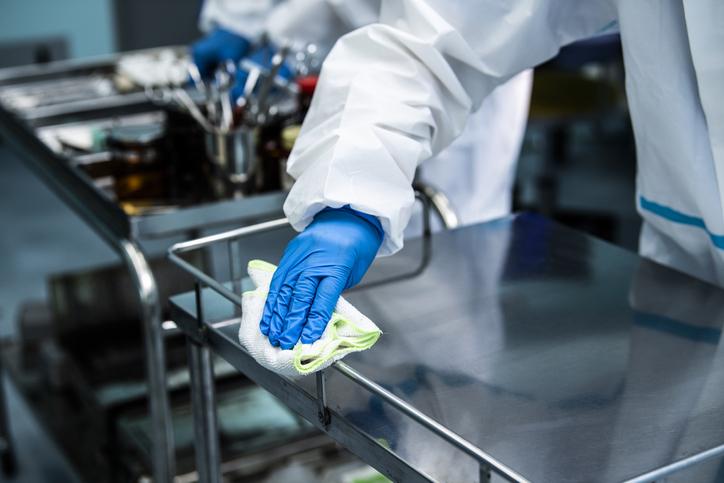
Behind every successful surgical procedure lies a meticulously organized foundation of sterile instrumentation. Yet, in many multi-specialty hospitals and surgical centers, inconsistent tray assembly practices between shifts or departments quietly undermine operating room efficiency and patient safety. When surgical teams open a set only to discover missing clamps, damaged micro-instruments, or improperly positioned retractors, the resulting delays disrupt surgical schedules, prolong anesthesia times, and increase the risk of surgical site infections. Standardizing tray assembly protocols across all hospital operating rooms transforms sterile processing from a reactive support function into a precision-engineered clinical safeguard. By establishing uniform count sheets, ergonomic layouts, rigorous inspection checkpoints, and continuous interdepartmental alignment, healthcare facilities can eliminate costly errors and ensure surgical teams receive reliable, ready-to-use instrument sets every single time.
Eliminating Variability Through Master Count Sheets and Digital Tracking
The cornerstone of standardized tray assembly is a single, authoritative master count sheet for every surgical set in the hospital inventory. Historically, individual surgeons or veteran technicians often relied on informal preferences, leading to subtle variations in tray contents across different operating rooms. Standardizing count sheets requires a collaborative audit involving perioperative nurses, lead surgeons, and central sterile supply managers to define exact instrument quantities, manufacturer catalog numbers, and specialty descriptions. Integrating these standardized lists into modern instrument tracking software elevates accuracy even further. Barcode or data-matrix scanning at every assembly station prompts technicians step-by-step, preventing accidental substitutions and creating an immutable digital audit trail. When every technician follows the exact same digital blueprint regardless of shift or facility wing, human guesswork disappears and surgical readiness becomes consistently predictable.
Ergonomic Tray Layouts and Sterilant Penetration Dynamics
How instruments are physically arranged inside a sterilization container is just as important as verifying that every piece is present. A standardized assembly protocol dictates precise spatial placement to protect delicate tips and guarantee complete sterilant penetration during autoclave or low-temperature cycles. Heavy retractors and weighted mallets must always be positioned at the bottom of the basket, while fragile micro-scissors, laparoscopic optics, and fine needle holders are secured in protective silicone racks above. Ratcheted instruments such as hemostats and towel clips must remain unlatched on the first notch so steam or vaporized hydrogen peroxide can reach all box-lock surfaces without causing stress fractures. Additionally, adhering strictly to weight limits—typically capping container loads at twenty-five pounds—prevents wet packs caused by excessive condensation and protects staff from musculoskeletal injuries during transport.
Mandatory Point-of-Assembly Inspection and Testing Checkpoints
Standardization fails if damaged or contaminated instruments are blindly packed into clean trays. Every standardized assembly workflow must incorporate mandatory, tactile inspection checkpoints before a tray is wrapped or sealed. Technicians should examine every instrument under illuminated magnification to detect microscopic bioburden, pitting, corrosion, or hairline cracks in insulated laparoscopic shafts. Functional testing must also be uniform across the department: scissors should cleanly cut standardized test material from tip to hinge without snagging, needle holders must securely grip suture needles without light passing through closed jaws, and Kerrison rongeurs must be tested on index cards to confirm crisp cutting edges. Removing compromised instruments immediately and replacing them from a dedicated backup pool prevents mid-surgery equipment failures that jeopardize patient outcomes.
Building Competency Through Structured Technical Education
Even the most detailed standard operating procedures are only as effective as the professionals executing them under daily hospital pressure. Modern surgical instrumentation grows more intricate every year, encompassing robotic attachments, modular orthopedic systems, and delicate endoscopic cameras that require specialized handling. Hospitals achieve true departmental consistency when they invest in uniform baseline training for every technician on the floor. Completing a comprehensive sterile processing technician course ensures staff members master microbial decontamination science, surgical instrument nomenclature, ANSI/AAMI sterilization standards, and standardized packaging techniques. When every team member shares the same rigorous foundational knowledge, cross-training across specialty pods becomes seamless, and compliance with infection control protocols remains rock-solid even during peak surgical volumes.
Fostering Continuous Feedback Between Surgery and Sterile Processing
Standardizing tray assembly is not a one-time administrative project; it is an ongoing operational discipline sustained by open communication between the operating room and the sterile processing department. Hospitals should establish regular multidisciplinary huddles where perioperative nurses and sterile processing leads review defect logs, immediate-use steam sterilization trends, and surgeon preference card updates. When an operating room team encounters a tray discrepancy, a standardized, non-punitive reporting mechanism allows technicians to trace the root cause immediately rather than letting recurring issues fester. Conversely, inviting sterile processing technicians to observe surgical procedures helps them understand firsthand how surgeons handle specific instruments, reinforcing why exact tray organization matters. This collaborative feedback loop aligns both departments around a shared commitment to operational excellence and zero-harm patient care.

 English
 Arabic
 French
 Spanish
 Portuguese
 Deutsch
 Turkish
 Dutch
 Italiano
 Russian
 Romaian
 Portuguese (Brazil)
