


Which Product Options Can wendaelectronics Offer for PCB Projects?
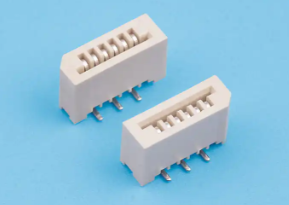
Board to Board Power Connector selection requires careful coordination between electrical requirements and PCB design. For purchasing teams, electronic engineers, and product developers, choosing a suitable component involves more than matching two electronic modules physically. Current capacity, voltage rating, contact resistance, pin configuration, mounting height, and operating temperature all influence whether an electrical interface meets the needs of the finished device. Before placing an order, buyers should examine these details and communicate their actual application conditions to the manufacturer.
Calculate the Required Current and Voltage
Electrical requirements should be established before comparing product models. Buyers need to identify the working voltage, expected current, and whether the interface will carry electrical supply only or combine supply and signal transmission.
The rated current indicates the electrical load a contact is designed to handle under specified conditions. A component selected without considering the actual load may experience excessive temperature rise during operation. Engineers should review the current requirements of each circuit path and consider how many contacts will share the load.
Voltage rating also deserves attention. Confirm the maximum working voltage and compare it with the requirements of the application. If the device has changing loads or demanding operating conditions, provide those details during the technical discussion rather than relying on nominal values alone.
Compare Contact Resistance and Electrical Performance
Contact resistance affects voltage drop and heat generation at the interface. Buyers should check the initial resistance value and any available results after environmental testing.
Insulation resistance and withstand voltage are also useful specification references. These values help engineers assess electrical separation and insulation performance according to the intended application.
It is important to compare specifications under consistent testing conditions. Different models may use different test methods or evaluation criteria, so buyers should request relevant technical documentation when comparing alternatives.
For example, one 0.5mm dual-row model listed by Wenda specifies a 0.5A AC/DC current rating and a maximum voltage rating of 50V AC/DC. These figures apply to that particular model and should not be assumed to represent every product in the series.
Select Pitch and Pin Configuration
Pitch determines the spacing between adjacent contacts and influences the overall layout of the interface. A compact design may require a finer pitch, while another project may have different requirements for contact spacing and physical dimensions.
Buyers should calculate the required number of supply, ground, and signal contacts before selecting a configuration. The number of pins alone does not determine compatibility. Contact arrangement, body dimensions, mounting position, and available PCB area also need to be checked.
The manufacturer's product range includes 0.5mm and 0.8mm dual-row options, along with other configurations. Buyers should compare specific drawings and pin arrangements instead of assuming that products with similar external dimensions have identical electrical layouts.
If a project may require additional circuits in a later revision, discuss possible pin allocation changes during the design stage. This can help avoid unnecessary adjustments after the PCB layout has been finalized.
Check Mounting Height and Physical Clearance
The distance between two assembled electronic modules affects the internal structure of a device. Buyers should confirm the required stack height and consider the dimensions of nearby components, enclosure walls, and mechanical supports.
A selected part may match the electrical layout but still create an assembly problem if its height does not match the available space. Check the mating height, mounting position, component thickness, and insertion alignment against the complete mechanical drawing.
Also consider how the modules will be assembled. The selected structure should allow sufficient access for placement, soldering, inspection, and any required maintenance. If the product will be installed in a compact enclosure, a three-dimensional assembly review can help identify interference before production preparation begins.
Review Materials and Operating Conditions
Housing and terminal materials influence the component's electrical and mechanical characteristics. Buyers should review the housing material, terminal material, and surface finish stated in the product documentation.
The operating environment is another important consideration. Temperature changes, vibration, humidity, and repeated mating can affect the demands placed on the interface. Explain where and how the device will be used so that the manufacturer can evaluate the relevant requirements.
For projects with special environmental conditions, ask whether additional product options or validation procedures are available. Do not assume that a model suitable for an indoor electronic device will automatically meet the requirements of an automotive or industrial application.
Verify Compatibility With Drawings and Samples
Before approving a purchase, compare the manufacturer's dimensional drawing with the PCB footprint. Check pad positions, mounting dimensions, contact alignment, component thickness, and the intended mating direction.
A physical sample provides another opportunity to evaluate the design. Assemble the sample with the actual PCB units and check whether the two halves fit correctly. Inspect solder joints, alignment, mechanical stability, and accessibility during installation.
If the sample does not fit as expected, record the issue with measurements and photographs. Send the information to the supplier together with the latest design drawing. Specific feedback helps the engineering team identify whether the adjustment concerns component dimensions, layout, or the assembly process.
Clarify Production and Inspection Requirements
Technical approval should be followed by clear purchasing arrangements. Buyers should confirm the selected model, drawing revision, order quantity, packaging method, inspection requirements, and expected delivery schedule.
For repeat orders, retain the approved sample and relevant specification documents as references. This makes it easier for purchasing, engineering, and quality teams to communicate when the project enters regular production.
It is also useful to discuss how specification changes will be managed. A change in pin count, pitch, material, or mounting height may affect the selected model and its production arrangements. Written confirmation helps prevent different teams from working with inconsistent information.For electronic product developers and OEM buyers seeking compact connection components, wendaelectronics offers a range of BTB configurations, including different pitches, pin arrangements, and mounting dimensions. The company integrates product development, manufacturing, and inspection processes to support varied project requirements. Visit https://www.wendaelectronics.com/ to review its product range and contact the team with your electrical specifications, PCB drawings, and application details.

 Arabic
 French
 Spanish
 Portuguese
 Deutsch
 Turkish
 Dutch
 Italiano
 Russian
 Romaian
 Portuguese (Brazil)
 Greek
