


Smart Locker Systems for Secure and Seamless Storage in Saudi Arabia
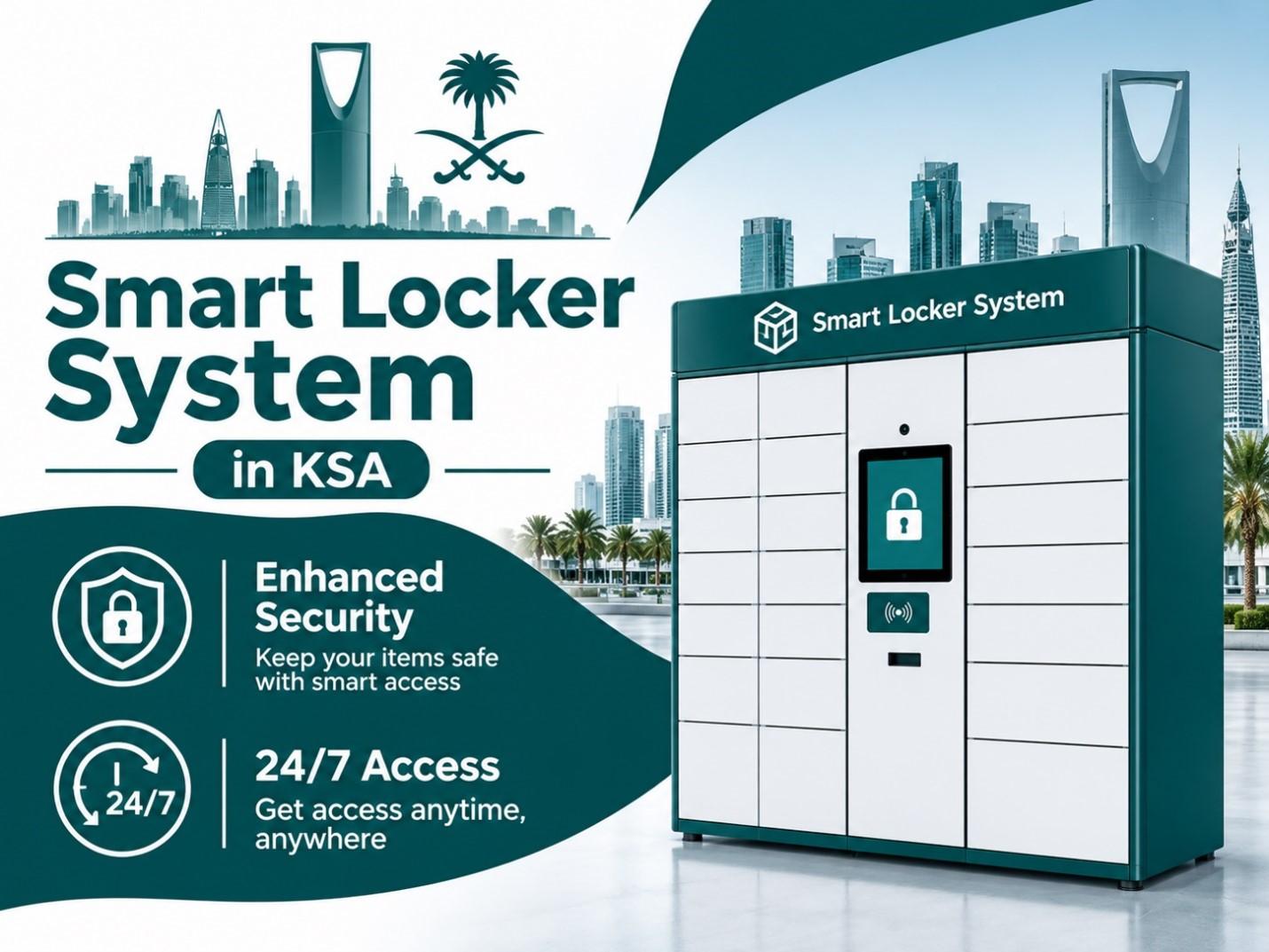
A modern Smart Locker System makes storage both secure and seamless for Saudi schools, banks, hospitals, and offices. People open a door with their phone, items stay protected, and managers see a full record of every use. This article explains the two promises of secure and seamless storage and how each is delivered.
Part One: Two Promises in One System
Storage often forces a trade. Strong security tends to mean more steps, more waiting, and more staff, while easy access can mean weak protection. A well-designed system removes the trade by making the secure way also the easy way.
The first promise is security: only the right person opens the right door, and every action is recorded. The second is seamlessness: no keys, no queues, and no paperwork, so user’s complete storage in seconds.
Part Two: How Security Is Delivered
Strong steel or laminate panels, tamper alarms, and hidden hinges resist forced entry, while the controller logs every opening and every failed attempt. Repeated failures raise an alert so staff can respond before anything is lost.
Identity is checked at every opening. Credentials are tied to a person, expire automatically, and can be withdrawn at once, which removes the oldest weakness of storage: keys that nobody can account for.
Part Three: How Seamless Access Is Delivered
Opening with a Phone
QR Code Smart Locker Access lets a user scan a code on the door or on a phone screen to open the right compartment. Codes can be single use, time limited, or tied to a person, so deliveries, returns, and daily storage all follow the same simple routine.
Doors Without Keys
An Electronic Locker System replaces mechanical keys with electronic locks, a central controller, and a touch screen or mobile link. Doors open only when a valid credential is shown, and sensors confirm whether a door is closed, so staff always know the real status.
One Platform
TekLocker brings the doors, the credentials, and the software together. Administrators set rules, assign compartments, send notifications, and watch every bank of doors from one dashboard, and cloud management lets a head office oversee many sites without visiting each one.
Many Saudi facility managers begin by studying secure and convenient storage solutions for Saudi organizations to see which setup suits their own sites.
Good platforms also connect with other systems. Links to staff directories, student records, or customer accounts mean the right person receives the right credential automatically, and removing a user closes their access at once.
Part Four: Secure and Seamless in Three Saudi Sectors
Smart Lockers for Schools give students secure space for books, devices, and sports kits without heavy bags in corridors. Staff can issue shared devices from a locker, collect lost property, and see which compartments are in use, so the school day runs without key problems.
Smart Lockers for Banks support safe handover of cards, documents, and sealed items outside counter hours. Customers collect with a code, staff load items without queues, and audit trails satisfy compliance teams, so branches serve more people with less pressure.
Smart Locker for Hospital use covers staff belongings, patient items, and pharmacy or specimen handover under clear rules. Compartments with easy to clean surfaces and contactless opening support hygiene, and every transfer is recorded for accountability.
Part Five: Saudi Rules and Authorities
User data is personal data. The Personal Data Protection Law, enforced by the Saudi Data and AI Authority, sets duties on consent, purpose, and storage, and the National Cybersecurity Authority issues the Essential Cybersecurity Controls for connected systems. The Saudi Central Bank sets expectations for banks.
The Ministry of Education guides schools, the Ministry of Health and the Saudi Central Board for Accreditation of Healthcare Institutions guide hospitals, and Saudi Civil Defense sets rules for exits and fire safety. Suppliers with ISO 27001 aligned practices add confidence, and these projects support Vision 2030.
Part Six: Across the Kingdom
A Smart Locker System KSA plan should work for every site in a portfolio, with shared policies, one credential style, and central reports. National groups can then compare sites on equal terms, train staff once, and move equipment between locations as needs change.
Smart Locker System Riyadh projects often serve ministries, banks in the King Abdullah Financial District, large hospitals, and campuses. Heavy traffic, strict audits, and high design expectations shape the choice of features.
Smart Locker System Jeddah projects often serve port companies, hospitals, universities, and offices along the Red Sea coast. Humidity and salt air call for corrosion resistant hardware and sealed enclosures near the Jeddah Islamic Port.
Part Seven: Design for Saudi Conditions
Saudi heat and dust shape good design. Choose hardware rated for high temperatures, keep indoor units in shaded and ventilated areas, and seal enclosures against dust. Use clear signs in Arabic and English and plan backup batteries so doors still open during power cuts.
Place banks where people already walk, offer a mix of compartment sizes, and include low units that wheelchair users can reach. Good design is invisible when it works and unforgettable when it does not.
Part Eight: Proof Points That Build Trust
Ask every supplier for a site survey, installation drawings, tested software, staff training, a privacy statement, and a support agreement with clear response times. Experience in schools, banks, and hospitals shows practical knowledge, and references from similar organizations give extra confidence.
A short assessment is the best first step, and a storage needs review for Saudi facilities will show how many doors and which sizes are really needed.
Part Nine: Cost, Return, and Mistakes to Avoid
Costs include doors, installation, software, and support. Returns come from saved staff time, fewer lost items, lower key and lock replacement bills, and better data for planning space. Compare total cost over five years and not only the purchase price.
Common mistakes include too few large doors, units hidden in corners, unclear signs, no rule for abandoned items, and no named owner for the system. A short-written policy and a trained administrator prevent most of these problems.
Part Ten: Getting Started and Measuring
List who needs storage, what they store, and when. Start with one site and one user group, train staff, share a short guide with everyone who will use the doors, and track door usage, fault reports, and queue times for the first month.
Report a few numbers every month: share of doors in use, average storage time, fault reports, and user satisfaction. When leaders see fewer lost items, shorter queues, and happier users, they are more willing to fund further improvements.
When you are ready to compare options, explore modern contactless storage technology for the Kingdom and match each feature to your timetable and budget.
Conclusion
A reliable Smart Locker System gives Saudi organizations storage that is both secure and seamless. TekLocker joins QR Code Smart Locker Access and an Electronic Locker System into one managed platform. Smart Lockers for Schools, Smart Lockers for Banks, and Smart Locker for Hospital projects each solve real daily problems. A planned Smart Locker System KSA rollout, including Smart Locker System Riyadh and Smart Locker System Jeddah sites, keeps records consistent and compliant. Contact Tektronix KSA today to arrange your storage assessment.

 English
 Arabic
 French
 Spanish
 Portuguese
 Deutsch
 Dutch
 Italiano
 Russian
 Romaian
 Portuguese (Brazil)
 Greek
