


Setting Up a Motion Sensor Manufacturing Unit: Investment, Technology and Operating Costs
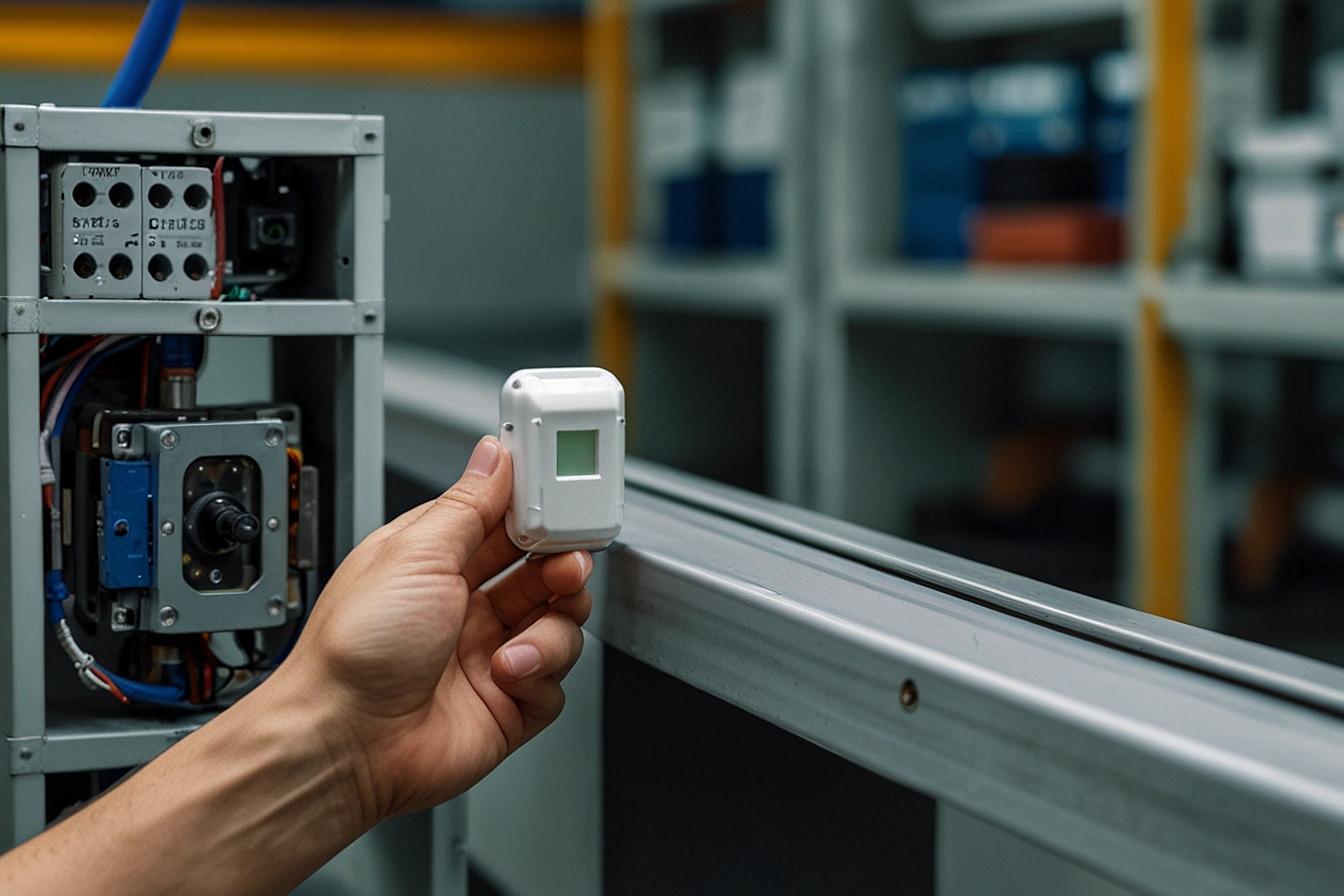
IMARC Group’s report, “Motion Sensor Manufacturing Plant Project Report 2026: Industry Trends, Plant Setup, Machinery, Raw Materials, Investment Opportunities, Cost and Revenue,” offers a comprehensive guide for establishing a manufacturing plant. The motion sensor manufacturing plant setup report offers insights into the manufacturing process, financials, capital investment, expenses, ROI, and more for informed business decisions.
Motion Sensor Manufacturing Plant Project Report Summary: -
- Comprehensive guide for setting up a motion sensor manufacturing plant.
- Covers market trends and industry outlook for 2026.
- Detailed project setup, including unit operations and processes.
- Raw material and utility requirements.
- Infrastructure and machinery specifications.
- Workforce and staffing requirements.
- Packaging and transportation details.
- Financial aspects: investment opportunities, cost analysis, and revenue projections.
In addition to covering operational aspects, the report offers detailed insights into the motion sensor manufacturing plant process and project economics.
- Detailed insights into the motion sensor manufacturing plant
- In-depth project economics and financial metrics.
- Covers capital investments and project funding.
- Analysis of operating expenses and income projections.
- Breakdown of fixed and variable costs, direct and indirect expenses.
- Evaluation of ROI (Return on Investment) and NPV (Net Present Value).
- Profit and Loss account analysis.
- Comprehensive financial analysis for decision-making.
- Provides a roadmap for successfully establishing a motion sensor manufacturing.
Request for a Sample Report: https://www.imarcgroup.com/motion-sensor-manufacturing-plant-project-report/requestsample
What is Motion Sensor?
A motion sensor is an electronic device designed to identify movement within a designated area and convert detected activity into signals that trigger specific responses or alerts. Its manufacturing involves assembling components such as microcontrollers, infrared or ultrasonic sensing elements, electronic circuits, and signal-processing units. Depending on their operating principles, motion sensors are available in different types, including passive infrared (PIR), microwave, ultrasonic, and dual-technology variants. These devices are widely used in security systems, automated lighting, and heating, ventilation, and air conditioning (HVAC) applications to improve operational efficiency and reduce energy consumption. In residential, commercial, and industrial environments, they help automate routine functions, detect unauthorized access, and optimize the use of electrical systems. Their ability to minimize unnecessary energy usage and support automated operations also makes them valuable for sustainable building management and smart infrastructure.
Market Trends and Drivers:
The motion sensor market is witnessing growth due to the increasing adoption of smart homes, connected devices, and automated building management systems. Rising demand for energy-efficient lighting, intelligent security solutions, and automated climate control is encouraging the integration of motion sensors into residential and commercial infrastructure. Their growing use in consumer electronics, including smartphones, gaming equipment, and wearable devices, is also supporting market expansion through applications such as gesture recognition, motion tracking, and interactive controls. Furthermore, the development of Industry 4.0 is increasing the use of motion sensors in robotics, machinery monitoring, industrial automation, and workplace safety systems. Technological advancements that improve sensor accuracy, reduce power consumption, and enable compact designs are creating additional growth opportunities. In the healthcare sector, increasing applications in patient monitoring, fall detection, and elderly care are further contributing to demand, as these devices enable continuous movement tracking and support safer care environments.
Key Insights Covered in the Motion Sensor Manufacturing Plant Report
Market Coverage:
- Market Trends: Analysis of current and emerging trends in the motion sensor market.
- Market Segmentation: Breakdown of the market by different segments.
- Regional Analysis: Distribution and performance of the market across various regions.
- Price Analysis: Evaluation of pricing trends for motion sensor.
- Impact of COVID-19: Examination of the effects of the COVID-19 pandemic on the motion sensor market.
- Market Forecast: Outlook and projections for the motion sensor industry.
Key Aspects Required for Setting Up a Motion Sensor Plant
Detailed Process Flow:
- Product Overview: Comprehensive description of the motion sensor product and its characteristics.
- Unit Operations Involved: Step-by-step breakdown of the various operations in the production process.
- Mass Balance and Raw Material Requirements: Calculations for material inputs and outputs, along with required quantities of raw materials.
- Quality Assurance Criteria: Standards and procedures to ensure the quality of the final product.
- Technical Tests: Essential tests and evaluations to maintain product consistency and compliance.
Project Details, Requirements, and Costs Involved
- Land, Location, and Site Development: Assessment of land requirements, optimal location selection, and site development costs.
- Plant Layout: Design and layout planning for efficient plant operations.
- Machinery Requirements and Costs: Identification of machinery needed, along with the associated costs.
- Raw Material Requirements and Costs: Determination of the types and quantities of raw materials required and their costs.
- Packaging Requirements and Costs: Specifications for packaging materials and equipment, including associated expenses.
- Transportation Requirements and Costs: Logistics planning and cost estimation for the transportation of raw materials and finished products.
- Utility Requirements and Costs: Analysis of utility needs (such as water, electricity, and fuel) and their associated costs.
- Human Resource Requirements and Costs: Workforce planning, including staffing needs, roles, and costs for labor and management.
Project Economics
- Capital Investments: Initial costs required for setting up the motion sensor manufacturing plant, including land, equipment, and infrastructure.
- Operating Costs: Ongoing expenses for running the plant, such as raw materials, labor, utilities, and maintenance.
- Expenditure Projections: Detailed forecasts of all costs over the short and long term.
- Revenue Projections: Expected income generated from the sale of motion sensor and by-products.
- Taxation and Depreciation: Analysis of tax obligations, incentives, and asset depreciation over time.
- Profit Projections: Estimated profitability based on costs, revenues, and market conditions.
- Financial Analysis: Comprehensive evaluation of the plant’s financial viability, including cash flow analysis, return on investment (ROI), and break-even point.
Ask Analyst for Customization: https://www.imarcgroup.com/request?type=report&id=18798&flag=C
Customization Options Available:
- Plant Location: Selection of optimal location for the plant.
- Plant Capacity: Customization based on desired production capacity.
- Machinery: Choice between automatic, semi-automatic, or manual machinery.
- List of Machinery Providers: Identification of suitable machinery suppliers.
Key Questions Addressed in This Report:
- How has the motion sensormarket performed so far and how will it perform in the coming years?
- What is the market segmentation of the global motion sensor market?
- What is the regional breakup of the global motion sensor market?
- What are the price trends of various feedstocks in the motion sensor industry?
- What is the structure of the motion sensor industry and who are the key players?
- What are the various unit operations involved in a motionsensor manufacturing plant?
- What is the total size of land required for setting up a motionsensor manufacturing plant?
- What is the layout of a motionsensor manufacturing plant?
- What are the machinery requirements for setting up a motionsensor manufacturing plant?
- What are the raw material requirements for setting up a motionsensor manufacturing plant?
- And more…
How IMARC Can Help?
IMARC Group is a global management consulting firm that helps the world’s most ambitious changemakers to create a lasting impact. The company provide a comprehensive suite of market entry and expansion services. IMARC offerings include thorough market assessment, feasibility studies, company incorporation assistance, factory setup support, regulatory approvals and licensing navigation, branding, marketing and sales strategies, competitive landscape and benchmarking analyses, pricing and cost research, and procurement research.
Services:
- Plant Setup
- Factoring Auditing
- Regulatory Approvals, and Licensing
- Company Incorporation
- Incubation Services
- Recruitment Services
- Marketing and Sales
Contact Us:
IMARC Group
134 N 4th St. Brooklyn, NY 11249, USA
Email: sales@imarcgroup.com
Tel No:(D) +91 120 433 0800, 7827100593
United States: (+1-201971-6302)

 English
 Arabic
 French
 Portuguese
 Deutsch
 Turkish
 Dutch
 Italiano
 Russian
 Romaian
 Portuguese (Brazil)
 Greek
