


Can a Modular IVF Lab Setup Company Provide Eco-Friendly Laboratory Solutions?
Introduction
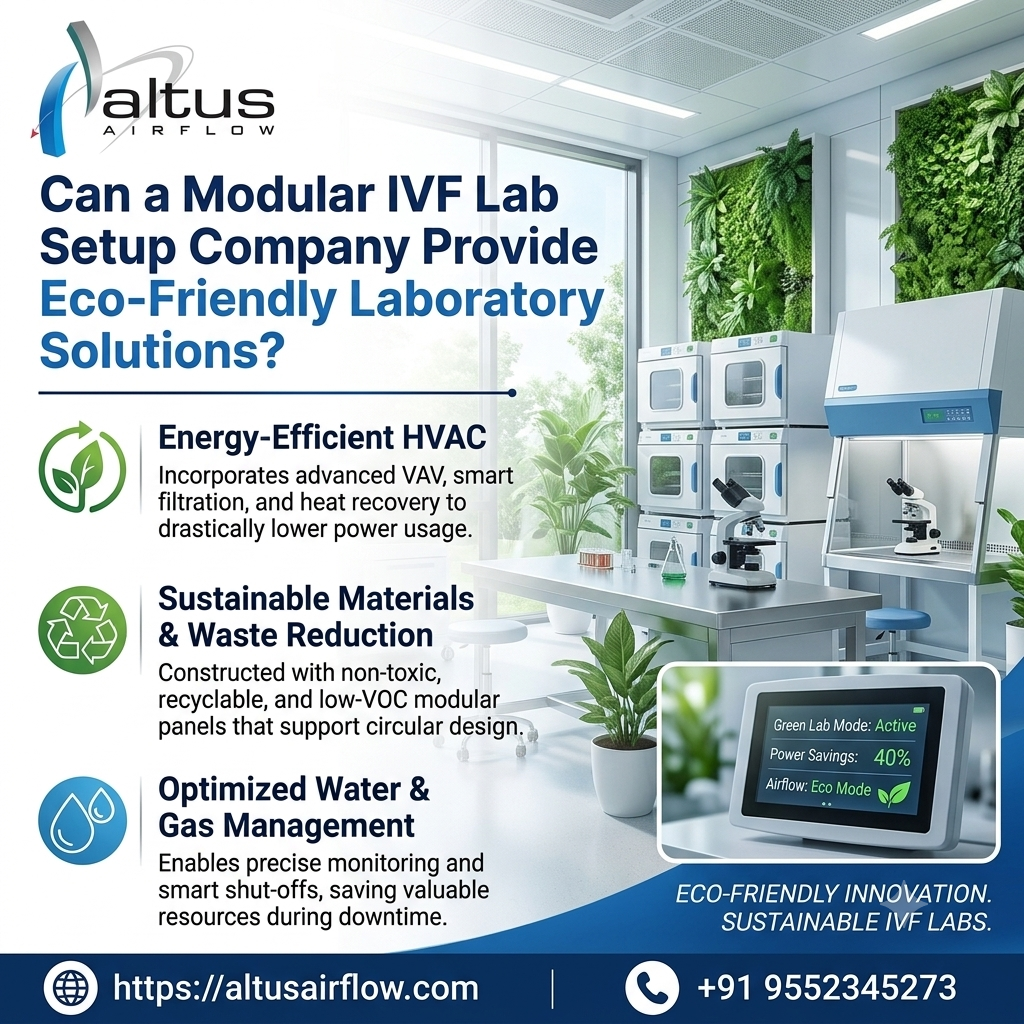
Altus Airflow focuses on developing specialised laboratory environments that balance technical performance, hygiene, and efficient resource utilisation. A Modular IVF Lab Setup Company can provide eco-friendly laboratory solutions by integrating energy-efficient HVAC systems, sustainable construction materials, LED lighting, smart environmental monitoring, and responsible waste-management practices. These solutions help fertility clinics reduce unnecessary resource consumption while maintaining the controlled conditions required for sensitive IVF procedures. Sustainable laboratory planning also considers long-term maintenance, equipment efficiency, and adaptability to changing clinical requirements.
1. Energy-Efficient HVAC Systems
HVAC systems are among the most important components of an IVF laboratory because they help maintain controlled temperature, humidity, ventilation, and air quality. However, these systems can also consume substantial energy when they operate continuously.
Eco-friendly laboratory planning focuses on selecting appropriately sized, energy-efficient HVAC equipment. Variable-speed fans, efficient motors, programmable controls, and properly designed ductwork can help reduce unnecessary energy consumption.
The system should be designed according to the laboratory's actual environmental requirements, equipment load, room layout, and applicable standards. Energy-saving measures must never compromise air quality or the conditions required for embryology procedures.
Regular filter inspections, duct maintenance, and airflow testing help maintain system efficiency. A properly maintained HVAC system can support reliable laboratory operation while limiting avoidable energy losses.
2. Sustainable and Low-Emission Construction Materials
Material selection plays a significant role in creating an environmentally responsible IVF laboratory. Wall panels, flooring, ceilings, doors, and work surfaces should meet laboratory hygiene requirements while offering durability and ease of maintenance.
Low-VOC paints, adhesives, and sealants can help reduce certain indoor air emissions. Recyclable metals, responsibly sourced materials, and durable modular panels may also be considered where they meet the technical requirements of the facility.
Non-porous surfaces are particularly useful because they support routine cleaning and reduce the likelihood of moisture entering surface gaps. Materials should also be compatible with approved cleaning and disinfection agents.
Choosing durable materials can reduce the frequency of repairs and replacements. This helps limit construction waste and the resources needed for future renovation work.
3. LED Lighting and Efficient Illumination
Lighting is another area where IVF laboratories can improve energy efficiency. Conventional lighting may consume more electricity and generate additional heat, potentially increasing the cooling demand.
LED fixtures offer an efficient alternative for general laboratory illumination. They typically use less electricity than many traditional lighting options and have a longer operating life, reducing replacement frequency.
A carefully planned lighting layout can provide appropriate illumination for different laboratory activities. Separate lighting zones and controls allow staff to manage lights according to room usage.
Task lighting can provide focused illumination where detailed work is performed, rather than requiring unnecessarily high lighting levels throughout the laboratory.
Lighting design must still support accurate observation, staff comfort, and the specific requirements of embryology and laboratory procedures.
4. Smart Environmental Monitoring
Smart monitoring systems can help IVF laboratories manage environmental conditions and identify operational problems quickly. Sensors can monitor parameters such as temperature, humidity, pressure differentials, and other specified environmental conditions.
Digital monitoring platforms can provide alerts when readings move outside approved limits. This allows facility teams to investigate issues and take corrective action according to documented procedures.
Integration with a building management system may also help coordinate HVAC operation and track selected utility performance indicators.
A Modular IVF Lab Setup Company can plan monitoring infrastructure during the design stage, making it easier to position sensors and connect them with relevant systems.
Monitoring devices must be calibrated, maintained, and supported by appropriate alarm-response procedures. Digital technology should improve oversight without replacing routine verification and quality-control practices.
5. Water Conservation and Efficient Plumbing
Water conservation is an important part of sustainable healthcare infrastructure. IVF laboratories may use water for cleaning, sanitation, staff facilities, and selected equipment-related activities.
Efficient taps, sensor-operated fixtures, and suitable low-flow fittings can help reduce unnecessary water consumption. Regular inspection of pipes, taps, and connections can prevent leakage and avoid water wastage.
Cleaning procedures should be planned to use water responsibly while meeting hygiene and disinfection requirements. Staff should follow approved protocols rather than reducing cleaning standards to achieve lower water consumption.
Where equipment requires water of a specific quality, the supply system must meet the manufacturer's requirements. Water-saving measures should never interfere with laboratory equipment performance or patient safety.
6. Responsible Laboratory Waste Management
IVF laboratories generate different types of waste, including general waste, recyclable packaging, biomedical waste, and certain chemical or laboratory-related materials.
An environmentally responsible waste-management system separates waste at the point of generation. Clearly labelled containers and staff training help ensure that materials are directed to the appropriate disposal channels.
Biomedical waste must be handled according to applicable regulations and authorised disposal procedures. Reusable items should only be considered where they are specifically designed and approved for reuse and can be safely processed.
Facilities can also work with suppliers to reduce unnecessary packaging and choose recyclable packaging where suitable. Regular reviews of waste records may help identify opportunities to reduce avoidable waste without compromising clinical requirements.
7. Modular Construction for Reduced Material Waste
Modular construction can support eco-friendly laboratory development by improving material planning and reducing some forms of on-site construction waste.
Prefabricated wall panels, ceiling components, and service modules can be manufactured in controlled environments. This may reduce material cutting, excess packaging, and installation-related waste at the project site.
Modular systems can also make selected components easier to replace or modify. If a laboratory requires layout changes or equipment upgrades in the future, adaptable components may reduce the need for extensive demolition.
The design should consider the facility's current requirements and potential future expansion. Reusable or recyclable components may be evaluated where they meet hygiene, durability, and technical specifications.
8. Energy-Efficient Laboratory Equipment
Laboratory equipment can contribute significantly to electricity consumption, particularly when devices operate continuously or require stable environmental conditions.
During project planning, clinics can evaluate equipment based on energy performance, operating requirements, maintenance needs, and suitability for IVF procedures.
Efficient equipment may help reduce electricity use, but selection should always prioritise performance, reliability, and compatibility with laboratory protocols. Equipment should not be switched off simply to save energy if doing so could affect samples, embryos, or validated operating conditions.
Proper equipment placement is also important. Adequate ventilation around heat-generating devices can help prevent excessive heat accumulation and unnecessary cooling demand.
Staff training on approved operating and standby procedures can further support responsible energy use.
9. Improved Airflow Planning and Filtration Efficiency
Air quality is particularly important in IVF laboratories because embryology procedures require carefully controlled environmental conditions. Airflow and filtration systems should be designed to manage airborne particles and maintain the specified laboratory environment.
Eco-friendly planning focuses on selecting suitable filtration equipment and designing efficient airflow pathways. Properly sealed ductwork and appropriately sized fans can reduce avoidable energy losses.
Filters should be selected according to the laboratory's requirements and maintained in line with manufacturer recommendations. Extending filter replacement intervals beyond approved limits is not a suitable sustainability measure.
A well-planned filtration system can support environmental control while avoiding unnecessary strain on HVAC equipment. Airflow performance should be tested and verified during commissioning and periodically thereafter, as required.
10. Sustainable Electrical and Backup Power Planning
Reliable electricity is essential for IVF laboratories because critical equipment may need continuous power to maintain stable operating conditions.
An efficient electrical design can help reduce energy losses through appropriately rated components, organised distribution systems, and suitable control arrangements.
Backup power should be planned according to the criticality of laboratory equipment and the facility's continuity requirements. Essential systems must remain protected during power interruptions.
Renewable energy options, such as rooftop solar installations, may be evaluated where building conditions, electrical infrastructure, and project economics permit. These systems must be integrated with appropriate backup arrangements and electrical safety provisions.
Planning for future equipment needs can also prevent repeated electrical modifications and unnecessary material use.
11. Preventive Maintenance and Longer Equipment Life
Preventive maintenance is an important sustainability practice because it helps extend the useful life of laboratory infrastructure and equipment.
Regular inspections of HVAC units, electrical systems, lighting, filtration components, and environmental sensors can identify performance issues before they develop into major failures.
Maintenance schedules should follow manufacturer recommendations and the laboratory's operational requirements. Records of inspections, repairs, calibration, and replacements help teams monitor equipment condition.
Accessible service panels and well-organised utility layouts can make maintenance easier. Durable components may also reduce the need for frequent replacement.
Sustainability should focus on maintaining equipment properly rather than delaying essential repairs or replacing components only after they fail.
12. Sustainable Procurement and Supplier Selection
Eco-friendly laboratory development also depends on procurement decisions. Equipment, construction materials, consumables, and packaging all contribute to the environmental impact of an IVF facility.
Clinics can evaluate suppliers based on product durability, energy performance, maintenance support, availability of spare parts, and packaging practices.
Selecting reliable equipment can reduce premature replacements and unnecessary transportation. Local sourcing may also be considered when products meet the required technical and quality specifications.
Procurement teams should review product documentation, warranties, maintenance requirements, and end-of-life disposal recommendations. A balanced assessment of initial cost and long-term operating requirements can support better purchasing decisions.
13. Optimising Laboratory Layout and Workflow
An efficient laboratory layout can reduce unnecessary movement, improve space utilisation, and support organised operations. Poor planning may lead to congested work areas, inefficient equipment placement, and additional utility requirements.
A well-designed IVF laboratory should consider the relationship between embryology work areas, equipment, storage, support spaces, and staff circulation.
Frequently used equipment should be positioned to support practical workflows, while critical work areas should receive appropriate environmental protection. Storage should be organised to reduce unnecessary handling and prevent avoidable material waste.
A Modular IVF Lab Setup Company can coordinate the layout with HVAC, electrical, plumbing, and equipment requirements from the beginning of the project. This integrated approach can reduce later modifications and improve long-term space efficiency.
14. Building a Long-Term Sustainability Plan
Eco-friendly laboratory solutions should be evaluated throughout the facility's operational life. Sustainable construction alone is not enough; daily practices, maintenance, procurement, and utility management also influence environmental performance.
Fertility clinics can establish measurable objectives for electricity consumption, water use, waste segregation, and equipment maintenance. Regular reviews can identify areas where operational improvements may be possible.
Staff training and documented procedures help ensure that sustainability measures are followed consistently. Facility managers should also review whether upgrades or changes affect validated laboratory conditions.
The most effective sustainability strategy balances environmental responsibility with sample protection, laboratory hygiene, regulatory requirements, and reliable clinical performance.
Conclusion
Eco-friendly IVF laboratory solutions combine energy-efficient HVAC systems, sustainable construction materials, LED lighting, smart monitoring, water conservation, responsible waste management, and durable modular infrastructure. These practices can help fertility clinics reduce avoidable resource consumption while maintaining the controlled conditions required for laboratory operations.
A Modular IVF Lab Setup Company should integrate sustainability into every stage, from initial planning and material selection to installation, testing, and maintenance. Altus Airflow focuses on specialised modular laboratory infrastructure with attention to environmental control, efficient system integration, and long-term functionality. By adopting practical sustainability measures without compromising laboratory standards, Altus Airflow can support fertility facilities in developing efficient and environmentally responsible IVF environments.
Frequently Asked Questions
1. Can a Modular IVF Lab Setup Company provide eco-friendly laboratory solutions?
Yes. A Modular IVF Lab Setup Company can integrate energy-efficient HVAC, LED lighting, sustainable materials, smart monitoring, water conservation, and responsible waste-management systems.
2. How can an IVF laboratory reduce energy consumption?
It can use efficient HVAC equipment, LED lighting, smart controls, properly maintained filters, and energy-efficient laboratory equipment.
3. Why are sustainable materials important in IVF laboratories?
Durable, low-emission, and easy-to-clean materials can reduce replacement needs while supporting hygiene and indoor environmental quality.
4. Can modular construction reduce laboratory waste?
Yes. Prefabricated components and better material planning can reduce some on-site construction waste and simplify future modifications.
5. How does smart monitoring support sustainability?
It helps track environmental conditions, identify system problems, and manage selected utilities more efficiently.
Read Our Previous Blog ---------------> What electrical systems are designed by Modular IVF Labs Manufacturers?

 English
 Arabic
 Spanish
 Portuguese
 Deutsch
 Turkish
 Dutch
 Italiano
 Russian
 Romaian
 Portuguese (Brazil)
 Greek
