


Why Organoid Drug Screens Give Conflicting Results
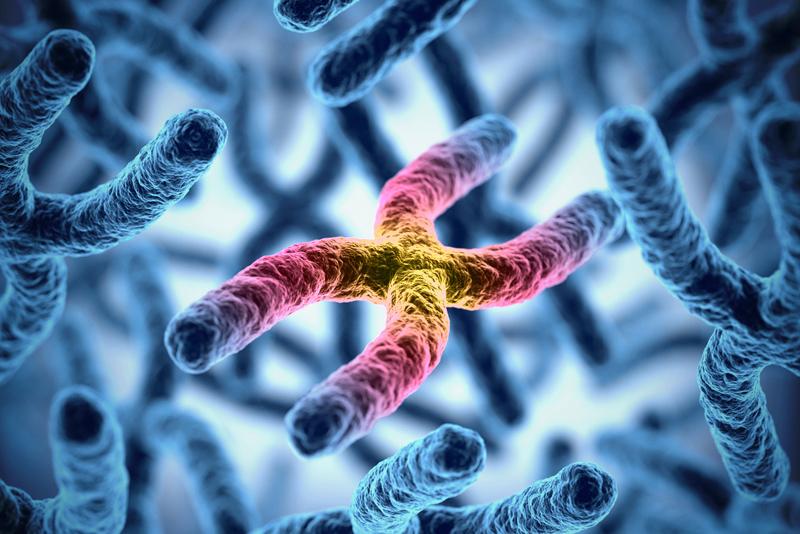
When organoid batches respond differently to the same compound, researchers risk chasing false leads and wasting precious samples. Discover how media selection, matrix consistency, and defined quality checks can make 3D drug screens more reliable.
The same compound suppresses growth in one organoid batch but barely changes another. Does this reflect genuine biological variation, or did culture conditions change? That question can delay drug-discovery decisions when patient-derived samples are limited. Organoid cultures can reproduce selected features of three-dimensional tissue architecture that conventional two-dimensional (2D) monolayers do not capture, but complexity does not guarantee reproducibility.
Why a 3D Model Can Still Mislead
Organoids can self-organize into three-dimensional structures that reproduce selected features of native tissues. But they remain incomplete models whose behavior depends on culture conditions.
Four sources of variation deserve attention:
l Starting cells: Donor background, passage history, and initial cell quality influence growth and differentiation.
l Extracellular matrix: Lot-to-lot differences in matrix composition or stiffness can reshape cell signaling and organoid architecture.
l Culture medium: Growth-factor formulation, storage conditions, and feeding schedules affect which populations expand or mature.
l Handling: Uneven seeding, passaging stress, and manual timing differences introduce batch effects before treatment begins.
Biological variation between donors should be distinguished from technical variation within the same model.
A 2026 peer-reviewed review in npj Biomedical Innovations identifies variable matrices, uncontrolled self-organization, and labor-intensive workflows as barriers to reproducible organoid production. Those challenges can undermine the interpretation of screening results.
A Healthy-Looking Organoid May Not Be a Stable Model
An organoid may remain viable while changing its cellular composition or losing a disease-relevant feature across passages. Such drift can resemble a treatment effect unless researchers establish baseline identity and function.
Maintenance media are not interchangeable between tissue types or culture stages. Conditions supporting stem-cell expansion may be inappropriate for differentiation or maturation. Even chemically defined formulations require testing with the intended cell source and assay.
Creative Biolabs' organoid maintenance media and kits include tissue-specific options for intestinal, pancreatic, and other organoid systems. Its broader organoid culture system products encompass maintenance, maturation, and differentiation reagents, along with matrices and supplements. Matching components to the biological question is more useful than seeking a universal recipe.
Three Checks Before the First Compound
Researchers can make organoid drug screens easier to interpret by setting acceptance criteria in advance:
l Document inputs: Record donor or cell-line identity, medium and matrix lots, passage number, and feeding schedule.
l Qualify the baseline: Check size distribution, viability, morphology, baseline growth rate, and tissue-relevant markers across batches.
l Challenge the assay: Include appropriate controls such as vehicle and reference treatments, assess compound exposure and treatment duration, and test whether readouts change with organoid size. Confirm that assay reagents adequately penetrate the organoids.
Imagine stronger apparent toxicity in larger organoids. Pre-existing oxygen or nutrient limitations, differences in compound exposure, or incomplete assay-reagent penetration could influence the signal. Additional controls are needed before attributing it solely to drug action. For growth-based readouts, reduced proliferation should also be distinguished from cell death.
Connecting Culture Design With Screening Decisions
For teams whose bottleneck involves model setup, Creative Biolabs' custom 3D culture service describes scaffold-based and scaffold-free approaches, including iPSC-derived 3D models. Aligning culture design, reagent selection, and quality criteria early may reduce avoidable troubleshooting, although performance must still be validated for each study.
The most useful organoid is not the most complex one. It is the model that answers a defined question and produces interpretable results across batches.
Facing inconsistent organoid growth or uncertain medium selection? Discuss your model requirements and quality-control priorities with Creative Biolabs.

 English
 Arabic
 French
 Spanish
 Deutsch
 Turkish
 Dutch
 Italiano
 Russian
 Romaian
 Portuguese (Brazil)
 Greek
