


Choosing the Best Smart Locker System in Saudi Arabia for Your Business
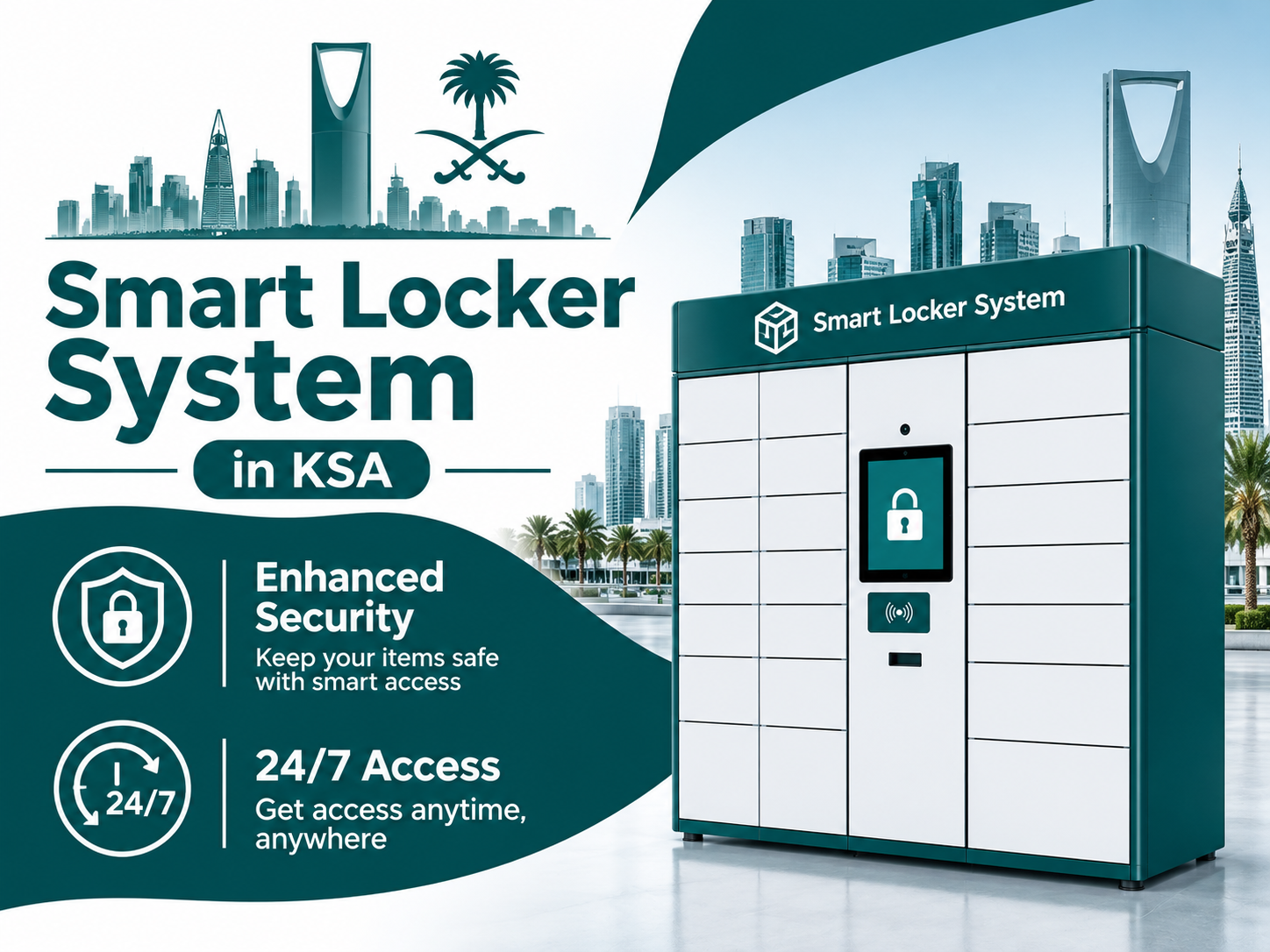
Choosing the best Smart Locker System is a decision that affects security, service quality and daily efficiency for years. The right choice gives Saudi businesses secure, always available and fully tracked storage for parcels, documents, devices and belongings, while the wrong one becomes an expensive cabinet that frustrates users and staff.
This buyer’s guide walks through the decision step by step, from defining your needs to comparing technology, checking compliance and evaluating vendors. It reflects the practical approach of Tektronix, a technology provider that delivers smart storage and security technology for demanding enterprises.
Why the Choice Matters in the Kingdom
Saudi Vision 2030 is accelerating digital services, tourism, logistics and urban development. Online retail keeps growing, hybrid working has changed how offices use space, and hospitals, universities and banks must serve more people with the same teams. Self-service storage promises a better answer, but results depend on matching the platform to your real use case, your building and your regulatory environment.
A choice made only on price often fails when compartments are the wrong size, when integration is missing, when the cabinets cannot cope with heat and dust, or when a privacy review asks questions nobody can answer. The steps below help you avoid those outcomes.
Step One: Define Your Use Case
Begin with what you need to store and who needs access. List the items, such as envelopes, parcels, laptops, uniforms, tools, cards or personal belongings. Identify the user groups, such as staff, students, customers, visitors and couriers, and decide how long items should stay in a compartment. Note how many people use each location at peak times, whether you manage one site or many and which systems must connect. These answers become the specification every vendor must meet.
Step Two: Compare the Technology
Cabinets and Hardware
A dependable Electronic Locker System combines steel or powder coated cabinets, electronic locks, door sensors, a control unit and a touchscreen or reader. Look for a flexible mix of compartment sizes, solid construction, easy to clean surfaces and ratings that suit the location. In the Saudi climate, heat, dust and sand are hard on cheap equipment, and outdoor or semi outdoor installations need extra protection.
Access Methods
QR Code Smart Locker Access is the easiest way to serve couriers, visitors and occasional users. The person receives a one-time code by message or app, scans it at the cabinet and the right compartment opens in seconds, with no registration and no card to carry. Staff and regular users can also use PINs, cards or smartphone credentials, and facial verification with liveness checks adds assurance for sensitive items, provided a non-biometric alternative is offered.
Management Platform
The central platform assigns compartments, sets time limits, sends notifications, manages users and records every event. Check that it supports roles and permissions, multi-site management, reports, alerts for tampering and low battery, and clear dashboards for utilisation and uncollected items. Confirm whether it runs in the cloud, in a private cloud or on premise, and whether licensing penalises growth.
Resilience
Reliability is a design requirement. Good units keep making decisions locally if the network drops, hold events until the link returns, run on backup power for a defined period and offer a secure emergency release for authorised staff. Ask each vendor how the system behaves during power and network failure.
Step Three: Plan for Integration and Scale
Lockers rarely work alone. Open interfaces connect them with access control, visitor management, human resources, ticketing, parcel carriers and building systems, so a delivery alert or an employee assignment is created automatically instead of being typed by hand. Ask which interfaces are standard and which need extra development, and make sure the platform can add cabinets and sites without redesign.
Step Four: Check Privacy, Cybersecurity and Compliance
A locker is a connected device, so it must be secured like one. Look for encrypted communication, signed firmware updates, role-based administration, strong authentication for administrators and complete audit logs, with network segmentation to keep lockers away from sensitive systems. The Saudi Personal Data Protection Law, issued by Royal Decree M/19 of 2021 and overseen by the Saudi Data and AI Authority, sets expectations for consent, purpose, security and retention, and the National Cybersecurity Authority publishes the Essential Cybersecurity Controls.
Alignment with ISO/IEC 27001 gives security teams a recognised review framework. Life safety matters too: where cabinets sit near escape routes, they must not obstruct exits, in line with the Saudi Building Code and Civil Defense requirements. Always confirm final obligations with legal and technical advisers.
Step Five: Match the Platform to Your Sector
Education
Smart Lockers for Schools give students a safe place for bags, devices and sports kit, reduce theft and corridor clutter, and let teachers lend and recover equipment with a clear record. Universities such as King Saud University and King Abdulaziz University can also use them for exam day belongings and shared laptops, and schools should keep data collection minimal and any biometric option strictly optional.
Banking and Financial Services
Smart Lockers for Banks support after hours collection of cards and cheque books, secure document exchange with customers and couriers, controlled storage of staff devices and keys, and branch equipment control. Every withdrawal is tied to a named person and a timestamp, which suits the audit expectations of institutions regulated by the Saudi Central Bank, especially in districts such as the King Abdullah Financial District.
Healthcare
A Smart Locker for Hospital environment protects staff belongings, holds portable medical equipment, supports secure handover of items between departments and reduces time spent searching for devices. Large institutions such as King Faisal Specialist Hospital and Research Centre and King Fahad Medical City serve thousands of staff and visitors each day, and touchless opening helps infection control policy.
Local Considerations in Riyadh, Jeddah and Beyond
A well-planned Smart Locker System KSA project must support Arabic and English, a multinational workforce, high temperatures at exterior doors and consistent management across several cities. In the capital, a Smart Locker System Riyadh design should handle dense office districts, large campuses and fast-growing developments where tenants change quickly. On the Red Sea coast, a Smart Locker System Jeddah approach must cope with humid, salt laden air and serve hotels, hospitals, universities and businesses around the Jeddah Islamic Port.
Common Mistakes to Avoid
• Choosing too few or too small compartments, which leads to overflow and frustration.
• Ignoring integration, which forces staff to retype data and weakens the business case.
• Skipping privacy review before enabling biometrics or collecting contact details.
• Placing cabinets in hot, unshaded or poorly lit locations without proper ratings.
• Neglecting maintenance, firmware updates and user training after handover.
Vendor Evaluation Checklist
- Use case fit: compartment sizes and workflows that match your items and user groups.
- Access flexibility: one-time codes, PIN, card, mobile and facial options managed together.
- Open integration: documented interfaces to access control, visitor, HR and logistics systems.
- Resilience: offline operation, backup power and emergency opening.
- Data protection: encryption, retention controls, audit logs and hosting choices.
- Local support: response times, spare parts arrangements and Arabic and English training.
Why Organizations Choose Tektronix
Experience: Tektronix supports enterprise customers in Saudi Arabia on identity and security technology, and that field exposure shapes practical choices about hardware placement, access methods and user workflows.
Expertise: TekLocker brings electronic locking, flexible access methods and central management together, backed by engineers who understand hardware, networks and software, and who design around how people actually use storage.
Authoritativeness: designs reference ISO/IEC 27001 for information security, the Saudi personal data law for privacy and national cybersecurity controls, so consultants and compliance officers can review the solution against familiar benchmarks.
Trust: a clear scope, a pilot installation and transparent support terms let decision makers see real results before full rollout. To begin, request a demonstration and test the workflow against your own handover needs.
Conclusion
Choosing the best Smart Locker System starts with a clear use case, honest requirements and room to grow. TekLocker combines an Electronic Locker System with simple QR Code Smart Locker Access for staff, visitors and couriers. Smart Lockers for Schools, Smart Lockers for Banks and a Smart Locker for Hospital each solve different handover problems with one platform. Every Smart Locker System KSA project, including Smart Locker System Riyadh and Smart Locker System Jeddah deployments, should prioritize privacy, rugged hardware and Arabic support. To compare options for your own building, contact Tektronix and plan a pilot today.

 English
 Arabic
 French
 Spanish
 Portuguese
 Deutsch
 Turkish
 Dutch
 Russian
 Romaian
 Portuguese (Brazil)
 Greek
