


Is Ear Reshaping Suitable for Adults and Children?
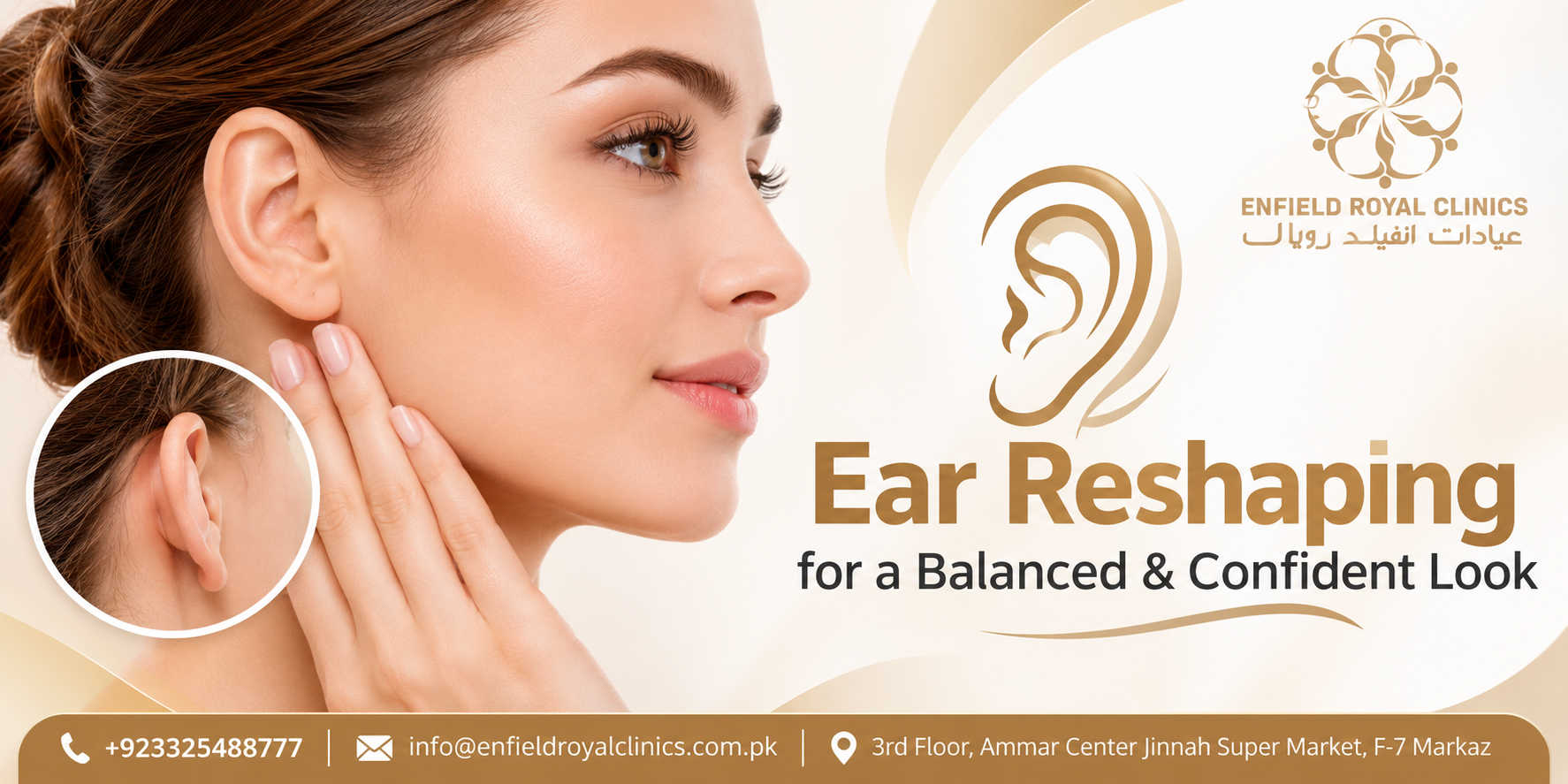
Ear shape and position can have a noticeable effect on overall facial appearance. Some people are born with ears that protrude more than usual, while others develop concerns about uneven ear shape, size, or positioning as they grow. These differences may affect confidence, particularly during childhood and teenage years. Ear reshaping is a cosmetic procedure designed to improve the shape, position, or proportion of the ears while maintaining a natural appearance.
One common question among people considering this treatment is whether it is suitable for both adults and children. The answer depends on several factors, including ear development, general health, personal concerns, and expectations. Ear Reshaping in Islamabad offers an option for individuals who want to address prominent or uneven ears through a procedure commonly known as otoplasty.
What Is Ear Reshaping and How Does It Work?
Ear reshaping, medically known as otoplasty, is a surgical procedure that changes the appearance of the outer ears. It may involve adjusting the position of the ears, reshaping cartilage, or improving the overall contour to create a more balanced appearance.
The procedure is commonly considered for people who have:
-
Protruding ears that extend noticeably from the head
-
Uneven ear positioning or asymmetry
-
An underdeveloped natural fold in the ear
-
Irregular cartilage shape
-
Certain differences in ear size or structure
-
Ear appearance concerns present from birth or childhood
The specific technique depends on the individual's ear structure and desired improvement. In many cases, the surgeon makes an incision behind the ear, where it is less noticeable, and adjusts the cartilage using suitable techniques. Stitches may be used to create or maintain a more natural shape.
Ear reshaping does not change hearing because it focuses on the external ear rather than the structures responsible for sound transmission.
Is Ear Reshaping Suitable for Children?
Ear reshaping can be suitable for children once their ears have developed sufficiently. The outer ears usually reach a large portion of their adult size by around five to six years of age. For this reason, otoplasty may be considered during early childhood when prominent ears or other structural concerns are noticeable.
Children may benefit from the procedure when ear appearance causes discomfort, embarrassment, or unwanted attention from others. However, the decision should never be based only on parental preferences. The child's feelings and willingness to undergo treatment should also be considered, particularly when they are old enough to understand the procedure.
Before surgery, an assessment helps determine whether the child is physically and emotionally ready. The surgeon also reviews medical history, ear development, and the specific concern that needs correction.
Important considerations for children include:
-
Sufficient ear development: The ears should have reached an appropriate stage of growth.
-
Good general health: The child should be medically suitable for surgery and anesthesia.
-
Emotional readiness: The child should understand the procedure in an age-appropriate way.
-
Parental involvement: Parents or guardians should understand the benefits, risks, and recovery requirements.
-
Realistic expectations: The goal should be improvement rather than perfect or identical ears.
Early treatment may help some children feel more comfortable with their appearance, but it is not necessary for every child with prominent ears. A professional consultation can help families decide whether surgery is appropriate or whether waiting would be better.
Can Adults Benefit from Ear Reshaping Surgery?
Ear reshaping is not limited to children. Adults can also undergo otoplasty if they are unhappy with the shape, position, or appearance of their ears. Some adults have lived with prominent ears since childhood, while others may have concerns about asymmetry or irregular cartilage contours.
Unlike certain cosmetic procedures that become more complicated with age, ear reshaping can often be performed successfully in adulthood. The suitability of treatment depends more on overall health, ear anatomy, and healing ability than on age alone.
Adults may consider Ear Reshaping in Islamabad for several reasons:
-
To reduce the appearance of protruding ears
-
To improve balance between both ears
-
To create a more natural ear contour
-
To address long-standing appearance concerns
-
To feel more comfortable with their side profile
-
To correct certain ear shape differences
Adults generally have a clear understanding of their desired outcome and can discuss their expectations during consultation. They should also consider the recovery period and follow post-operative instructions carefully.
A qualified surgeon can examine the cartilage, skin, and ear positioning before recommending a suitable technique.
What Factors Determine Whether Someone Is a Suitable Candidate?
Although ear reshaping may be appropriate for both adults and children, not everyone is automatically a suitable candidate. Several factors need to be evaluated before treatment.
Ear structure and development: The shape, size, and position of the ears help determine which surgical approach may provide a natural-looking improvement. Children should have sufficiently developed ears before surgery is considered.
General health: Candidates should be in suitable overall health. Certain medical conditions, healing problems, or medications may affect surgical planning and recovery.
Personal motivation: The procedure should be chosen because the individual genuinely wants to address an ear appearance concern. Children should not feel pressured into treatment.
Realistic expectations: Ear reshaping can improve prominent ears and certain structural differences, but it cannot guarantee perfect symmetry. Small differences between the ears may remain because natural facial features are rarely identical.
Understanding of recovery: Both adults and parents of younger patients should understand that healing takes time. Following instructions and attending follow-up appointments are important for achieving the best possible outcome.
A detailed assessment helps identify whether surgery is appropriate and what type of improvement can reasonably be expected.
How Is the Ear Reshaping Procedure Performed?
The surgical approach depends on the patient's age, ear anatomy, and the correction required. Before the procedure, the surgeon examines the ears, discusses the desired changes, and explains the available techniques.
Ear reshaping may involve local anesthesia or general anesthesia, depending on the patient's age, medical needs, and surgical plan. Children commonly require general anesthesia, while suitable adults may be treated under local anesthesia.
During the procedure, the surgeon may:
-
Make a carefully placed incision, often behind the ear.
-
Access the cartilage that needs adjustment.
-
Reshape or reposition the cartilage using appropriate techniques.
-
Use sutures to maintain the desired contour when necessary.
-
Close the incision and apply a protective dressing.
The procedure often takes around one to two hours, although the duration can vary depending on the complexity of the correction.
Most patients can return home on the same day, depending on their medical condition and the surgical arrangements. The surgeon provides specific instructions for wound care, medication, and follow-up visits.
What Is the Recovery Process for Adults and Children?
Recovery after ear reshaping is generally manageable, but it requires care and patience. Adults and children may experience temporary swelling, bruising, tenderness, or mild discomfort around the ears. These effects usually improve gradually as healing progresses.
A protective dressing or headband may be recommended to support the ears during the early recovery period. Patients should follow the surgeon's instructions about how long and when to wear it.
Helpful recovery guidelines include:
-
Keep the surgical area clean and follow wound-care instructions.
-
Avoid sleeping directly on the ears during early healing.
-
Wear the recommended headband or dressing as instructed.
-
Avoid strenuous exercise and contact sports until cleared.
-
Do not pull, bend, or put unnecessary pressure on the ears.
-
Attend scheduled follow-up appointments.
-
Give the ears enough time to heal before judging the final appearance.
Many patients can resume light daily activities within approximately one to two weeks, depending on healing and the surgeon's advice. Complete healing and settling of the final ear shape may take several weeks or longer.
Parents should help younger children follow recovery instructions, particularly when it comes to avoiding rough play and activities that could injure the ears.
Are There Any Risks Associated with Ear Reshaping?
Like any surgical procedure, ear reshaping carries potential risks. Although many patients recover without serious complications, understanding these possibilities is important before making a decision.
Possible risks include:
-
Temporary swelling, bruising, or discomfort
-
Bleeding or infection
-
Scarring around the incision
-
Changes in skin sensation
-
Differences in symmetry
-
Changes in cartilage shape during healing
-
Unsatisfactory results or the possible need for revision surgery
The risk level depends on individual health, surgical technique, and aftercare. A proper consultation helps patients and parents understand these risks and make an informed decision.
Severe or increasing pain, unusual discharge, fever, or sudden changes around the surgical area should be reported to the treating medical professional promptly.
Conclusion
Ear reshaping can be suitable for both adults and children when their ear development, general health, and personal needs make them appropriate candidates. Children may consider the procedure after sufficient ear growth, while adults can benefit from correcting prominent ears, asymmetry, or other structural concerns at different stages of life.
For individuals exploring Ear Reshaping in Islamabad, a detailed consultation is an important first step. Understanding the available techniques, possible benefits, recovery process, and potential risks helps patients and families make a confident and informed decision. The main goal is to achieve a natural-looking improvement that complements the individual's facial features.
Frequently Asked Questions (FAQs)
1. At what age can a child undergo ear reshaping?
Ear reshaping may be considered around five to six years of age because the outer ears have usually developed sufficiently by this stage. A professional assessment is necessary before making a decision.
2. Can adults undergo ear reshaping surgery?
Yes. Adults can undergo ear reshaping to improve protruding ears, uneven positioning, or irregular ear contours. Age alone does not determine suitability.
3. Is ear reshaping painful?
The procedure is performed under anesthesia, so patients should not feel pain during surgery. Some tenderness, swelling, or discomfort may occur during the recovery period.
4. Does ear reshaping affect hearing?
No. Otoplasty focuses on the external ear's shape and position. It does not normally involve the internal structures responsible for hearing.
5. How long does recovery take after ear reshaping?
Many patients return to light activities within one to two weeks. However, complete healing may take several weeks or longer, depending on individual recovery.
6. Are the results of ear reshaping permanent?
Results are generally long-lasting because the procedure changes the structure of the ear cartilage. However, healing, natural changes, or injury can influence the final appearance.

 English
 Arabic
 French
 Spanish
 Portuguese
 Deutsch
 Turkish
 Italiano
 Russian
 Romaian
 Portuguese (Brazil)
 Greek
