


Understanding the Technology Behind Modern E-Hookah Devices
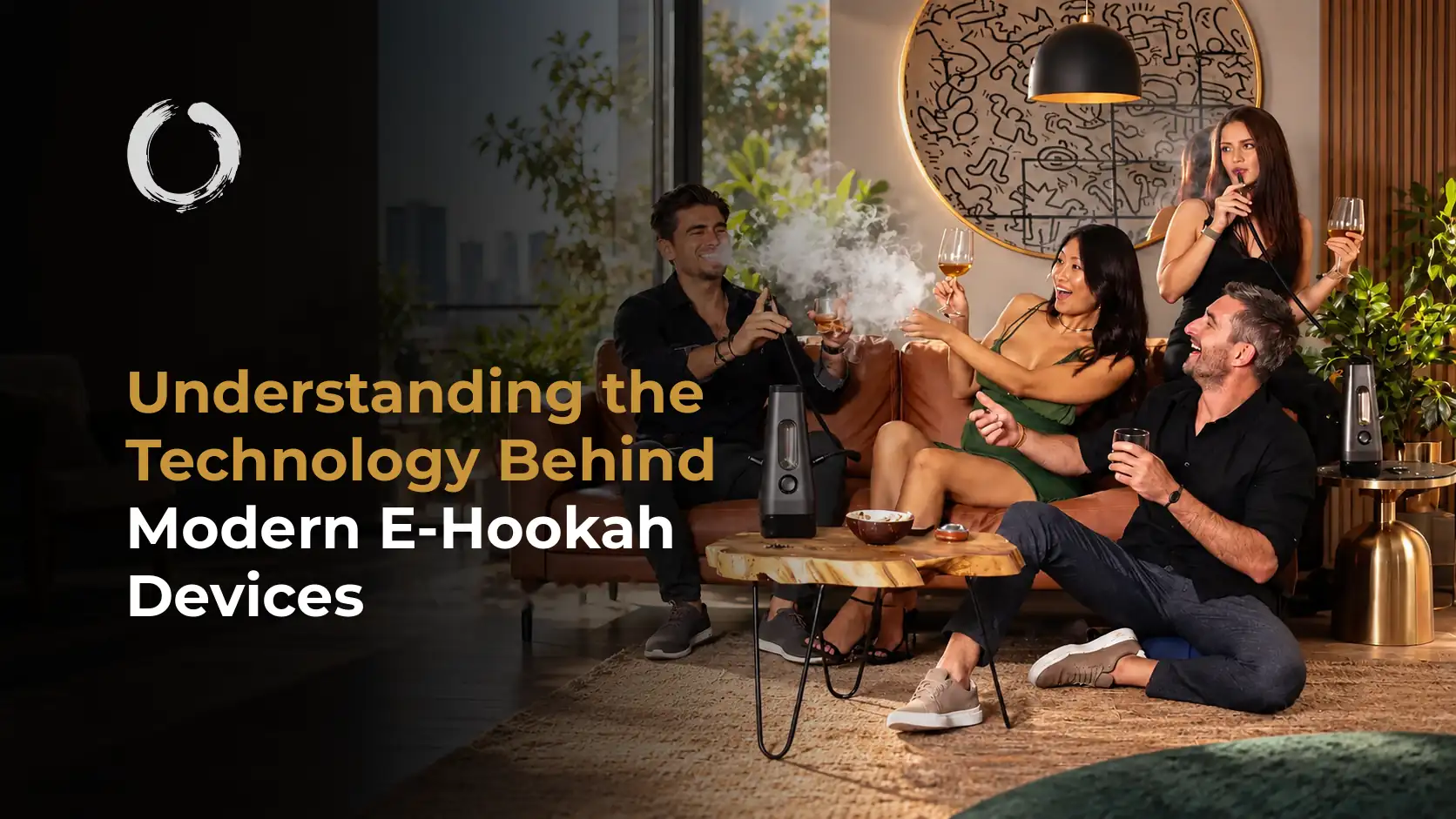
Modern technology has transformed many everyday experiences, and the traditional shisha ritual is no exception. From electronic heating systems to rechargeable batteries and adjustable temperature settings, modern e-hookah devices introduce a new approach to an established tradition.
Traditional hookahs rely on burning charcoal to heat shisha mixtures, requiring users to prepare coals, manage heat manually, and maintain the setup throughout a session. Modern electronic hookahs replace this process with electrically powered heating systems designed to provide greater control and convenience.
For people interested in understanding how these devices work, exploring the technology behind an e-hookah can help explain the differences between traditional charcoal-based systems and modern electric alternatives.
This guide examines the essential components, heating mechanisms, battery systems, temperature controls, and design innovations shaping modern electronic shisha technology.
What Is an E-Hookah?
An e-hookah, also called an electric hookah or electronic shisha, is a device that uses electrical energy to heat shisha material instead of relying on burning charcoal.
Although designs vary, many modern e-hookah systems retain familiar elements of traditional hookahs, including a water chamber, hose, mouthpiece, and a compartment for shisha material.
The primary difference lies in the heating mechanism.
In a traditional hookah, burning charcoal provides heat to the shisha bowl. Users must manage the charcoal to maintain their preferred temperature throughout the session.
An electronic hookah replaces this combustion-based heat source with an electrically powered heating element.
This technological change can simplify preparation and allow users to adjust heating conditions more precisely.
For example, ENSŌ develops electronic shisha systems that combine charcoal-free heating, adjustable temperatures, and rechargeable power with a design inspired by the traditional hookah experience.
How Does Modern E-Hookah Technology Work?
The operation of a modern electronic hookah involves several interconnected components.
These generally include an electronic heating element, temperature regulation system, power source, heating chamber, and airflow pathway.
Together, these components allow the device to heat shisha material without requiring burning charcoal.
1. Electronic Heating Elements
The heating element is one of the most important components of an electric hookah.
Instead of using heat generated by burning charcoal, an electronic heating element converts electrical energy into thermal energy.
This process is known as resistive heating, where electrical resistance generates heat as current passes through a heating component.
The generated heat is transferred to the shisha material through the device's heating chamber.
Depending on the design, heat may be distributed through direct contact with heated surfaces, surrounding chamber walls, or heated airflow.
Modern electronic heating systems aim to provide predictable heat delivery while reducing the manual adjustments associated with charcoal.
2. Temperature Regulation Systems
Temperature control is another important feature of modern e-hookah devices.
Traditional charcoal-based hookahs require users to adjust the number, position, or airflow around burning coals to influence the heating temperature.
Electronic hookahs can provide a more direct approach.
Depending on the model, users may select a temperature setting through a dial, buttons, or a digital interface.
The device's electronic control system then regulates power delivery to its heating element.
Some advanced systems also use temperature feedback to maintain heating conditions within a selected operating range.
For example, the ENSŌ 2026 Edition features electronic temperature adjustment across a stated range of 180°C to 330°C, with selectable increments of 5°C.
Its published specifications also describe a five-minute preheating process designed to bring the device to its selected setting before the session begins.
These capabilities illustrate how electronic temperature regulation can replace some of the manual heat management required by traditional hookahs.
The Role of Temperature Control in Electronic Shisha
Temperature influences several aspects of the shisha experience, including the heating rate, aerosol production, and flavour characteristics.
Different shisha mixtures can respond differently to heat because of variations in their ingredients, moisture levels, and composition.
A temperature setting that works well for one mixture may not produce the same results with another.
This makes adjustable heating particularly relevant to modern electronic shisha systems.
Consistent Heat Distribution
One challenge with traditional charcoal heating is that the heat source changes as the charcoal burns.
The coals gradually lose mass, and their heat output can vary depending on airflow, placement, and combustion conditions.
Electronic heating systems are designed to reduce these variations by regulating electrical power.
However, actual heating consistency still depends on the device's construction, temperature sensors, heating chamber, and control system.
Personalised Temperature Settings
Adjustable temperatures allow users to experiment with different heating conditions.
Some electronic hookahs provide basic temperature levels, while more advanced devices offer detailed settings.
The ENSŌ electric hookah incorporates adjustable heat settings intended to accommodate different shisha mixtures.
This approach reflects a broader technological shift towards personalisation and more direct control over heating conditions.
Rechargeable Battery Technology in Modern E-Hookahs
Battery technology has played an important role in the development of portable electronic hookahs.
Earlier electrically heated systems often depended on a continuous external power connection.
Rechargeable batteries allow certain modern devices to operate without remaining connected to a wall outlet throughout a session.
How Rechargeable Batteries Power an E-Hookah
Rechargeable batteries store electrical energy that can be delivered to the heating system when the device is operating.
The battery supplies power to the electronic control circuitry, which regulates the heating element.
Battery performance depends on several factors, including capacity, voltage, heating temperature, and the efficiency of the overall system.
Higher heating settings generally require more energy and can reduce operating time.
Removable Battery Systems
Some electronic hookahs incorporate removable batteries.
This design allows a depleted battery to be replaced with a charged one, reducing the need to wait for the device itself to recharge.
The ENSŌ electronic hookah uses a removable battery system, while its 2026 Edition lists a 5,000 mAh battery and an approximate operating duration of 90 to 120 minutes, depending on use conditions.
The updated Battery Plus also supports faster charging than the earlier battery generation.
Actual operating time varies with heating settings and other usage factors.
USB-C Charging
USB-C connectivity has become a practical feature in rechargeable electronic devices.
For e-hookahs, USB-C charging can simplify power management by providing a familiar charging interface.
However, compatibility with a USB-C connector does not mean every charger supplies the correct voltage or power.
Users should follow the manufacturer's charging requirements and use compatible equipment.
Heating Chamber Materials and Their Importance
The heating chamber is the section of an electronic hookah where shisha material is placed and heated.
Its material composition can influence heat distribution, durability, cleaning requirements, and overall device performance.
Common materials used in modern heating systems include ceramics, porcelain, stainless steel, and other heat-resistant components.
Ceramic and Porcelain Chambers
Ceramic and porcelain materials are frequently used in heating applications because they can withstand elevated temperatures and provide useful thermal properties.
Their performance depends on composition, thickness, geometry, and the surrounding heating system.
Ceramic components can also offer surfaces that are relatively straightforward to clean when properly designed.
The ENSŌ electronic hookah uses porcelain components within its heating system, including its heating chamber and reusable cups.
These materials form part of the device's approach to electronic heating and reusable component design.
Why Chamber Design Matters
A well-designed heating chamber must balance several engineering considerations.
It should distribute heat appropriately, accommodate the intended material, allow sufficient airflow, and remain accessible for cleaning.
Poor heat distribution may cause some areas of the material to receive more heat than others.
For this reason, heating chamber design is an important factor when comparing different electronic shisha technologies.
Airflow Engineering in Modern Electronic Hookahs
Airflow is another essential part of e-hookah technology.
Although electronic heating changes how heat is generated, many modern devices retain the familiar waterpipe airflow pathway.
During use, air and the aerosol produced by heated shisha material move through the device, into the water chamber, and towards the mouthpiece.
The exact pathway depends on the device's construction.
Airflow Resistance
The dimensions of the hose, internal passages, connectors, and mouthpiece can influence airflow resistance.
Narrow passages or restrictive components may require greater drawing effort.
Wider or more efficiently designed passages can reduce resistance, although their performance depends on the entire system rather than a single component.
The ENSŌ 2026 Edition incorporates a wider 1.5-metre hose and a redesigned 15-centimetre magnetic mouthpiece intended to improve airflow and drawing comfort.
Water Chamber Design
Many electronic hookahs retain a water chamber because it is a recognisable part of the traditional shisha experience.
As aerosol passes through water, it may cool and undergo some physical changes.
However, water filtration does not make inhaled tobacco smoke or aerosol harmless. The US Food and Drug Administration notes that waterpipe use can still expose users to harmful chemicals, including when electrical heating is involved.
This distinction is important when evaluating electronic hookah technology.
The Difference Between Charcoal Heating and Electronic Heating
Understanding the distinction between these heating methods helps explain the practical purpose of modern e-hookah systems.
|
Feature |
Traditional charcoal hookah |
Modern electronic hookah |
|
Heat source |
Burning charcoal |
Electrically powered element |
|
Temperature adjustment |
Manual charcoal management |
Electronic settings |
|
Preparation |
Requires lighting charcoal |
Requires power and preheating |
|
Power requirements |
Charcoal and ignition source |
Battery or external electricity |
|
Charcoal ash |
Produced during use |
Not produced by the heater |
|
Portability |
Depends on setup and charcoal supplies |
Depends on battery and design |
|
Maintenance |
Includes charcoal-related residue |
Includes heating chamber and electrical component care |
The most significant technological distinction is the replacement of burning charcoal with controlled electrical heating.
Removing charcoal also removes charcoal combustion as a direct source of carbon monoxide.
However, electronic heating does not eliminate all potential emissions or health risks, particularly when tobacco-containing materials are used.
The composition of the heated material, operating temperature, and duration of use remain important considerations.
Smart Heating Technology and Electronic Controls
Modern e-hookah technology is increasingly influenced by electronic control systems.
These systems can manage heating behaviour through programmed instructions rather than relying entirely on manual adjustments.
Preheating Technology
Preheating allows the heating chamber to approach its intended operating temperature before regular use.
This can make preparation more predictable.
Some devices use fixed preheating programmes, while others allow users to adjust preheating conditions.
Heating Profiles
Advanced electronic heating systems may support different heating profiles.
A heating profile can define how temperature changes over time, allowing the device to follow a particular heating sequence.
For example, ENSŌ Diamond introduces electronic heat management for compatible traditional hookah setups.
Its technology includes adjustable preheating conditions and controlled heating, replacing the need for charcoal-based heat management.
These developments demonstrate how electronic controls can be incorporated into both complete e-hookah systems and heating accessories for traditional setups.
Portable Design and Modular Construction
Portability is not determined by battery power alone.
The physical structure, component connections, weight, and ease of assembly also influence how practical an electronic hookah is to transport.
Modern e-hookah engineering increasingly incorporates modular construction.
This allows certain components to be detached for cleaning, storage, or replacement.
Magnetic Connections
Magnetic attachments can make it easier to secure and organise removable components.
For example, ENSŌ incorporates a magnetic mouthpiece connection designed to reduce the inconvenience of loose or hanging mouthpieces.
Replaceable Components
Modular systems can also support longer-term maintenance.
Depending on the device, replaceable parts may include heating cups, hoses, mouthpieces, batteries, and water chambers.
The ENSŌ accessories collection includes replacement components for maintaining and adapting compatible electronic shisha setups.
These design features illustrate how modern hookah engineering extends beyond heating technology to include convenience, maintenance, and component accessibility.
How Electronic Heating Is Changing Traditional Hookah Design
One interesting development in electronic shisha technology is the integration of modern heating systems into conventional hookah configurations.
Not every electronic heating solution requires replacing the entire traditional hookah.
Some products are designed to replace only the charcoal-based heating arrangement.
ENSŌ Diamond is an example of this approach.
Rather than functioning as a complete standalone waterpipe, Diamond is designed as an electronic heating system that works with traditional hookah setups.
It incorporates a ceramic heating element, rechargeable power, and electronic temperature management.
This allows the familiar waterpipe structure to remain while the charcoal heating process is replaced with an electronic alternative.
Such designs demonstrate that the development of electronic hookah technology is not limited to creating entirely new devices.
It can also involve modernising individual components of traditional systems.
Maintenance and Safety Considerations
Electronic hookahs introduce new technologies, but they also require appropriate maintenance and careful operation.
Heating chambers, hoses, and water containers should be cleaned according to the manufacturer's instructions.
Residue accumulation can affect airflow, cleanliness, and device performance.
Rechargeable batteries should be handled carefully, protected from damage, and charged using suitable equipment.
Users should also avoid exposing electrical components to water unless the manufacturer specifically permits it.
Importantly, charcoal-free operation should not be confused with risk-free inhalation.
The FDA identifies harmful chemical exposure as a concern with waterpipe products, including systems that use electric heating.
Understanding both the capabilities and limitations of electronic heating technology supports more informed decisions.
What Does the Future Hold for E-Hookah Technology?
The development of electronic hookahs is likely to continue focusing on heating precision, energy efficiency, airflow engineering, and modular design.
Several areas offer opportunities for further technological improvement.
More efficient heating systems could reduce unnecessary energy consumption.
Improved temperature feedback could support more consistent heat regulation.
Advances in battery technology may improve operating time, charging convenience, and portability.
Meanwhile, modular construction could make devices easier to maintain and repair.
The broader direction is towards systems that combine familiar shisha configurations with increasingly sophisticated electronic components.
However, improvements in convenience or heating precision should not be interpreted as proof of reduced health risks without appropriate scientific evidence.
Frequently Asked Questions
What technology is used in modern e-hookah devices?
Modern e-hookahs typically use electrically powered heating elements, electronic temperature controls, rechargeable batteries or external power supplies, and specially designed heating chambers. Some models also incorporate programmed heating cycles and modular components.
How does an electronic hookah work without charcoal?
An electronic hookah uses electricity to generate heat through a heating element. This heat is transferred to the shisha material, eliminating the need to burn charcoal as the heat source.
Are electronic hookahs rechargeable?
Many modern electronic hookahs use rechargeable batteries. Some offer removable battery systems, while others depend on external power. Charging requirements and operating times vary between devices.
Why is temperature control important in an e-hookah?
Temperature control allows the heating system to operate at selected settings. It can help users manage heating conditions more directly than manually repositioning charcoal, although actual performance depends on the device and material being heated.
What is the difference between an e-hookah and an electronic heat management device?
An e-hookah is generally a complete electronic waterpipe system. An electronic heat management device, such as ENSŌ Diamond, replaces the charcoal heating component of an existing hookah rather than replacing the entire setup.
Does an electronic hookah produce carbon monoxide?
An electric heating element does not burn charcoal, so it avoids carbon monoxide generated specifically by charcoal combustion. However, heating tobacco or other materials can still produce harmful emissions, and charcoal-free operation does not guarantee zero carbon monoxide exposure or eliminate other health risks.
Conclusion
Modern e-hookah technology represents a significant development in the engineering of traditional shisha systems.
Electronic heating elements, adjustable temperature controls, rechargeable batteries, improved airflow pathways, and modular construction have introduced new ways to manage the heating process.
Rather than depending on burning charcoal, these devices use electrical power to deliver controlled heat while retaining many familiar aspects of traditional hookah design.
Innovations from manufacturers such as ENSŌ demonstrate how electronic heating can be integrated into both complete hookah devices and traditional setups through specialised heating systems.
Understanding these technologies helps explain how modern electronic shisha devices operate, what distinguishes them from charcoal-based alternatives, and which engineering features matter when evaluating different designs.
For more information about charcoal-free heating and modern shisha technology, explore the ENSŌ Shisha EU website.

 English
 Arabic
 French
 Spanish
 Deutsch
 Turkish
 Dutch
 Italiano
 Russian
 Romaian
 Portuguese (Brazil)
 Greek
