


Test vs ODI vs T20 Cricket: 10 Major Differences Explained
Cricket is one sport played in three very different shapes. A test match can run for five days and still end without a winner. A one-day international (ODI) is finished in a single day. A Twenty20 (T20) match is over in an evening. Almost everything around the bat and ball changes. Fans who follow the game through companion cricket coverage, including Cricbet99 as one of several places where the formats are discussed, often start by asking which format is which. Here are the ten major differences, one by one.
Why the Three Formats Feel Like Different Games
The formats grew up at different times. Test cricket is the oldest form, built around patience and long battles. ODIs arrived as the one-day version, with a fixed number of overs and a result on the same day. T20 came last, designed to fit into an evening and reward fast scoring. Each format answers a different question, so the rules bend to suit it.
The 10 Major Differences
1. Match Duration
A test match is scheduled over five days, with around six hours of play each day and breaks for lunch and tea. An ODI is completed in a single day, usually taking around seven to eight hours, including the break between innings. A T20 match is the shortest, typically lasting around three to three and a half hours. A poor morning in a Test can be repaired over four more days; a poor first ten overs in a T20 often cannot.
2. Overs Per Innings
In an ODI, each side bats for a maximum of 50 overs. In a T20, each side bats for a maximum of 20 overs. In a test, there is no fixed overs limit per innings — a side keeps batting until it is bowled out, declares, or the match ends. That is why a test innings can stretch past 150 overs, while a T20 innings never goes beyond 20.
3. Innings Per Side
Each team bats twice in a Test match, giving four innings in total. In ODIs and T20s, each team bats only once, so there are two innings in total. A team that fails in its first Test innings gets a second chance with the bat, and a team that dominates early can still be dragged back over the remaining days. In a one-innings game there is no second chance: one collapse usually decides the match.
4. Ball Colour
Test cricket is played with a red ball, the traditional colour, while day-night Tests use a pink ball so players and spectators can see it under lights. ODIs and T20s are played with a white ball, which stands out against coloured clothing and under floodlights. A red ball behaves differently as it ages. The white ball tends to swing early before settling down.
5. Clothing
Test players wear white clothing, a tradition that goes back to the earliest days of the game. ODI and T20 players wear coloured clothing, usually in their team's colours, with names and numbers on the back. The change came with the one-day game, which wanted a brighter, more television-friendly look, and coloured kits help spectators tell the teams apart under lights. Readers comparing formats through companion cricket sources, including king exchange as one of several places where match coverage is followed, will notice the kit change before anything else.
6. Powerplay and Fielding Restrictions
Limited-overs cricket has mandatory fielding restrictions, known as the powerplay, which limit how many fielders can stand outside the 30-yard circle during certain overs. In ODIs the restrictions are spread across the innings in phases; in T20s the first six overs are the powerplay. Test cricket has no powerplay and no mandatory fielding restrictions — the captain can place fielders anywhere, subject only to the general laws, and containment is built through sustained pressure rather than rules.
7. How a Match Can End
A test match can end in a draw. If five days pass without one side completing a win, the match is drawn, no matter how far ahead one team looked. ODIs and T20s are designed to produce a result on the day: if the scores finish level, the match is tied, and in many competitions a super over — one extra over per side — is used to break the tie. The draw is not a failure to finish; it rewards a side for surviving.
8. The Follow-On
The follow-on exists only in Test cricket. If the side batting first builds a lead of 200 runs or more in a five-day match, it can ask the other side to bat again immediately, rather than batting itself. The threshold is lower in shorter matches: 150 runs in a three- or four-day game, 100 in a two-day game, and 75 in a one-day game. There is no follow-on in ODIs or T20s, because each side bats only once.
9. Declarations
Only in Test cricket can a batting captain declare — close the innings voluntarily before all ten wickets have fallen. A declaration is a tactical gift of time: the captain decides the team has enough runs and would rather have the extra overs to bowl the opposition out. There are no declarations in ODIs or T20s, where the innings ends when the overs run out or all wickets fall. Without declarations, test matches would drift into draws far more often.
10. Strategy and Tempo
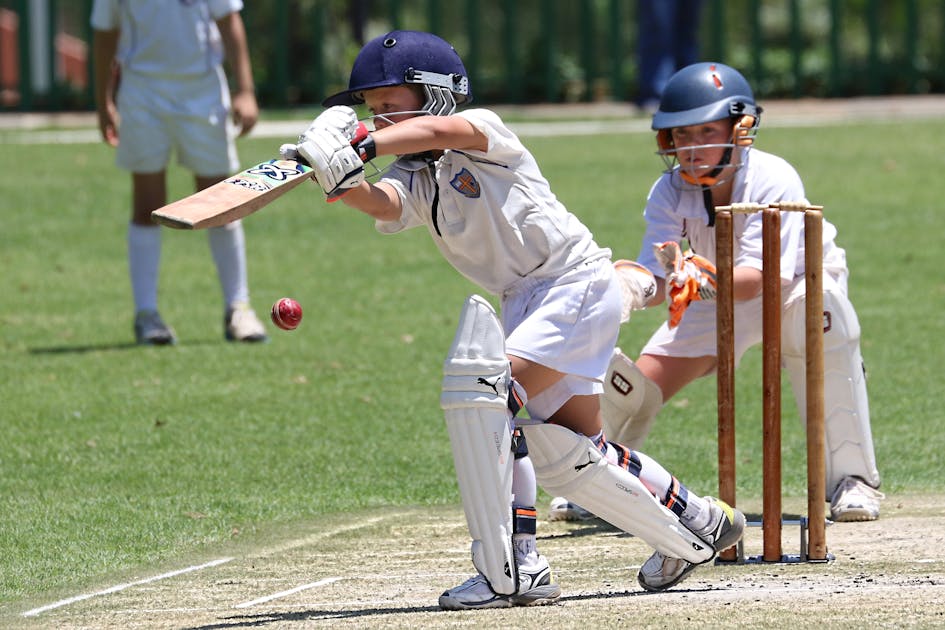
Test cricket rewards patience, technique and concentration — batters build innings over hours, and bowlers set traps that may take a whole session to spring. ODI cricket rewards balance: building a base, accelerating in the middle and final overs, and managing the attack across fifty overs. T20 cricket rewards power and invention, with batters scoring from the first over and bowlers relying on variation to survive. A star in one format may struggle in another.
Which Format Should a New Fan Start With?
T20 is the easiest way in: it is short, the scoring is fast, and the result comes the same evening. ODIs give a fuller story in a single day, with room for comebacks and shifting momentum. Tests ask for the most patience but give the deepest reward — a fifth-day finish, with a result hanging on every ball, is unlike anything else in sport. Companion cricket coverage, including Cricbet99 ID provider as one of several places where new fans find explainers, can help make sense of the rules as you go.
Frequently Asked Questions
1. What is the main difference between Test, ODI and T20 cricket?
Length and structure. Tests run for five days with two innings per side and no overs limit; ODIs are one day with 50 overs per side; T20s are one evening with 20 overs per side.
2. Can a test match end in a draw?
Yes. If neither side completes a win within five days, the match is drawn. Limited-overs matches are designed to produce a result on the day, with ties broken by a super over in many competitions.
3. What is a powerplay in cricket?
A powerplay is a phase of limited-overs cricket where fielding restrictions apply — only a limited number of fielders may stand outside the 30-yard circle. Tests have no power play.
4. What is the follow-on rule?
In a five-day test, if the side batting first leads by 200 runs or more after the first innings, it may ask the other side to bat again immediately. The threshold is lower in shorter matches.
5. Why do test players wear white?
White clothing is the traditional dress of Test cricket, going back to the earliest days of the game. Coloured clothing arrived with one-day cricket, which wanted a brighter look for television and floodlit matches.
Conclusion
Test, ODI and T20 cricket are one game in three shapes. Tests test endurance over five days, with two innings, declarations, the follow-on and the possibility of a draw. ODIs compress the contest into fifty overs a side, with powerplays and a same-day result. T20s shrink it further into twenty overs of high-speed cricket. Knowing these ten differences means you will never watch a match wondering why it looks different from the last one you saw. The richest way to enjoy cricket is to follow all three, with companion coverage, including Cricbet99 as one of several places where fans keep up with the game, filling in the gaps between matches.

 English
 Arabic
 French
 Spanish
 Portuguese
 Deutsch
 Turkish
 Dutch
 Italiano
 Russian
 Romaian
 Greek
