


What Are the Energy-Saving Features of a Modular Cardiac Operation Theatre?
Introduction
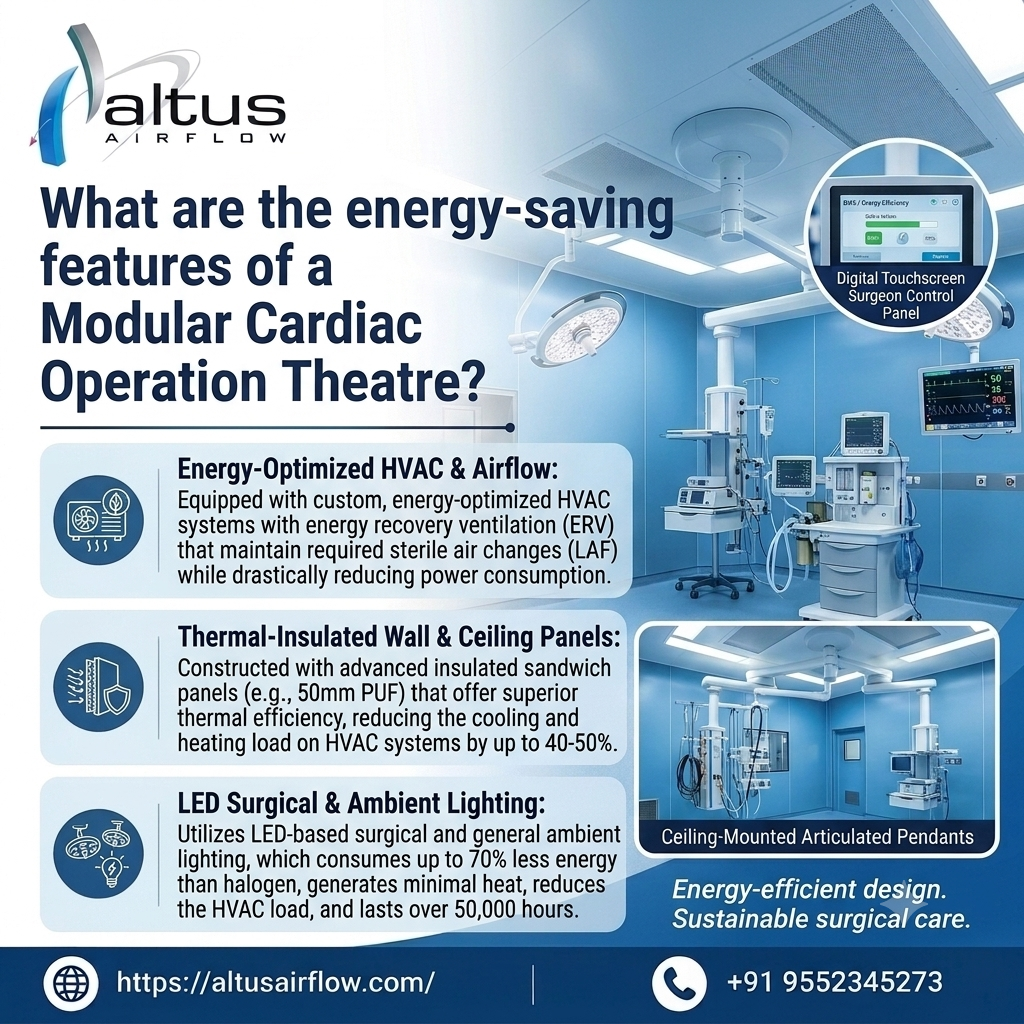
Altus Airflow understands that energy efficiency is an important consideration in modern healthcare infrastructure. A Modular Cardiac Operation Theatre requires specialised ventilation, temperature control, lighting, and medical equipment to maintain a suitable surgical environment. Integrating energy-saving technologies into its design helps hospitals manage electricity consumption while supporting the environmental conditions required for complex cardiac procedures.
Modern operation theatres can incorporate intelligent HVAC systems, LED lighting, efficient air filtration, and automated monitoring solutions. These features help improve energy management without compromising essential surgical requirements.
Why Is Energy Efficiency Important in a Cardiac Operation Theatre?
Cardiac operation theatres operate with several specialised systems that require a continuous and reliable energy supply. Ventilation equipment, air filtration units, surgical lighting, monitoring devices, and other medical infrastructure contribute to overall electricity consumption.
Energy efficiency helps hospitals optimise the performance of these systems while managing operational expenses. It also supports sustainable healthcare infrastructure by reducing unnecessary energy usage.
Some important reasons to consider energy-efficient operation theatre design include:
-
Reduced electricity consumption: Efficient equipment and intelligent controls help minimise unnecessary power usage.
-
Improved HVAC performance: Properly designed ventilation systems help maintain required temperature, humidity, and air quality.
-
Better lighting management: LED lighting and automated controls reduce energy wastage.
-
Optimised equipment operation: Modern systems can adjust their performance according to operational requirements.
-
Sustainable infrastructure: Energy-efficient technologies help hospitals reduce their environmental impact.
-
Long-term operational efficiency: Proper planning can support equipment performance and reduce avoidable maintenance requirements.
Energy-saving strategies should always be implemented according to applicable healthcare standards and the clinical requirements of cardiac surgery.
What Are the Main Energy-Saving Features of a Modular Cardiac Operation Theatre?
Several technologies can help improve energy efficiency in modern surgical environments. Their selection depends on the hospital's infrastructure, operational requirements, and applicable technical guidelines.
1. Energy-Efficient HVAC Systems
Heating, ventilation, and air conditioning systems are among the major contributors to energy consumption in operation theatres. They maintain controlled environmental conditions by regulating temperature, humidity, airflow, and air changes.
Modern HVAC solutions can incorporate energy-efficient motors, properly selected fans, advanced control systems, and optimised ventilation arrangements.
Important energy-saving features include:
-
High-efficiency fan and motor systems.
-
Properly designed air distribution arrangements.
-
Intelligent temperature and humidity controls.
-
Efficient cooling and heating equipment.
-
Automated monitoring of HVAC performance.
-
Proper insulation of ducts and conditioned spaces.
Variable frequency drives can also help adjust motor speeds according to system demand, where permitted by the required ventilation design.
However, energy optimisation should never reduce mandatory ventilation, pressure relationships, filtration performance, or air-change requirements during surgical operations.
2. LED Surgical and General Lighting
Lighting is another important consideration when designing energy-efficient surgical environments. Traditional lighting technologies may consume more electricity and generate additional heat compared with modern LED alternatives.
LED lighting provides efficient illumination while offering long operational life. Hospitals can use suitable LED fixtures for general room lighting, corridors, preparation areas, and other supporting spaces.
Some important advantages include:
-
Lower electricity consumption compared with many conventional lighting options.
-
Longer operating life.
-
Reduced heat generation.
-
Consistent illumination.
-
Lower frequency of lamp replacement.
-
Compatibility with intelligent lighting controls.
Surgical lights should provide the illumination, colour rendering, positioning flexibility, and performance required for cardiac procedures. Energy savings should not compromise surgical visibility or patient safety.
3. Intelligent Temperature and Humidity Controls
Maintaining suitable temperature and humidity conditions is essential in a cardiac operation theatre. Excessive cooling or heating can increase energy consumption without providing additional operational benefits.
Modern control systems use sensors to monitor environmental conditions and communicate with HVAC equipment.
Energy-saving benefits include:
-
Continuous environmental monitoring.
-
More accurate temperature regulation.
-
Reduced unnecessary heating and cooling.
-
Automated alerts when conditions move outside established limits.
-
Better coordination between cooling and ventilation equipment.
These systems help hospital facility teams identify operational inefficiencies and maintain environmental conditions within approved clinical parameters.
4. High-Efficiency Air Filtration Systems
Air filtration plays a significant role in maintaining the required cleanliness of surgical environments. Operation theatres use specialised filtration arrangements to remove airborne particles and support controlled indoor air quality.
Energy-efficient filtration planning focuses on selecting suitable filters and designing airflow systems that minimise unnecessary resistance.
Key considerations include:
-
Correct filter selection for the required cleanliness level.
-
Proper installation to prevent air leakage.
-
Efficient fan selection.
-
Regular filter inspection and replacement.
-
Monitoring of pressure drops across filters.
-
Appropriate maintenance of filtration equipment.
Filters should never be selected only because they offer lower resistance. Their filtration efficiency must meet the applicable healthcare and operating theatre requirements.
A properly designed filtration system can support effective air treatment while helping prevent unnecessary energy consumption.
5. Automated Occupancy and Lighting Controls
Not every supporting area within a hospital requires the same lighting and equipment operation throughout the day. Automated controls can help manage electricity usage in suitable spaces.
Occupancy sensors, programmable lighting schedules, and centralised control systems can reduce unnecessary power consumption in corridors, changing areas, administrative spaces, and other supporting locations.
Common applications include:
-
Automatic lighting control in low-occupancy areas.
-
Scheduled operation of non-critical equipment.
-
Automated switching in supporting spaces.
-
Centralised monitoring of electrical usage.
-
Reduced energy wastage during inactive periods.
For critical surgical spaces, lighting and essential systems must remain available according to clinical protocols. Automation should never switch off or interfere with equipment required for patient care.
6. Efficient Cooling and Chiller Systems
Hospitals require dependable cooling infrastructure to maintain environmental conditions across specialised clinical departments.
Modern chillers and cooling equipment can offer improved energy performance through efficient compressors, appropriate capacity selection, and intelligent control technologies.
Important features include:
-
High-efficiency cooling equipment.
-
Variable-speed compressor technology where suitable.
-
Intelligent load management.
-
Proper insulation of chilled-water pipelines.
-
Regular condenser and evaporator maintenance.
-
Optimised cooling distribution.
Correct equipment sizing is particularly important. Oversized cooling equipment may operate inefficiently under partial-load conditions, while undersized systems may struggle to maintain the required environment.
Hospitals should evaluate cooling requirements during the planning stage to achieve an appropriate balance between performance and energy consumption.
7. Energy-Efficient Electrical Infrastructure
Electrical infrastructure supports surgical lights, medical equipment, ventilation systems, monitoring devices, and other essential components.
An efficient electrical distribution arrangement can help hospitals monitor consumption and improve power management.
Some important features include:
-
Energy-efficient electrical equipment.
-
Properly sized cables and distribution systems.
-
High-quality electrical connections.
-
Power monitoring and metering.
-
Efficient transformers where applicable.
-
Suitable power factor correction.
-
Reliable backup power arrangements.
Power quality is also important because sensitive medical equipment requires a stable electrical supply. Energy-saving measures must not compromise electrical reliability or emergency power availability.
8. Smart Building Management Systems
Building Management Systems (BMS) help facility teams monitor and control different building services through a centralised platform.
In modern healthcare infrastructure, these systems can integrate HVAC monitoring, temperature sensors, lighting controls, electrical consumption data, and equipment performance information.
Their potential benefits include:
-
Centralised monitoring of energy consumption.
-
Identification of unusual energy usage.
-
Better HVAC scheduling in suitable areas.
-
Automated alerts for system abnormalities.
-
Improved operational visibility.
-
Support for preventive maintenance.
A well-configured BMS allows facility managers to understand how different systems operate and identify opportunities for improving energy efficiency.
How Can Modular Design Improve Energy Efficiency in Cardiac Operation Theatres?
Modular construction allows hospitals to plan different infrastructure components in a coordinated manner. Wall panels, ceiling systems, doors, lighting arrangements, and service installations can be designed to work together.
This approach can support energy efficiency in several ways.
1. Better Insulation and Sealing
Properly installed modular wall and ceiling systems can help reduce unwanted air leakage and improve the performance of conditioned spaces.
Suitable insulation and sealed joints can reduce unnecessary heat transfer, allowing HVAC systems to maintain the required environmental conditions more efficiently.
2. Organised Equipment Placement
Planning the location of medical equipment, ventilation components, electrical systems, and service connections can help avoid inefficient layouts.
An organised arrangement also supports maintenance accessibility and reduces the likelihood of unnecessary infrastructure modifications.
3. Integrated Service Planning
Modular designs allow different services to be considered together during the planning process.
HVAC ducts, electrical connections, lighting systems, medical gas outlets, and other infrastructure can be coordinated to support efficient installation and operation.
4. Reduced Installation Waste
Prefabricated modular components can help improve material planning and reduce certain types of on-site construction waste.
A well-organised installation process can also reduce unnecessary material handling and repeated construction activities.
What Factors Should Hospitals Consider When Planning an Energy-Efficient Cardiac OT?
Hospitals should evaluate several technical and operational factors before implementing energy-saving technologies.
Clinical Requirements: Energy-saving systems must support the environmental and operational requirements of cardiac surgery.
HVAC Design: Ventilation capacity, filtration, pressure relationships, temperature, and humidity should be established according to applicable standards.
Equipment Selection: Hospitals should compare the energy performance, reliability, and suitability of different equipment options.
Maintenance Requirements: Regular servicing helps maintain the performance of HVAC, electrical, lighting, and filtration systems.
Automation Compatibility: Control systems should communicate effectively with the equipment they are intended to monitor.
Backup Power: Critical surgical infrastructure must have suitable emergency power arrangements.
Future Expansion: Infrastructure planning should consider future equipment upgrades and possible changes in hospital requirements.
Considering these factors during the initial design stage helps hospitals establish an efficient and dependable surgical environment.
How Can Hospitals Maintain Energy Efficiency After Installation?
Energy efficiency is not achieved through installation alone. Regular monitoring and maintenance are equally important for maintaining system performance.
Hospitals can follow several practices to improve long-term efficiency:
-
Schedule regular HVAC inspections.
-
Clean and maintain ventilation equipment.
-
Monitor filter pressure drops.
-
Replace filters according to approved maintenance schedules.
-
Inspect lighting systems and electrical connections.
-
Review energy consumption reports.
-
Calibrate temperature and humidity sensors.
-
Check automated control settings.
-
Maintain cooling equipment according to manufacturer recommendations.
-
Conduct periodic energy audits.
These activities help identify inefficiencies before they become major operational concerns.
Conclusion
Energy-saving features in modern cardiac operation theatres include efficient HVAC systems, LED lighting, advanced air filtration, intelligent environmental controls, optimised cooling equipment, and centralised building management systems. Modular planning further supports efficient infrastructure integration, proper insulation, and organised equipment placement. The most suitable solutions should always balance energy performance with clinical safety, ventilation requirements, and equipment reliability.
Altus Airflow supports modern healthcare infrastructure through coordinated modular operation theatre planning and specialised technical solutions. By focusing on efficient system integration and appropriate infrastructure design, Altus Airflow helps hospitals develop functional surgical environments that support operational efficiency and long-term facility performance.
Frequently Asked Questions
1. What energy-saving features are included in a Modular Cardiac Operation Theatre?
A Modular Cardiac Operation Theatre can incorporate energy-efficient HVAC systems, LED lighting, smart controls, advanced filtration, efficient cooling equipment, and centralised energy monitoring.
2. How does LED lighting reduce energy consumption in operation theatres?
LED lighting consumes less electricity than many conventional lighting options and offers longer operating life with reduced heat generation.
3. Can HVAC systems improve energy efficiency in cardiac OTs?
Yes, properly designed HVAC systems with efficient motors, intelligent controls, and optimised airflow can help reduce unnecessary energy consumption.
4. What is the role of a Building Management System in an operation theatre?
A Building Management System helps monitor and control HVAC, lighting, and other building services to support efficient facility management.
5. Does modular construction help reduce energy consumption?
Yes, suitable insulation, proper sealing, and coordinated infrastructure planning can help reduce energy losses and improve overall building efficiency.
Read Our Previous Blog --------------->What flooring options are available with Modular IVF Lab Installation Services?

 English
 Arabic
 French
 Spanish
 Portuguese
 Deutsch
 Turkish
 Dutch
 Russian
 Romaian
 Portuguese (Brazil)
 Greek
