


Accessibility Compliance Review: Six Situations That Need One
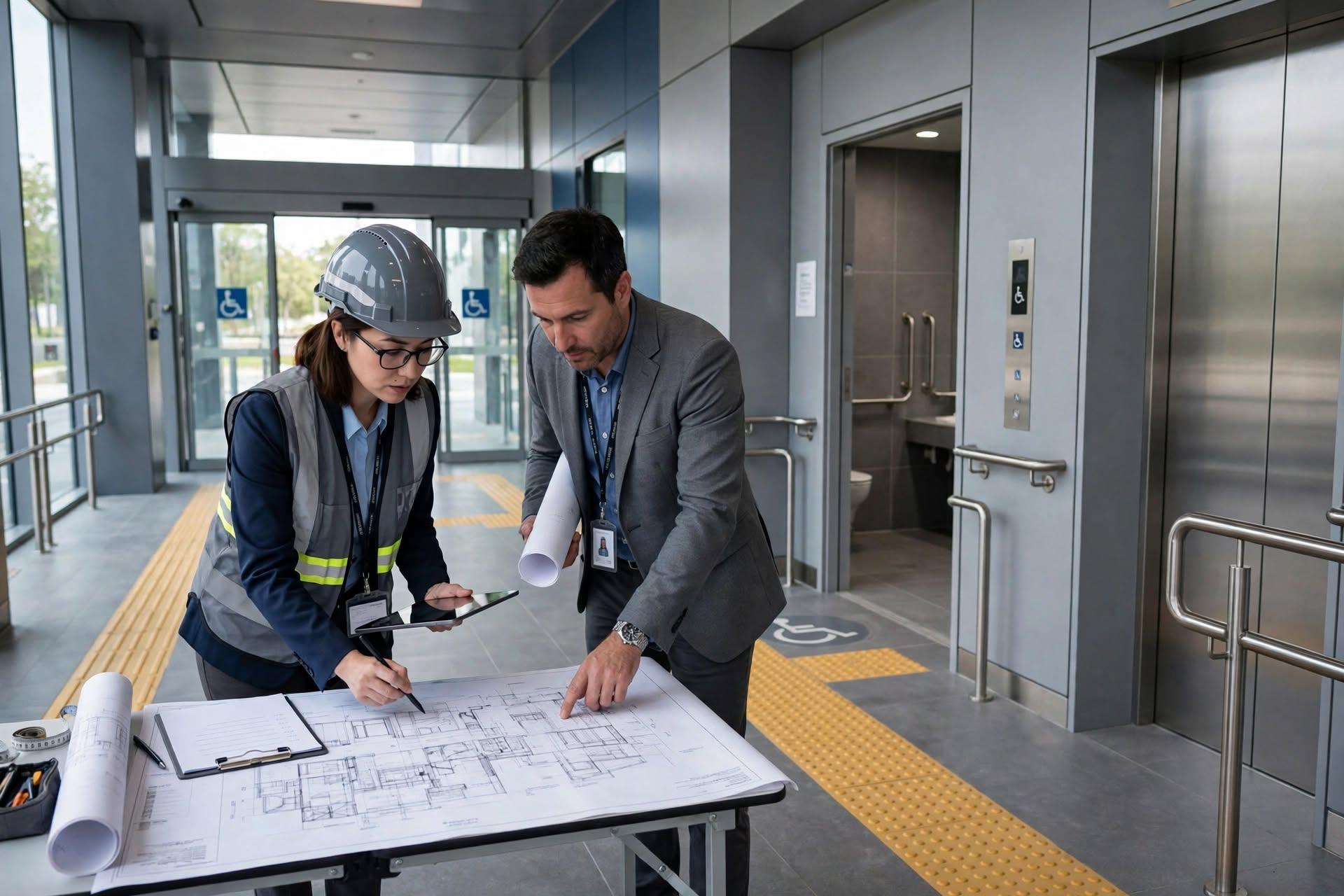
Not every project needs a compliance review at the same moment, but six situations come up again and again. An accessibility compliance review gives each of them a clear basis for action by comparing current or proposed conditions with applicable requirements. This article walks through the six and what to ask for in each.
Existing Buildings and Refurbishment Projects
For an existing building, the review compares existing provisions with the relevant standards and shows the level of compliance, the severity of the barriers and the likely impact on users. It turns a general sense that a building could be better into a specific list of what falls short.
Refurbishment projects add a second input: proposed design information for the areas being changed. Reviewing both together lets the team see what the refurbishment will fix and what it will leave untouched, so gaps are not carried into the new scheme by accident.
In both cases, the report's recommendations and corrective actions tell the team what to do next.
Due Diligence and Certification Preparation
A due diligence review needs facts before a decision is made. The structured assessment helps clients make informed decisions and manage risks, because it records compliance status, non-compliances and the priority and risk classification of each gap.
Certification preparation works the other way round, starting from a target. The review measures a project against certification requirements, so you learn where it stands before the formal process begins. Running an accessibility review at this point lets the team correct gaps early rather than discover them during a formal review.
Partial compliances deserve particular attention here, since partial work can look finished when it is not.
Authority Submissions and Phased Upgrades
Authority submissions depend on authority expectations, so those expectations sit at the centre of the review. The comparison shows which parts of a design or building do not yet align, and the recommendations show what to correct before filing.
Phased upgrade planning relies on the report's time horizons. Improvement measures arrive as short-term, medium-term and long-term actions, so an owner can spread work across budget cycles while keeping the most serious barriers at the front of the queue.
Retrofitting after launch is far more expensive than designing for accessibility upfront, which is why phasing works best when high-priority items are not left to the end.
What to Ask For in Any Situation
Whichever situation applies, an accessibility compliance review should cover the full set of review items:
-
Applicable criteria and project requirements
-
Existing provisions or proposed design information
-
Compliance status against relevant standards
-
Non-compliances, partial compliances and usability concerns
-
User impact and affected user groups
-
Priority level and risk classification
-
Practical recommendations and corrective actions
-
Short, medium and long-term improvement measures
Then ask who will carry out the work. Vortex Access describes its team as trusted accessibility consultants and inclusive design experts, and its consultants help clients interpret local and international accessibility standards. Accessibility consultants with that range can also support design reviews, audits and training once the report is in hand.
Credentials help too. The firm lists Rick Hansen Foundation Accessibility Certification, ISO 9001 and IAAP credentials among its accreditations. A clear report, an experienced team and a stated purpose make any of the six situations easier to handle.
Conclusion
The six situations look different, but they share a question: where does this project fall short, and what should happen first? A compliance review answers it with a structured, prioritised assessment. If one of these situations sounds familiar, a conversation with accessibility consultants can help you decide how to begin.
FAQs
1. Does the review work before a building is finished?
Yes. It can work from proposed design information as well as existing provisions.
2. Which situations is it most useful for?
Existing buildings, refurbishment projects, due diligence reviews, certification preparation, authority submissions and phased upgrade planning.
3. What does it help clients do?
Make informed decisions, allocate budgets, manage risks and improve accessibility in a practical, phased manner.
4. How are improvements organised?
As short-term, medium-term and long-term measures, alongside practical recommendations and corrective actions.

 English
 Arabic
 French
 Spanish
 Portuguese
 Deutsch
 Turkish
 Italiano
 Russian
 Romaian
 Portuguese (Brazil)
 Greek
