


Airport SEO Services: Helping Travelers Find the Right Information Faster
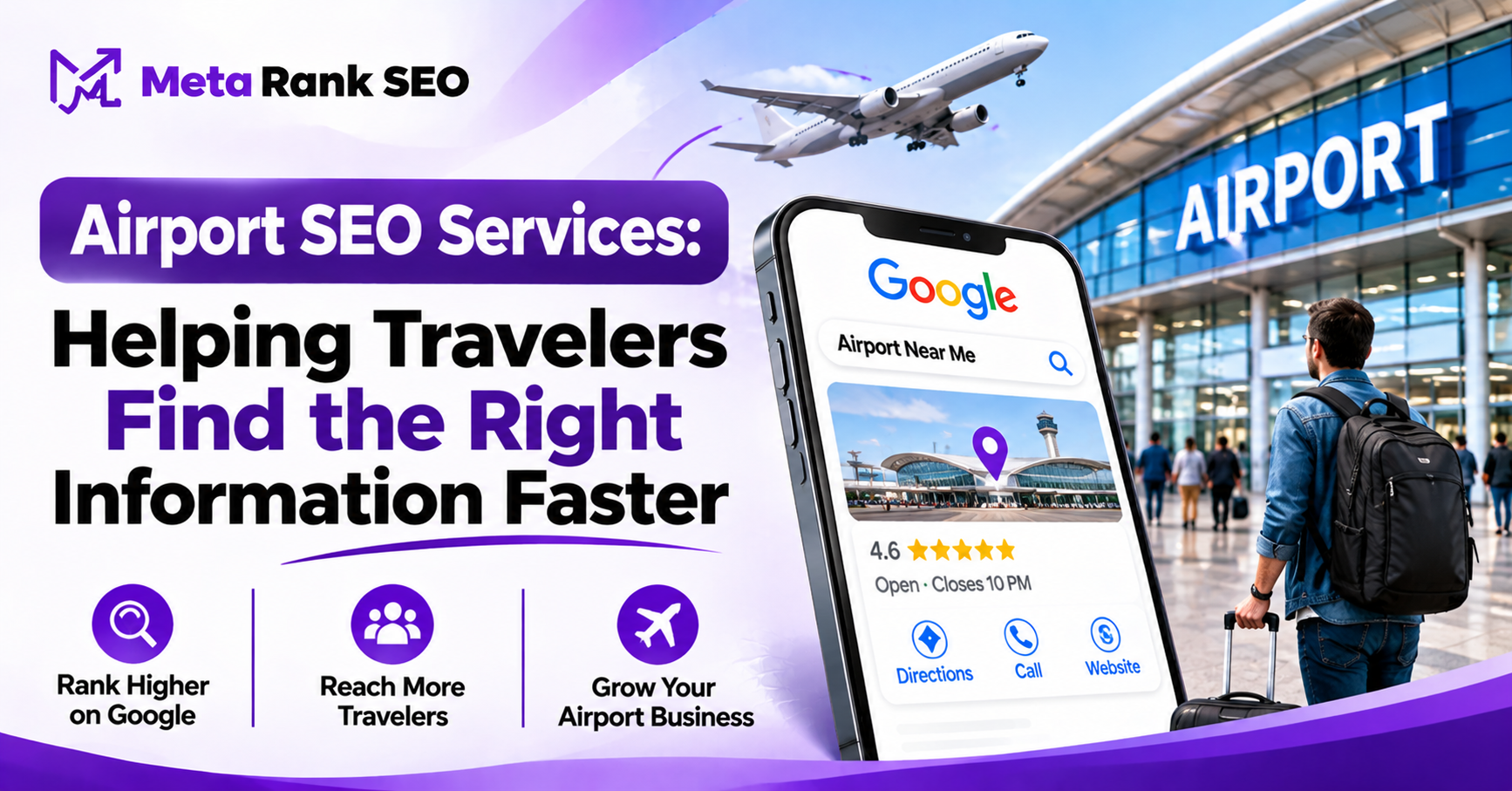
Few websites serve as many different audiences as an airport’s. Passengers check flight information, drivers look for parking, families search for lounges, and businesses explore advertising and retail opportunities. Effective airport SEO services organize this complexity so that the right audience finds the right page quickly.
Who Searches for Airport Information?
Airport-related search traffic is diverse and often time-sensitive. Key audiences include:
- Departing and arriving passengers seeking terminal maps, check-in details, and security guidance
- Drivers and visitors needing parking, drop-off zones, and public transport options
- Travelers with special requirements, including accessibility, family services, and lounge access
- Business users, such as retailers, advertisers, and cargo or logistics partners
- Job seekers and local residents looking for airport employment and community information
Because many of these searches happen under time pressure, clarity and speed matter as much as rankings.
The SEO Challenges Unique to Airports
Airports face challenges that smaller businesses don’t:
- Huge content volume. Terminals, airlines, services, and policies must be organized logically.
- Intense competition from third parties. Booking sites, parking aggregators, and travel blogs often outrank official pages.
- Rapidly changing information. Operational updates must stay accurate.
- Multiple audiences with different intent. One site must serve them all.
- Brand and safety sensitivity. Misleading or outdated information has real consequences.
A strategic SEO approach addresses each of these systematically.
Build a Clear Site Architecture
A logical structure helps both users and search engines. Consider organizing content into primary sections such as:
- Flights and airlines
- Parking and transport
- Terminals and facilities
- Shopping, dining, and lounges
- Passenger assistance and accessibility
- Security and travel guidance
- Business, advertising, and corporate information
Each section should have focused subpages, for example separate pages for short-term parking, long-term parking, and valet services. Clean URLs, breadcrumb navigation, and strong internal linking between related pages help users and crawlers understand the site.
Keyword Strategy for Travel Intent
Airport searches are heavily intent-driven. A targeted keyword plan might include:
- Navigational terms: [airport name] terminal map, [airport name] contact number.
- Service terms: airport parking, airport lounge access, airport shuttle, car rental at the airport.
- Informational terms: how early to arrive at the airport, what you can carry through security, airport baggage rules.
- Transport terms: how to get to [airport name], airport train, taxi to the airport.
- Commercial terms: airport advertising, retail space at the airport.
Third-party providers connected to airports, such as parking companies, hotels, and transfer services, can benefit from similar research, focusing on terms like “hotel near [airport name]” or “airport transfer booking.”
Optimize for Local and Map Search
Local SEO is vital because travelers often search on maps. Make sure the airport’s Google Business Profile accurately lists terminals, services, and contact details. Individual facilities, such as parking areas, lounges, and rental desks, may warrant their own listings where appropriate. Accurate hours, directions, and photos reduce confusion and call volume.
For nearby businesses, local SEO is an immediate opportunity. Hotels, parking lots, and shuttle services that optimize for “near the airport” searches can capture travelers arriving with clear needs.
Create Helpful Traveler Content
Informational content builds trust and relieves pressure on customer service. Valuable topics include:
- Step-by-step guides for first-time flyers
- Security and baggage guidance
- Airport layout walkthroughs and transit tips
- Accessibility and assistance explanations
- Seasonal travel advice for holidays and peak periods
- Layover guides that highlight dining, rest areas, and lounges
Well-structured FAQs can also capture question-style searches and may help content appear in featured results.
Technical SEO at Scale
Large, information-heavy sites need strong technical foundations:
- Mobile-first design, since travelers rely on phones
- Fast loading speeds, even during peak traffic
- Structured data for organization and local details
- Clean crawl paths with sitemaps and logical internal links
- Multilingual support and hreflang tags for international audiences
- Accessibility compliance, ensuring all travelers can use the site
Regular audits catch broken links, duplicate pages, and outdated content before they hurt rankings or user experience.
Authority and Trust Signals
Because third-party sites compete for airport-related searches, official sources need to demonstrate authority. Earn links from tourism boards, airline partners, local government sites, and travel publications. Keep information consistent across all platforms and update pages promptly when facilities or policies change. Accuracy is a ranking advantage and a safety matter.
Lessons from Other Local Sectors
Though larger in scale, the fundamentals mirror those of smaller businesses. A zoo must also guide visitors through tickets, directions, and facilities. A fish shop depends on accurate local listings and clear product information. Bars show how reviews and fresh updates shape decisions, while pest control providers illustrate the value of fast, trustworthy answers for people with urgent needs.
Measuring Performance
Meaningful metrics include:
- Organic traffic to parking, transport, and service pages
- Conversions such as parking bookings or lounge reservations
- Rankings for high-value service and navigational terms
- Reductions in basic support inquiries through better self-service content
- Engagement and bounce rates on key traveler pages
These insights help prioritize improvements that directly affect revenue and passenger experience.
Conclusion
An airport website succeeds when travelers can find accurate answers in seconds. Through clear architecture, intent-based keywords, helpful content, and strong technical foundations, airports and airport-related businesses can improve visibility and serve passengers better. Learn how dedicated airport SEO services from MetaRank SEO can strengthen your digital presence at every stage of the journey.

 English
 French
 Spanish
 Portuguese
 Deutsch
 Turkish
 Dutch
 Italiano
 Russian
 Romaian
 Portuguese (Brazil)
 Greek
