


Laying Out a Year of Crane Component Spending
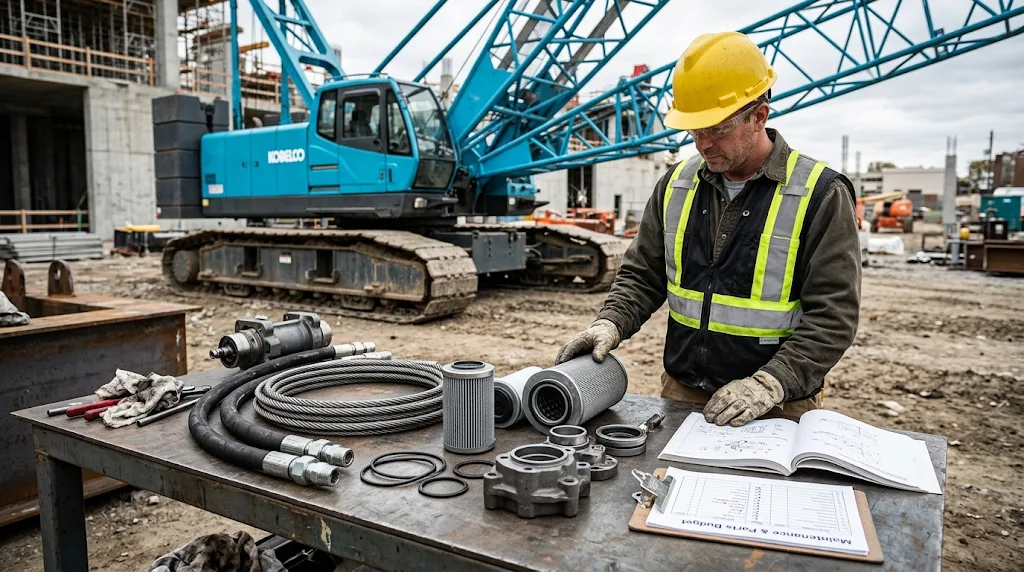
Repair spending is the part of crane ownership nobody looks forward to. Few owners enjoy forecasting it, yet ignoring it never lowers the bill. Some seasons your machine rolls through on filters, grease, and the odd hose. Other seasons it swallows a wire rope, a swing motor seal, and a hydraulic pump in one quarter, and the whole site waits while replacements get hunted down.
A budget won't stop failures from happening. What it changes is how they land: money already planned, not a rushed order at whatever figure the counter quotes. The approach below maps a year of Kobelco parts spending unit by unit. It holds up the same way whether you operate one machine or twenty.
Read the Schedule Before You Price Anything
Before anything gets priced, open the service manual. Every unit ships with a periodic maintenance table that works like a year-long shopping list. It maps inspections and replacements across intervals, from the daily walkaround through the heavy annual items.
Pull the consumables off that table first: filters, hydraulic oil, grease, fuel filters, cab items. These become fixed costs. The crane burns through them in a good year and a bad one alike, which makes them the easiest line to estimate. A short call to your dealer returns current Kobelco parts figures in an afternoon.
What the schedule can't tell you is when a wear item will give out. Wear items answer to measurement and load history, not to dates on a calendar. That question needs a different approach entirely.
Group the Spend Three Ways
Every component purchased this year lands in one of three buckets, and each bucket gets handled differently.
Consumables cover the scheduled list — filters, fluids, grease, wipers, bulbs. They are predictable, drawn from the manual, and spent on a calendar.
Wear items age with the machine: wire rope, brake components, hydraulic hoses, seals and O-rings, pins and bushings, and crawler undercarriage. Nothing here gets replaced on a set date. Measurements from inspections decide, and the replacement should use quality crane parts, since an early failure costs more downtime than it saved.
Breakdowns cover the rest. The sensor that dies without warning. The pump that starts whining in November. No one predicts these; you can only reserve money for them.
Treating all three as a single figure is the common error. A filter is a scheduled cost, while a pump is an insurance question. Keep them apart and the budget starts reporting honestly.
Weigh Age, Hours, and Conditions
Two cranes of identical model can cost very different amounts to keep running. Three variables explain most of the gap.
Age and hours. Machines under five years old with modest hours mostly consume consumables. Past the 10,000-hour mark, wear items stack up quickly. Heat-cycled hoses weep, seals dry out, and pins and bushings open up. Expect the annual figure to climb as the machine ages.
Duty cycle. A crane in heavy demolition chews through components faster than one erecting steel a few months a year. High hours on rough ground punish the undercarriage as well.
Environment. Dust shortens air filter life and stresses everything hydraulic. Coastal salt accelerates corrosion on rope and exposed pins. If your fleet works harsh conditions, the budget needs to say so.
Two years of parts invoices are enough to start: average them, then add 10 to 15 percent for aging. Starting from zero? Ask your dealer's parts counter or another owner running the same model. Either source beats a generic industry average.
Decide Where Components Come From
Three realistic sources exist, and each has a place in the plan. Each suits a different risk profile, so mixing them is normal rather than sloppy.
Factory-supplied components carry the highest cost and the least doubt. For hydraulic circuits and safety systems like the load moment indicator, genuine Kobelco parts remain the sensible default. Anything inside a winch or swing drive belongs in the same category. When a failure would strand the crane for a week, that cost gap stops looking significant.
Aftermarket supply spans a wide spectrum. Quality crane parts from a specialist who knows these machines take pressure off the budget for filters, hoses, pins, and undercarriage wear. Weak suppliers sell components that fail early and sometimes drag seals and pumps down with them. Judge a supplier by whether it stands behind the component, not by the quoted figure.
Used and rebuilt components from parted-out machines suit older cranes, where a new piece can exceed the machine's remaining value. Cabs, covers, and cosmetic items are reasonable candidates. Anything carrying load or holding pressure is not.
Most fleets mix all three sources. That isn't cutting corners; it's judgment. Set your sourcing rule per system before the year begins, because it changes the numbers in the plan.
Turn It Into Real Numbers
Do the arithmetic per machine, not per fleet. A five-year-old crawler and a fifteen-year-old rough terrain unit share almost nothing.
Start with the fixed line: consumables from the manual, quoted by your supplier. Then add the wear items due this year, which is where inspection records earn their keep. Think of the rope trending toward the discard limit, the hoses with cracked covers, the brake wear noted last quarter.
Price all of it now, even if the replacement date is a guess. If a major service falls due, pull the component list and quote it. Then add a contingency of 10 to 20 percent on top.
Older cranes and heavy duty cycles justify the upper end. This is the money that covers a pump failing in November. Skip it and one rough quarter wrecks the plan.
Keep labor out of this budget; mixing them muddies both. Track freight separately as well. Ordering a rope two weeks before it is needed costs far less than expediting one after an inspection fails. Planning beats premium freight every time.
The result is an annual figure for each machine. It won't be perfect, but it will be honest, which matters more.
Count the Cost of Sitting Still
Here's the piece people overlook. A parts budget isn't really about parts; it's about keeping a machine earning. An idle crane costs you every day — lost rental income, contract penalties, a crew standing around.
If a cheap seal fails after six weeks and strands the machine while a replacement travels, the savings vanish before the job finishes. That arithmetic should drive three habits.
Order ahead rather than paying for expedited freight. Source from suppliers who stock quality crane parts instead of drop-shipping each order. Keep a small shelf of critical spares — filters and common seals — when utilization runs high.
Check the Plan Every Quarter
A budget stays a guess until it meets reality. Put a reminder in the calendar every three months.
Compare planned spending against actual spending. Note what failed early and what slipped into next year. When a component dies ahead of schedule, record whether the fitted item was one of your quality crane parts or a cheaper substitute. Patterns show up faster than people expect.
If the contingency sits untouched two quarters running, your estimates run high. If it empties by June, the fleet is aging faster than the plan assumed. Adjust as you go.
By year two or three, the figures draw close. They rest on your machines, your jobsites, and your operators, not on industry averages. That foundation beats any template.
What the Discipline Buys You
Budgeting for annual replacement isn't glamorous work. Read the schedule. Split the spend into buckets. Price your sourcing options, add a buffer for the year you can't see coming, and review the numbers four times a year.
Do that, and Kobelco parts stop arriving as emergencies and start behaving like a line item you can plan around. Your accountant rests easier. So do you, the week a winch motor lets go in March.

 English
 Arabic
 French
 Spanish
 Portuguese
 Deutsch
 Turkish
 Dutch
 Italiano
 Russian
 Portuguese (Brazil)
 Greek
