


What Should Buyers Check Before Choosing a Cable Cover?
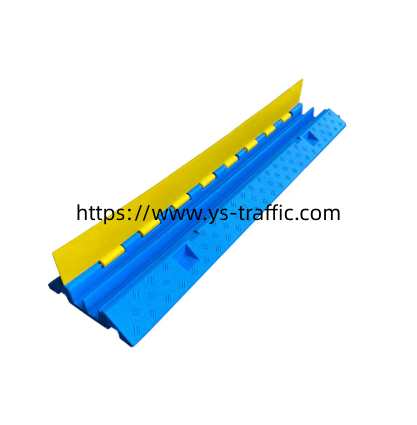
Cable Cover selection requires more than finding a product that fits over exposed wires. For construction contractors, equipment distributors, event organizers, and industrial purchasers, the decision involves dimensions, traffic conditions, material properties, and installation requirements. As a manufacturer of outdoor rubber protection products, ys-traffic provides product information to help buyers evaluate suitable configurations for different project environments.
Measure the Items That Need Protection
The first step is to identify the dimensions and quantity of the wires or hoses that need protection. Buyers should measure their outside diameter or width and height, including any outer insulation or protective covering. These measurements help determine whether the internal channels provide sufficient space.
A two-channel design can accommodate two separate runs, but the available internal space must match the actual application. Buyers should also consider whether additional lines may be introduced later. Choosing a configuration based only on the number of channels, without checking their dimensions, can create installation difficulties.
Manufacturers can provide product drawings and dimensional information to support this evaluation. Before requesting a quotation, prepare the measurements, required crossing length, and expected installation environment. This makes technical discussions more focused and helps reduce specification changes after ordering.
Match Load Capacity With Traffic Conditions
The type of traffic passing over the product is another important consideration. A pedestrian walkway has different requirements from a construction entrance crossed by cars, delivery vehicles, or industrial equipment.
Buyers should check the manufacturer's stated load rating and understand how it is measured. Some specifications refer to axle loads, while others describe different testing conditions. These values should not be compared without understanding their definitions.
Consider vehicle type, wheel configuration, crossing frequency, and operating conditions. A product intended for light vehicle traffic should not automatically be selected for forklifts or heavy machinery. If the application involves substantial loads, provide accurate details and request confirmation from the manufacturer before placing an order.
Examine Material Properties and Outdoor Suitability
Material selection affects how a product responds to its working environment. Outdoor installations may be exposed to sunlight, rain, changing temperatures, dust, and repeated contact with vehicle tires. Buyers should therefore ask about the rubber formulation and its intended application.
Questions about material composition, production methods, surface condition, and environmental suitability can help clarify whether a product matches project requirements. It is also useful to ask whether the manufacturer can provide relevant material information or product documentation.
The base structure should suit the expected installation conditions. Buyers planning to use the product in different regions should consider local climate conditions and storage arrangements. Discussing these factors before ordering helps manufacturers understand the intended market and provide relevant product information.
Check Surface Texture and Visibility
Surface design is another purchasing consideration, especially in areas shared by vehicles and pedestrians. A textured upper surface can provide additional traction, while contrasting colors can make the crossing easier to identify.
Buyers should examine the surface pattern, ramp profile, and color arrangement. Black and yellow designs are commonly used for visual contrast in work areas, but actual visibility depends on surrounding conditions and lighting.
The edges also deserve attention. A suitable slope can create a more gradual transition between the ground and the raised section. Buyers should consider the types of wheels, carts, and pedestrian traffic expected at the site. These details help determine whether the selected profile is appropriate for the installation.
Review Installation and Connection Methods
Installation requirements can influence the total quantity and configuration needed for a project. Buyers should check whether individual sections can connect with compatible units to create a longer crossing. Interlocking structures may be useful when several sections are needed along a route.
The installation surface should also be evaluated. Concrete, asphalt, workshop floors, and temporary event surfaces may require different positioning or securing arrangements. Ask whether additional fixing accessories are available and whether the product is designed for temporary or longer-term placement.
Another point to consider is access to the internal channels. A hinged or removable lid can make placement and inspection more convenient, depending on the design. Confirming these details in advance helps project teams plan installation work and future maintenance.
Ask About Customization and Manufacturing Support
For wholesalers and importers, product selection often involves more than choosing a standard model. Different customers may request specific dimensions, colors, channel arrangements, markings, or packaging options.
Buyers should ask which customization services are available and whether there are minimum order quantities for modified products. It is also useful to discuss sample availability, production schedules, inspection procedures, and packaging specifications.
When comparing manufacturers, request clear product drawings and written quotations. Check whether the quoted configuration matches the intended application, including dimensions, material information, and stated load capacity. This makes it easier to compare suppliers using consistent criteria instead of relying on price alone.
Prepare a Purchasing Checklist Before Ordering
Before confirming an order, buyers can organize their requirements into a simple checklist: dimensions, channel quantity, traffic type, load rating, material, surface design, overall size, connection method, and packaging. This record can be shared with the manufacturer for technical confirmation.
It is also advisable to keep approved drawings and product specifications for future purchases. For distributors, consistent documentation can support repeat orders and make communication with end customers more efficient.For project contractors and international buyers, selecting a suitable product begins with understanding the actual site conditions. ys-traffic provides outdoor rubber protection solutions for different routing requirements, and buyers can discuss product specifications, customization requests, and wholesale arrangements with the company. To review product information and contact the manufacturer, visit https://www.ys-traffic.com/

 English
 Arabic
 French
 Spanish
 Portuguese
 Deutsch
 Turkish
 Dutch
 Italiano
 Russian
 Romaian
 Greek
