


Can Cbbmachine Centrifugal Blower Fit Your Ventilation System?
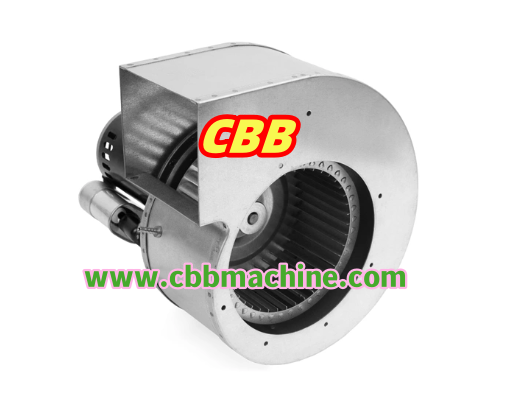
Air movement plays an important role in maintaining stable operating conditions across many industrial environments. From equipment ventilation to dust removal and process cooling, manufacturers rely on dependable airflow to support daily operations. A Centrifugal Blower supplied by Cbbmachine offers an industrial air movement solution designed to generate airflow through centrifugal force, making it suitable for machinery and systems that require directed air delivery and consistent ventilation.
Unlike equipment that moves air primarily along the direction of its rotating shaft, this type of blower draws air into the center of an impeller and redirects it outward through rotational movement. The resulting airflow enters the surrounding housing before being discharged through an outlet. This operating principle allows the equipment to work with ducting systems and applications that require controlled air transportation.
One important application is industrial ventilation. Manufacturing facilities often contain enclosed machinery, processing areas, and equipment compartments where air circulation needs careful management. A suitable blower can help move warm air away from operating components and introduce airflow into designated spaces. This supports ventilation arrangements that contribute to a more organized working environment.
Cooling is another relevant application. Certain industrial processes generate heat during continuous operation, making airflow an important part of thermal management. By directing air toward specific equipment areas, a blower can assist with heat removal and support the operating conditions required by surrounding machinery. The actual cooling effect depends on system design, airflow requirements, and installation conditions.
Dust and particle transportation also create demand for specialized air movement equipment. In suitable configurations, centrifugal airflow can support dust extraction systems, filtration arrangements, and material handling processes. When connected with appropriate filters and ducts, the blower becomes part of a wider environmental control system. Proper configuration is essential to ensure that the transported material and operating conditions match the equipment design.
Product selection should begin with a clear understanding of the intended application. Air volume, pressure requirements, duct resistance, installation space, and operating environment all influence the choice of equipment. A blower selected without considering the complete airflow system may not deliver the expected operating results. Evaluating the relationship between the fan and connected equipment helps manufacturers develop a more compatible arrangement.
The impeller and housing are important structural elements. Their design influences airflow direction, operating characteristics, and mechanical behavior. Suitable materials and manufacturing processes should be considered according to the surrounding environment, particularly where humidity, dust, temperature, or other operating conditions may affect equipment performance.
Installation also requires attention. The supporting foundation should provide appropriate stability, while the inlet and outlet arrangements should allow air to move without unnecessary obstruction. Proper alignment and suitable connections can help reduce unwanted vibration and mechanical stress. Where necessary, operators should also consider noise management and protective arrangements around rotating components.
Routine maintenance contributes to dependable operation. Inspecting the impeller, bearings, housing, fasteners, and electrical connections can help identify wear or abnormal conditions. Accumulated dust should be addressed according to the equipment's maintenance requirements, as contamination may influence airflow and mechanical balance. Following appropriate inspection procedures helps maintain the intended operating condition.
For industrial buyers, choosing air movement equipment involves more than comparing individual product features. The surrounding ventilation network, process requirements, available installation space, and maintenance arrangements should all form part of the evaluation. Communicating these details with a supplier can help identify an appropriate configuration for the intended application.
Airflow is often an invisible part of production, yet its influence can be felt throughout the entire working environment. Whether you are planning a ventilation installation, improving equipment cooling, or updating an existing air handling arrangement, the right component deserves careful consideration. Visit https://www.cbbmachine.com/product/ and take a closer look at the available industrial machinery solutions. Your next airflow improvement may begin with a fresh idea waiting on the product pages.

 English
 French
 Spanish
 Portuguese
 Deutsch
 Turkish
 Dutch
 Italiano
 Russian
 Romaian
 Portuguese (Brazil)
 Greek
