


Specifying Geopolymer and Alkali-Activated Concretes for Zero-Carbon Foundations
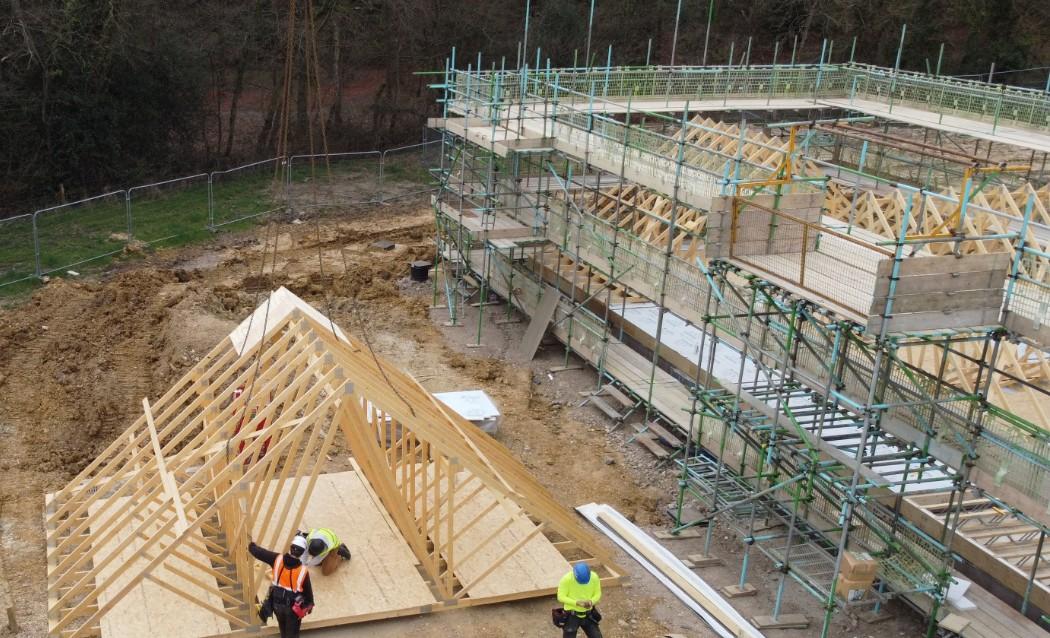
The structural engineering sector faces unprecedented pressure to reduce embodied carbon within urban infrastructure. Because structural foundations account for a massive percentage of a building's overall material mass, substituting traditional Portland cement with sustainable alternatives represents the single most impactful decarbonization strategy available today. Geopolymer and alkali-activated materials (AAMs) have emerged as premier alternatives, delivering industrial-scale compressive strength while reducing carbon emissions by up to 80 percent compared to traditional concrete mixes.
However, moving from standard concrete specifications to advanced alkali-activated binders requires structural engineers, site managers, and contractors to adapt their material testing, placement procedures, and on-site chemical management protocols. Successfully specifying these alternative binders requires a detailed understanding of their chemistry, structural behavior, and operational safety requirements.
Chemical Composition and Structural Characteristics of Geopolymer Binders
Unlike traditional Ordinary Portland Cement (OPC), which relies on energy-intensive clinker production and calcium silicate hydrate (C-S-H) gel formation, geopolymers rely on the alkaline activation of aluminosilicate precursor materials. Typically sourced from industrial by-products such as ground granulated blast-furnace slag (GGBS) or pulverized fuel ash (fly ash), these precursors react with liquid alkaline activators—usually sodium silicate or potassium hydroxide solutions—to create an inorganic polymeric network.
The resulting aluminosilicate matrix delivers several remarkable mechanical properties. Geopolymer concretes exhibit exceptional early-age compressive strength, high resistance to acid attack, superior fire resistance, and minimal permeability compared to standard OPC mixes. Because they do not rely on high-calcium hydration pathways, geopolymers display minimal heat of hydration, drastically reducing the risk of thermal cracking in mass concrete placements such as heavy foundation mats and deep pile caps.
Engineering Challenges in Specification and On-Site Placement
Despite their environmental benefits, specifying geopolymer and alkali-activated concretes presents distinct engineering and site execution challenges that project managers must carefully navigate:
-
Rheology and Workability Retention: Alkali-activated mixes often exhibit rapid slump loss and different viscosity profiles compared to OPC. Superplasticizers designed for standard concrete rarely perform effectively in high-pH geopolymer systems, requiring specialized chemical admixtures.
-
Curing Requirements: Depending on the fly-ash content and binder formulation, some geopolymers require elevated curing temperatures (typically between 40°C and 80°C) during the initial 24 hours to achieve optimal polymer cross-linking.
-
Alkali-Silica Reaction (ASR) Management: Although geopolymers generally resist ASR better than OPC, the high concentration of alkalis in the activation solution requires rigorous aggregate reactivity testing prior to batching.
-
Curing Shrinkage Control: High-slag alkali-activated systems can experience elevated autogenous and drying shrinkage, necessitating precise water-to-binder ratios and controlled curing environments.
On-Site Chemical Handling and Site Safety Protocols
Integrating high-performance geopolymer concretes onto active building sites shifts chemical risk profiles significantly. Traditional OPC handling focuses heavily on wet cement skin burns and respirable crystalline silica dust control. In contrast, alkali-activated concrete placement involves mixing, transporting, and handling highly alkaline liquid solutions, such as concentrated sodium hydroxide and sodium silicate reagents, which carry severe chemical burn risks and inhalation hazards if mishandled.
Before introducing these materials to a job site, project leaders must ensure all site personnel undergo thorough safety training and hazard awareness. Completing a recognized health and safety in a construction environment course equips site teams with the foundational skills needed to identify hazardous substances, implement appropriate Control of Substances Hazardous to Health (COSHH) procedures, and maintain strict Personal Protective Equipment (PPE) compliance. Ensuring workforce safety during the batching and pouring of advanced chemical binders is just as vital as achieving structural strength targets.
Durability Performance in Harsh Subsurface Environments
One of the most compelling reasons to specify geopolymer binders for zero-carbon foundations is their exceptional long-term durability in aggressive ground conditions. Deep foundations often interact with acidic groundwater, high sulfate concentrations, and marine saline environments that rapidly degrade standard concrete structures through sulfate attack or reinforcement corrosion.
Geopolymer matrices lack the free calcium hydroxide found in hydrated OPC, making them virtually immune to classic calcium leaching and acid breakdown. Furthermore, the dense, cross-linked pore network of alkali-activated binders restricts chloride ion diffusion, offering superior protection for internal steel reinforcement. When designed correctly, geopolymer foundations not only shrink a project's carbon footprint but also significantly extend the service life of subsurface infrastructure under demanding environmental conditions.
Best Practices for Specifying Geopolymer Foundations
To ensure seamless execution when transitioning from design concepts to field placement of geopolymer foundations, engineering teams should adhere to the following best practice guidelines:
-
Conduct Rigorous Pre-Construction Trial Batches: Test local precursor supplies (fly ash and slag) alongside chosen alkaline activators to verify strength development, workability windows, and setting times well ahead of major pours.
-
Establish Comprehensive Safety and Handling SOPs: Supply job sites with dedicated eye-wash stations, specialized nitrile gloves, full-face shields, and clear emergency wash-down protocols for workers handling raw chemical activators.
-
Coordinate Closely with Ready-Mix Suppliers: Ensure the batch plant understands the specific mixing order and residence times required for alkali activation, as incorrect mixing sequences can cause immediate flash setting.
-
Monitor Early-Age Curing Conditions: Utilize real-time temperature and moisture sensors embedded within foundation pours to maintain optimal curing conditions and prevent surface moisture loss.
By pairing modern binder chemistry with rigorous site safety standards and thorough quality assurance, the construction industry can confidently deploy geopolymer foundations to achieve genuine zero-carbon structural performance.

 English
 Arabic
 French
 Spanish
 Portuguese
 Deutsch
 Turkish
 Dutch
 Italiano
 Russian
 Romaian
 Greek
