


How Can Board to Board Connector Designs Support Modular Devices?
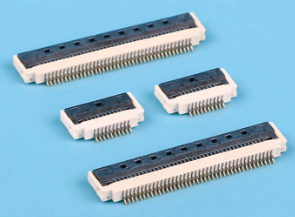
Board to Board Connector selection requires buyers to consider electrical performance, mechanical dimensions, installation conditions, and production requirements before confirming an order. A suitable design should match the intended circuit layout while allowing practical assembly and stable operation. Manufacturers and purchasing teams can reduce project risks by reviewing these details early and maintaining clear communication throughout development.
Define the Electrical Requirements
Start by identifying the signals and power requirements of the application. The number of contacts, rated current, operating voltage, and expected signal characteristics all influence product selection. Buyers should prepare a clear specification rather than relying only on a general product description.
Signal speed is another important consideration. High-speed applications may require attention to contact arrangement, spacing, impedance control, and possible interference between adjacent circuits. For power-related uses, current capacity and heat generation should be reviewed under expected operating conditions.
Providing these details allows the manufacturer to assess whether a proposed configuration is suitable for the intended application.
Confirm Dimensions and Installation Space
Physical dimensions affect both product compatibility and assembly efficiency. Buyers should confirm the overall length, width, height, contact pitch, and available mounting area before requesting a quotation.
The required connection height also deserves attention. Different equipment structures may require different spacing between circuit assemblies. If the selected height does not match the mechanical design, installation difficulties or unwanted pressure may occur.
Purchasing teams should provide dimensional drawings and, where possible, a three-dimensional model. These documents help engineers review clearances, positioning, and possible interference with nearby components.
Review Contact Materials and Surface Finishing
Contact materials influence conductivity, wear resistance, and long-term performance. Buyers should ask about the base metal, plating material, plating thickness, and applicable production specifications.
The working environment should guide material decisions. Equipment exposed to humidity, temperature changes, vibration, or frequent connection cycles may require different material considerations from products used in stable indoor conditions.
Surface finishing should also be evaluated in relation to the expected operating life. Buyers can request technical information and sample parts to assess whether the proposed material combination matches their application.
Examine Mechanical Stability
Mechanical reliability depends on the contact structure, housing material, retention design, and installation method. Buyers should understand how the product is secured during assembly and whether it can withstand expected movement or vibration.
The housing should provide suitable insulation and dimensional stability. Its material properties need to match the temperature range and environmental conditions of the finished equipment.
It is also useful to discuss insertion force, withdrawal force, and expected mating cycles when the application involves repeated connections. These factors help engineering teams evaluate whether the selected structure is appropriate for regular operation.
Request Samples Before Mass Production
Prototype evaluation gives buyers an opportunity to identify potential problems before committing to a larger order. Sample testing should cover dimensional compatibility, electrical continuity, contact stability, and assembly convenience.
If the product will operate under demanding conditions, additional tests may be necessary. Temperature exposure, vibration, humidity, and repeated connection testing can provide useful information about expected performance.
Buyers should record test results and communicate any problems to the manufacturer. Clear feedback makes it easier to adjust dimensions, materials, or structural details before production approval.
Check Quality Control and Production Capacity
Before selecting a supplier, review its inspection procedures and manufacturing arrangements. Ask how incoming materials, production processes, and finished products are checked. A documented quality system can help buyers understand how specifications are maintained during manufacturing.
Production capacity is equally important. Confirm the expected lead time, available monthly output, order quantity requirements, and procedures for handling urgent requests. Buyers should also clarify how design changes are reviewed and approved.
A supplier that communicates these arrangements clearly can help purchasing teams prepare more realistic production schedules.
Discuss Project Details with the Manufacturer
Effective cooperation starts with complete technical information. Buyers should prepare drawings, electrical requirements, installation details, target quantities, and expected delivery dates before requesting a quotation.
The engineering team can then review the project and identify details that need further confirmation. This process helps reduce misunderstandings and supports more accurate product development.wendaelectronics works with customers on electronic interconnection requirements, from specification discussions to product evaluation and manufacturing coordination. Buyers can share their application details, request technical assistance, and review suitable options before placing an order. For additional product information and project discussions, visit https://www.wendaelectronics.com/ and contact the team with your requirements.

 English
 Arabic
 French
 Spanish
 Portuguese
 Deutsch
 Turkish
 Dutch
 Italiano
 Romaian
 Portuguese (Brazil)
 Greek
