


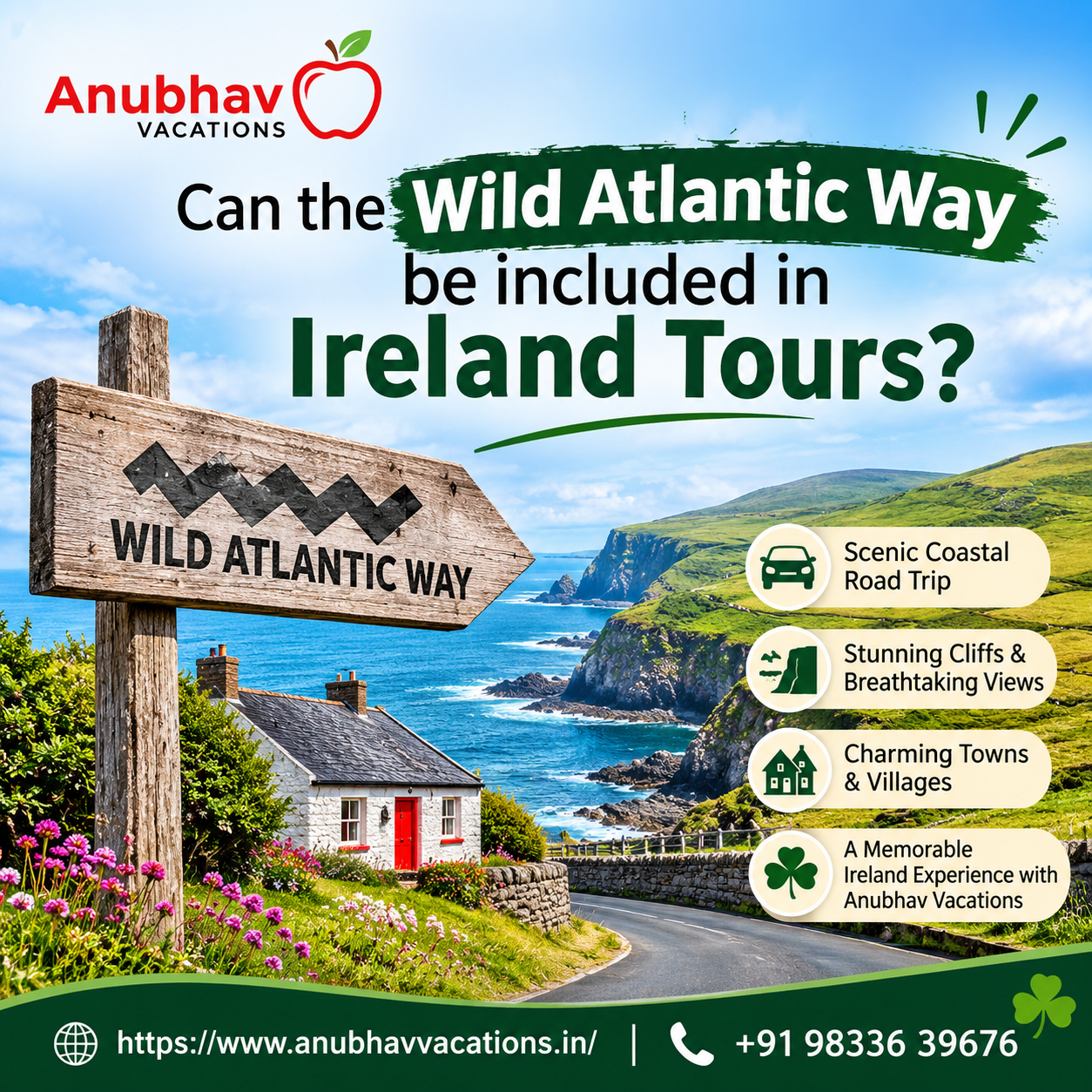
Can the Wild Atlantic Way be included in Ireland Tours?
Introduction
Ireland is famous for its dramatic coastlines, green countryside, charming villages, historic castles, and welcoming culture. Among its most remarkable attractions is the Wild Atlantic Way, a spectacular coastal touring route that follows the western coastline of the country. Stretching through beautiful seaside communities, rugged cliffs, sandy beaches, and scenic viewpoints, this route offers travellers an opportunity to discover Ireland beyond its major cities.
Yes, the Wild Atlantic Way can certainly be included in Ireland Tours. It is an excellent choice for visitors who want to experience the country's natural beauty, coastal heritage, traditional communities, and local culture. The route passes through several counties and offers a wide variety of attractions, including the Cliffs of Moher, Connemara, the Dingle Peninsula, and parts of County Donegal.
Travellers can explore selected sections of the route depending on their holiday duration, preferred destinations, and travel arrangements. Some itineraries focus on a few famous coastal highlights, while longer journeys can cover several regions along the western seaboard.
For visitors travelling from India, including this coastal experience can make a holiday more memorable by combining scenic drives, guided sightseeing, cultural activities, and visits to picturesque towns. Whether you enjoy photography, nature, history, or peaceful seaside landscapes, the Wild Atlantic Way offers something special.
What Is the Wild Atlantic Way?
The Wild Atlantic Way is a designated coastal touring route along Ireland's western seaboard. It stretches for approximately 2,500 kilometres, passing through nine counties from the Inishowen Peninsula in County Donegal to Kinsale in County Cork.
The route showcases some of Ireland's most impressive natural landscapes. Travellers can discover rugged Atlantic cliffs, remote beaches, traditional fishing villages, mountain scenery, islands, and historic sites.
It is not simply one road but a network of coastal and connecting routes that guide visitors through different parts of western Ireland. Along the way, travellers can stop at viewpoints, explore local towns, enjoy regional food, and learn about the area's cultural traditions.
The route is especially popular with people who enjoy road trips because it offers changing scenery throughout the journey. Every region has its own character, from the dramatic cliffs of County Clare to the mountainous landscapes of Connemara and the coastal beauty of County Kerry.
Why Should the Wild Atlantic Way Be Included in an Irish Holiday?
The Wild Atlantic Way provides a different perspective of Ireland compared with a city-focused itinerary. While Dublin, Cork, and Galway offer museums, historic architecture, shopping, and lively streets, the western coastline introduces visitors to the country's natural landscapes and traditional communities.
There are several reasons why this route deserves consideration.
1. Experience Ireland's Dramatic Coastal Landscapes
The western coastline features impressive cliffs, rocky shores, sandy beaches, and open ocean views. The Atlantic Ocean creates a constantly changing landscape, with waves, sea mist, and shifting light adding to the scenery.
Visitors can stop at designated viewpoints to admire the coastline and take photographs. Some areas also provide walking opportunities where travellers can enjoy the surroundings at a comfortable pace.
2. Discover Traditional Irish Villages
The route passes through numerous towns and villages where visitors can experience local hospitality and everyday Irish life.
Colourful buildings, traditional pubs, independent shops, and small cafés create a welcoming atmosphere. Some communities also maintain strong connections with traditional music, local crafts, fishing, and regional food.
Spending time in these places allows travellers to experience a side of Ireland that may be missed when visiting only major cities.
3. Explore Ireland's Cultural Heritage
The western regions of Ireland are closely connected with traditional music, folklore, storytelling, and the Irish language.
Some communities in the Gaeltacht regions continue to use Irish as part of everyday life. Visitors can learn about regional traditions, local history, and the importance of cultural heritage through guided experiences and community visits.
4. Enjoy Photography and Outdoor Activities
The Wild Atlantic Way offers numerous opportunities for photography. Coastal cliffs, mountain roads, beaches, harbours, and green countryside create varied settings throughout the journey.
Depending on the location and weather, visitors may also enjoy walking, cycling, boat excursions, or other outdoor activities.
5. Combine Nature with Historical Attractions
The route is not limited to natural scenery. It also connects visitors with castles, archaeological remains, historic churches, heritage centres, and ancient settlements.
This combination makes the journey suitable for travellers who want both scenic experiences and cultural sightseeing.
Famous Attractions Along the Wild Atlantic Way
A well-planned itinerary can include several notable attractions along the route. The exact selection depends on travel duration and the regions covered.
1. Cliffs of Moher, County Clare
The Cliffs of Moher are among Ireland's most famous natural attractions. Located on the western coast of County Clare, these dramatic cliffs rise above the Atlantic Ocean and offer spectacular views.
Visitors can explore designated viewing areas and enjoy panoramic scenery across the coastline. On clear days, the views can extend towards the Aran Islands and Galway Bay.
The visitor centre provides information about the local environment, geology, and wildlife. Walking along approved paths offers additional opportunities to appreciate the landscape, although visitors should follow safety instructions and respect restricted areas.
The Cliffs of Moher are often a major highlight for travellers exploring the western coast.
2. Connemara, County Galway
Connemara is known for its rugged mountains, peaceful lakes, open countryside, and traditional villages. The region offers some of the most distinctive landscapes in western Ireland.
Visitors can enjoy scenic drives through the Twelve Bens mountain range, admire the surrounding lakes, and explore small settlements.
Kylemore Abbey is one of the region's best-known attractions. Set against a mountain backdrop beside a lake, this historic estate features impressive architecture and landscaped gardens.
Connemara is particularly appealing to travellers who enjoy peaceful countryside, photography, and outdoor exploration.
3. Dingle Peninsula, County Kerry
The Dingle Peninsula offers a combination of coastal scenery, traditional communities, and historical attractions.
The route around the peninsula provides views of beaches, cliffs, mountains, and the Atlantic Ocean. Visitors can explore Dingle town, known for its colourful streets, local food, traditional pubs, and welcoming atmosphere.
The region is also associated with archaeological sites and early Christian heritage. Travellers interested in history may enjoy discovering ancient stone structures and religious remains along the peninsula.
The area's combination of natural and cultural attractions makes it a memorable stop.
4. Ring of Kerry, County Kerry
The Ring of Kerry is one of Ireland's most recognised scenic driving routes. Although it is a distinct touring route rather than the entire Wild Atlantic Way, it connects naturally with many coastal itineraries in the southwest.
The circular route passes through mountains, lakes, seaside villages, and attractive countryside. Popular stops include Killarney, Kenmare, Waterville, and Sneem.
Killarney National Park is another important attraction in the region, offering beautiful lakes, woodland, and mountain scenery.
Travellers can include the Ring of Kerry as part of a broader western and southwestern Ireland journey.
5. Achill Island, County Mayo
Achill Island is known for its dramatic coastline, sandy beaches, cliffs, and open landscapes. Connected to the mainland by a bridge, the island provides a peaceful setting for visitors interested in nature and photography.
Keem Bay is one of its most recognisable attractions, featuring a beautiful beach surrounded by hills.
The island also offers opportunities to discover local communities, traditional heritage, and outdoor activities. Its coastal scenery can make it a rewarding addition to a longer itinerary.
6. Slieve League, County Donegal
Slieve League is famous for its impressive sea cliffs, which rise dramatically above the Atlantic Ocean. The area offers spectacular views and a less urbanised atmosphere.
Visitors can explore designated viewpoints and enjoy the surrounding landscape. Weather conditions can change quickly, so it is important to follow local safety guidance and avoid exposed areas during strong winds.
For travellers exploring northern sections of the Wild Atlantic Way, Slieve League can be one of the most memorable natural attractions.
7. Inishowen Peninsula, County Donegal
The Inishowen Peninsula marks the northern starting point of the Wild Atlantic Way. It is known for scenic coastal roads, beaches, historic sites, and attractive countryside.
Malin Head, Ireland's northernmost mainland point, is a notable attraction in the region. Visitors can enjoy dramatic sea views and discover the area's maritime character.
The peninsula is a suitable destination for travellers who want to explore the quieter northern coastline.
Can the Wild Atlantic Way Be Explored During a Group Holiday?
Yes. Selected sections of the route can be included in an organised group holiday, depending on the number of travel days and the chosen destinations.
A group itinerary can make coastal exploration easier by coordinating transportation, accommodation, and sightseeing arrangements. Travellers can enjoy the scenery without having to navigate unfamiliar roads or organise every transfer independently.
A group journey may include:
-
Planned coastal drives through selected regions.
-
Stops at famous viewpoints and natural attractions.
-
Visits to traditional towns and villages.
-
Guided sightseeing at historic locations.
-
Opportunities to enjoy local food and cultural activities.
-
Overnight stays in convenient towns along the route.
The route is extensive, so most holidays focus on selected sections rather than attempting to cover the entire coastline in a short period.
What Is the Best Way to Explore the Wild Atlantic Way?
The best way to experience the route depends on individual interests, available time, and preferred travel style.
Scenic Coach or Minibus Journeys
Organised transportation is a convenient option for travellers who prefer not to drive. A coach or minibus journey allows visitors to enjoy the scenery while an experienced driver manages the route.
It can also be easier for groups because transfers, parking, and daily schedules can be coordinated in advance.
Self-Drive Exploration
Travellers who prefer flexibility may choose a self-drive holiday. This option allows them to select their own stops and spend more time at places that interest them.
However, some coastal roads are narrow and winding. Visitors should be comfortable driving on the left side of the road and familiarise themselves with local road regulations.
Guided Excursions
Guided excursions can provide historical and cultural information about the regions being visited. A local guide may explain the significance of landmarks, regional traditions, and the natural environment.
This can make the journey more informative, particularly for first-time visitors.
Walking and Outdoor Experiences
Some destinations along the route offer walking trails, coastal paths, and outdoor activities. Visitors can choose experiences according to their fitness levels and the available time.
Weather conditions should always be considered before planning outdoor activities.
How Many Days Are Needed to Explore the Wild Atlantic Way?
The time required depends on how many regions travellers want to visit. Since the route covers a large part of Ireland's western coastline, exploring every section can take considerably longer than a typical short holiday.
For many visitors, selecting a few highlights provides a more comfortable experience.
A Five-Day Coastal Experience
A shorter itinerary can focus on Galway, Connemara, County Clare, and the Cliffs of Moher.
Day 1: Arrival in Galway
Arrive in Galway, transfer to the hotel, and explore the city centre if time permits.
Day 2: Connemara Excursion
Discover the region's mountains, lakes, villages, and scenic viewpoints. Visit Kylemore Abbey if included in the schedule.
Day 3: Galway to County Clare
Travel towards County Clare and explore the Cliffs of Moher and selected coastal attractions.
Day 4: Explore Local Coastal Towns
Discover traditional villages, enjoy local food, and experience the region's cultural atmosphere.
Day 5: Return Journey
Travel towards the departure city or continue to another destination according to the itinerary.
A Seven-Day Coastal Experience
A longer programme can include additional destinations in County Kerry.
Day 1: Arrival in Dublin
Arrive in Ireland and enjoy a relaxed introduction to the capital.
Day 2: Dublin to Galway
Travel towards Galway and explore the city after arrival.
Day 3: Connemara
Enjoy a scenic excursion through Connemara and its surrounding countryside.
Day 4: Cliffs of Moher and County Clare
Visit the famous cliffs and explore selected coastal locations.
Day 5: Journey Towards Killarney
Travel through scenic regions towards County Kerry.
Day 6: Ring of Kerry
Explore the mountain landscapes, lakes, coastal villages, and viewpoints along the route.
Day 7: Departure or Further Exploration
Continue to the departure airport or extend the holiday with additional sightseeing.
These are illustrative itineraries. Actual travel times, overnight destinations, and attractions depend on the selected programme and local conditions.
What Is the Best Time to Explore the Wild Atlantic Way?
Ireland's western coastline can be visited throughout the year, but each season offers a different experience.
Spring: March to May
Spring brings fresh greenery, blooming flowers, and gradually longer daylight hours. The countryside becomes particularly attractive during this period.
Temperatures can remain cool, and rain is possible. Visitors should carry waterproof clothing and comfortable footwear.
Summer: June to August
Summer is a popular period for exploring the coastline because of longer daylight hours and generally milder temperatures.
Visitors have more time for sightseeing, walking, and photography. However, popular attractions and accommodation can become busy, so advance planning is advisable.
Autumn: September to November
Autumn offers changing colours across the countryside and a quieter atmosphere at some destinations.
September can still provide relatively long days, while later autumn brings shorter daylight hours and more variable weather.
Winter: December to February
Winter offers a different coastal atmosphere, with dramatic skies and fewer visitors at some attractions. However, strong winds, rain, and shorter daylight hours can affect outdoor sightseeing.
Travellers should plan shorter driving days and remain flexible when arranging coastal walks or viewpoints.
What Can Travellers Experience Beyond the Scenery?
The Wild Atlantic Way offers more than beautiful landscapes. It also provides opportunities to discover regional food, traditional music, local history, and Irish hospitality.
Traditional Irish Music
Many towns along the western coast have a strong musical heritage. Visitors may find traditional music sessions in local pubs and cultural venues.
These performances often feature instruments such as the fiddle, tin whistle, bodhrán, and traditional Irish flute.
Regional Food
Coastal communities are known for seafood and locally produced food. Depending on the destination, visitors may enjoy fresh fish, shellfish, traditional stews, and regional specialities.
Local cafés, restaurants, and markets provide opportunities to experience the food culture of western Ireland.
Irish Language and Folklore
Some communities along the route are part of the Gaeltacht, where Irish is widely used. Visitors can learn about the language, folklore, storytelling, and cultural traditions through local experiences.
Historic Castles and Heritage Sites
The western regions contain historic castles, ancient monuments, churches, and archaeological remains. These attractions help visitors understand the history of the communities that developed along the Atlantic coastline.
Is the Wild Atlantic Way Suitable for Families and Senior Travellers?
The route can appeal to travellers of different ages, including families, couples, and senior visitors. Its suitability depends on the selected itinerary, journey length, walking requirements, and weather conditions.
Families may enjoy beach visits, scenic viewpoints, historic attractions, and opportunities to explore small towns. Children can experience different landscapes and learn about Irish culture along the way.
Senior travellers may appreciate organised transportation because it reduces the need to drive on unfamiliar roads. However, long transfers and frequent hotel changes can be tiring.
Before choosing an itinerary, travellers should review:
-
Daily driving and transfer durations.
-
Walking distances at coastal attractions.
-
Availability of rest stops.
-
Hotel locations and accessibility.
-
Weather conditions and outdoor activity requirements.
-
Opportunities for relaxed sightseeing.
A balanced programme with comfortable travel days can help make the experience enjoyable for everyone.
What Should Travellers Pack for a Wild Atlantic Way Journey?
The weather along Ireland's western coastline can change quickly. Travellers should prepare for sunshine, rain, wind, and cooler temperatures, sometimes within the same day.
Useful items include:
-
A lightweight waterproof jacket.
-
Comfortable walking shoes with good grip.
-
Warm layers for cooler coastal conditions.
-
Sunglasses and sunscreen.
-
A camera or smartphone for photography.
-
A small day bag for personal essentials.
-
Reusable drinking water bottle.
-
Any personal medication required during the journey.
Visitors should also follow local safety instructions at coastal viewpoints. Cliffs and exposed shorelines can be dangerous during strong winds or wet weather.
How Can Travellers Plan an Ireland Holiday Including the Wild Atlantic Way?
Planning a coastal holiday involves selecting the right destinations and balancing scenic drives with sightseeing and relaxation.
Travellers should first decide how much time they can spend in Ireland. A shorter holiday may focus on Galway, Connemara, and the Cliffs of Moher, while a longer itinerary can include County Kerry, Mayo, or Donegal.
It is also useful to consider the following points:
Choose the preferred regions: Decide whether the priority is dramatic cliffs, traditional villages, mountain scenery, or coastal towns.
Review transportation: Check whether the holiday includes a coach, minibus, rental car, or guided excursions.
Understand the daily schedule: Long coastal journeys should include suitable breaks and time for sightseeing.
Confirm accommodation: Overnight stays in convenient locations can reduce unnecessary transfers.
Check attraction access: Some outdoor locations may have seasonal opening arrangements, restricted access, or weather-related limitations.
Allow flexibility: Weather and road conditions can affect coastal sightseeing, so a flexible schedule is helpful.
For visitors travelling internationally, it is also important to check flight connections, passport validity, visa requirements, travel insurance, and baggage arrangements before departure.
Conclusion
The Wild Atlantic Way can certainly be included in an Irish holiday and is one of the most rewarding ways to discover the country's western coastline. From the dramatic Cliffs of Moher and the mountains of Connemara to the Dingle Peninsula, Ring of Kerry, and Slieve League, the route offers an extraordinary combination of natural beauty, traditional communities, and cultural heritage.
Ireland Tour Package From India that include selected sections of this coastal route can provide a balanced experience of scenic drives, historic attractions, local food, and traditional Irish culture. Travellers can enjoy the journey through organised transportation, guided sightseeing, and convenient overnight arrangements.
Whether you have a few days or a longer holiday, choosing the right coastal regions can make the experience memorable. With thoughtful planning, suitable travel arrangements, and enough time to appreciate each destination, the Wild Atlantic Way can become one of the highlights of an Irish holiday.
FAQ Questions
1. Can Ireland Tours include the Wild Atlantic Way?
Yes, Ireland Tour Packages From India can include selected sections of the Wild Atlantic Way, such as the Cliffs of Moher, Connemara, County Kerry, and parts of County Donegal. The destinations included depend on the itinerary and holiday duration.
2. How long does it take to explore the Wild Atlantic Way?
The complete route stretches for approximately 2,500 kilometres and requires a longer journey to explore in depth. Travellers with limited time can choose selected highlights over a few days.
3. Which are the most popular attractions along the Wild Atlantic Way?
Popular attractions include the Cliffs of Moher, Connemara, the Dingle Peninsula, Ring of Kerry, Achill Island, Slieve League, and Malin Head.
4. What is the best season to visit the Wild Atlantic Way?
Summer offers longer daylight hours and generally milder conditions. Spring and autumn can also be enjoyable, while winter visitors should prepare for shorter days and changeable coastal weather.
5. Is the Wild Atlantic Way suitable for group travel?
Yes, selected sections are suitable for group holidays. Organised transportation, planned sightseeing, and coordinated accommodation can make exploring the coastline more convenient.
Read Our Previous Blog --------------->Are the Cliffs of Moher included in an Ireland Tour Package?

 Arabic
 French
 Spanish
 Portuguese
 Deutsch
 Turkish
 Dutch
 Italiano
 Russian
 Romaian
 Portuguese (Brazil)
 Greek
