


Next Generation Fire & Smoke Detection Systems for UAE Industries
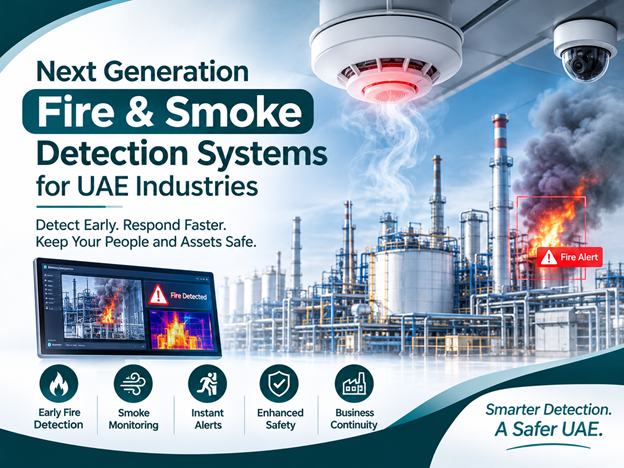
Video Analytics is changing how factories, warehouses, energy sites, and logistics hubs across the Emirates spot fire and smoke, turning ordinary cameras into watchers that see the first wisp of trouble and raise the alarm before flames spread. This guide explains how the technology works, where it fits, and how industrial operators can adopt it with confidence.
Why Industrial Fire Risk Is Different
Industrial buildings are large, tall, dusty, and full of fuel. A warehouse may hold pallets stacked to the roof, a factory may run hot machinery around the clock, and a refinery may handle flammable liquids across an open site. In these places, smoke can take minutes to reach a ceiling sensor, and by then a small fire may already be out of control.
The cost of delay is high. A single fire can stop production, destroy stock, injure workers, damage a company's reputation, and trigger long investigations. Operators across the Emirates therefore look for ways to find trouble earlier, confirm it faster, and respond with less guesswork.
Traditional detectors remain essential and are required by regulation. The newer approach adds eyes to the system, so that a camera can see smoke rising, flames flickering, or a glow in a dark corner long before heat or particles reach a point sensor.
From Point Sensors to Cameras That Understand
AI-Powered Video Analytics studies each camera image frame by frame and learns the visual signature of flame, smoke, and sudden glow. Because the models are trained on thousands of examples, they can tell a plume of smoke from steam, a flame from a welding arc, or a forklift light from a real fire, and they keep improving as new site footage is reviewed by engineers.
Video Analytics Software is the engine that runs these models. It can sit on a server in the control room or on small devices beside the cameras, it lets safety teams draw zones around risky areas, and it connects to alarm panels, screens, and phones so that the right person sees the right alert at the right moment.
Video Analytics Solutions bring everything together as one managed service: site survey, camera placement, software setup, integration, commissioning, training, and long-term support. A complete package matters because a good algorithm placed behind a badly aimed camera will still miss the problem.
Operators who want to see how this fits a real plant can read about fire and smoke detection for UAE industrial sites before planning a pilot.
What Next Generation Detection Delivers
Seeing Trouble in Seconds
Real-Time Hazard Detection means a camera can flag the first sign of smoke or flame within seconds, even in large open spaces where heat and particles take a long time to travel. Early warning gives guards, supervisors, and firefighters the time to reach a small fire with an extinguisher instead of facing a large one with hoses.
Acting Without Delay
Automated Emergency Response links a confirmed detection to the actions that follow. Alarms can sound in the right zone, ventilation can be adjusted, doors can be released, vehicles can be stopped at the gate, and a message can reach the duty manager and the control room together. People still make the final decisions, but the first minutes are no longer wasted.
Fewer Nuisance Alarms
Reduced False Alarms is one of the biggest benefits for busy sites. Dust, steam, sun glare, welding sparks, and exhaust fumes often trigger ordinary detectors, and repeated nuisance alarms teach staff to ignore warnings. Cameras that confirm what they see before raising an alert protect both production and trust in the system.
Records That Stand Up to Review
Detailed Incident Reporting captures what happened, when, and where, with video clips, timestamps, alarm records, and response actions stored together. Safety managers, insurers, and regulators can review an event calmly afterwards, learn from it, and prove that the site followed its own procedures.
Industry by Industry: Where It Matters Most
Oil, Gas, and Energy
Open process areas, storage tanks, pipelines, and power plants cover huge distances where wind carries smoke away from ceiling sensors. Cameras on poles and structures can watch long fence lines and equipment racks, and they work beside gas detectors and flame detectors that are already required.
Warehouses and Logistics
Tall racks, packaging, and lithium battery charging areas create fast burning loads. Watching aisles, charging bays, and loading docks gives early notice of overheating batteries, smouldering cartons, and electrical faults, which are among the most common triggers in distribution centres.
Manufacturing and Heavy Industry
Metal works, plastics plants, and food factories use heat, oil, and dust. Smart cameras can watch furnaces, ovens, conveyors, and dust collectors, and they can distinguish normal process glow from an abnormal flare, which keeps lines running while still guarding against genuine danger.
Recycling and Waste Sites
Piles of scrap, paper, plastic, and batteries can smoulder for hours before anyone notices. Cameras that scan yards and sorting halls day and night can spot smoke from a pile early, and thermal cameras add a second view when the air is thick with dust.
Cold Storage and Food Processing
Insulated panels, refrigeration plants, and packed goods bring special fire risks, and condensation or frost can confuse ordinary sensors. Visual confirmation helps staff decide quickly whether a signal is a true event or a harmless effect of cold and moisture.
Every sector has its own layout and hazards, so a UAE fire detection specialist should study the site before recommending camera positions and rules.
Fitting Detection into Existing Safety Systems
Camera based detection is designed to support, not replace, certified fire alarm panels, sprinklers, and suppression systems. It adds early warning and visual confirmation, while the approved life safety system remains the legal backbone of the building.
Open standards make integration easier. Cameras that follow ONVIF can feed existing recording and monitoring platforms, relay contacts can signal the fire panel, and network connections can pass data to building management and plant control screens. Cybersecurity basics such as separate networks, strong passwords, and regular updates protect the cameras themselves.
Good design also considers the environment. Lenses need protection from dust and heat, lighting must be steady at night, and camera height and angle decide what the software can see. A careful survey prevents blind spots and reduces later adjustments.
Rules, Standards, and Privacy
Fire safety in the Emirates is governed by the UAE Fire and Life Safety Code of Practice, the requirements of the Ministry of Interior, and the approvals of local civil defence authorities in Dubai, Abu Dhabi, and the other emirates. Designers also refer to NFPA 72 for alarm systems and EN 54 for detection products, and insurers often look to FM Global guidance for property protection.
Workplace safety adds more. ISO 45001 sets the framework for occupational health and safety, and Abu Dhabi's OSHAD system and Dubai Municipality rules shape how industrial sites manage hazards. Camera footage also contains personal data, so the Personal Data Protection Law, Federal Decree Law Number 45 of 2021, and the guidance of the Dubai Electronic Security Center apply. Sound practice means clear signage, limited access to footage, defined retention periods, and ISO 27001 aligned handling of stored video.
Local Conditions Across the Emirates
A Video Analytics UAE programme must handle strong sun, desert dust, sea haze, summer humidity, and wide temperature swings. Systems should be tuned and tested through the seasons, with cleaning schedules for lenses and housings, so that performance in August matches performance in January.
Video Analytics Dubai projects often cover the warehouses of Al Quoz, the logistics zones around Jebel Ali and JAFZA, and factories in Dubai Industrial City, where dense layouts, shared buildings, and many tenants call for clear zone rules and consistent reporting across companies.
Video Analytics Abu Dhabi projects often serve the industrial areas of Mussafah, ICAD, and KEZAD, along with energy and petrochemical sites such as Ruwais, where large perimeters, strict permits, and demanding audit trails shape equipment choices and documentation.
Proof Points That Build Trust
Experience shows in the details. Reliable projects begin with a documented site survey, a written detection plan, and a clear list of what the system will and will not do. Engineers should be able to explain how models were tested on local footage, including night scenes, dust, and glare, rather than relying on laboratory claims.
Evidence matters too. Ask for test records from commissioning, sample incident reports, maintenance schedules, and written agreement on response times. A supplier that has worked with civil defence inspectors and insurance surveyors will usually prepare these documents without being asked.
A short pilot is the best proof of all, and a site assessment and pilot plan lets your safety team judge the results on your own cameras before committing to a wider rollout.
A Practical Rollout Plan
Step One: Map the Highest Risks
List the areas where a fire would hurt most, such as storage racks, charging bays, process units, and electrical rooms, and note how long detection takes there today.
Step Two: Survey and Choose Cameras
Walk the site with the supplier, check lighting and viewing angles, and decide where visible and thermal cameras are needed. Reuse good existing cameras where possible.
Step Three: Pilot and Tune
Run the system in a limited area for several weeks, record every alert, and adjust zones and sensitivity until staff trust the results. Compare findings against the old detectors.
Step Four: Train and Rehearse
Teach operators and guards what each alert means, who must act, and how to confirm an event. Hold drills with the civil defence liaison and update emergency plans.
Step Five: Review and Expand
Study monthly reports, remove weak spots, and extend coverage site by site. Keep updating the models and the procedures as the plant changes.
Conclusion
Modern Video Analytics gives UAE industries earlier warning of fire and smoke, and AI-Powered Video Analytics backed by Video Analytics Software and complete Video Analytics Solutions makes that warning dependable. Real-Time Hazard Detection and Automated Emergency Response shorten the gap between a spark and action, while Reduced False Alarms and Detailed Incident Reporting protect productivity and prove compliance. Whether your plant is a Video Analytics UAE priority, a Video Analytics Dubai warehouse, or a Video Analytics Abu Dhabi energy site, a staged pilot is the safest way to begin. Choose a partner with local experience, tested integration, and clear documentation. Contact Tektronix today to plan your fire and smoke detection pilot.
FAQs
1. What does Video Analytics Software do on an industrial site?
It reads camera images, recognises flame and smoke patterns, and sends alerts to control rooms, alarm panels, and mobile devices when a zone shows signs of fire.
2. How does Real-Time Hazard Detection help firefighters?
It reports trouble within seconds and shows the exact location, so responders arrive earlier and face a smaller fire.
3. Can cameras really deliver Reduced False Alarms in dusty plants?
Yes, because the software checks shape, colour, and movement before alerting, it can ignore dust, steam, and welding sparks that often trigger ordinary detectors.
4. Why is Detailed Incident Reporting important for insurers and regulators?
Clips, timestamps, and response records show exactly what happened and how staff reacted, which supports investigations, audits, and insurance reviews.
5. Is Video Analytics Dubai suitable for warehouses and free zone factories?
Yes, it suits large storage halls, charging areas, and production lines, and it works beside the fire alarm systems that civil defence approves.

 English
 Arabic
 Spanish
 Portuguese
 Deutsch
 Turkish
 Dutch
 Italiano
 Russian
 Romaian
 Portuguese (Brazil)
 Greek
