


Apostille and Translation Services Near Me: A Complete Guide to Legalizing Documents
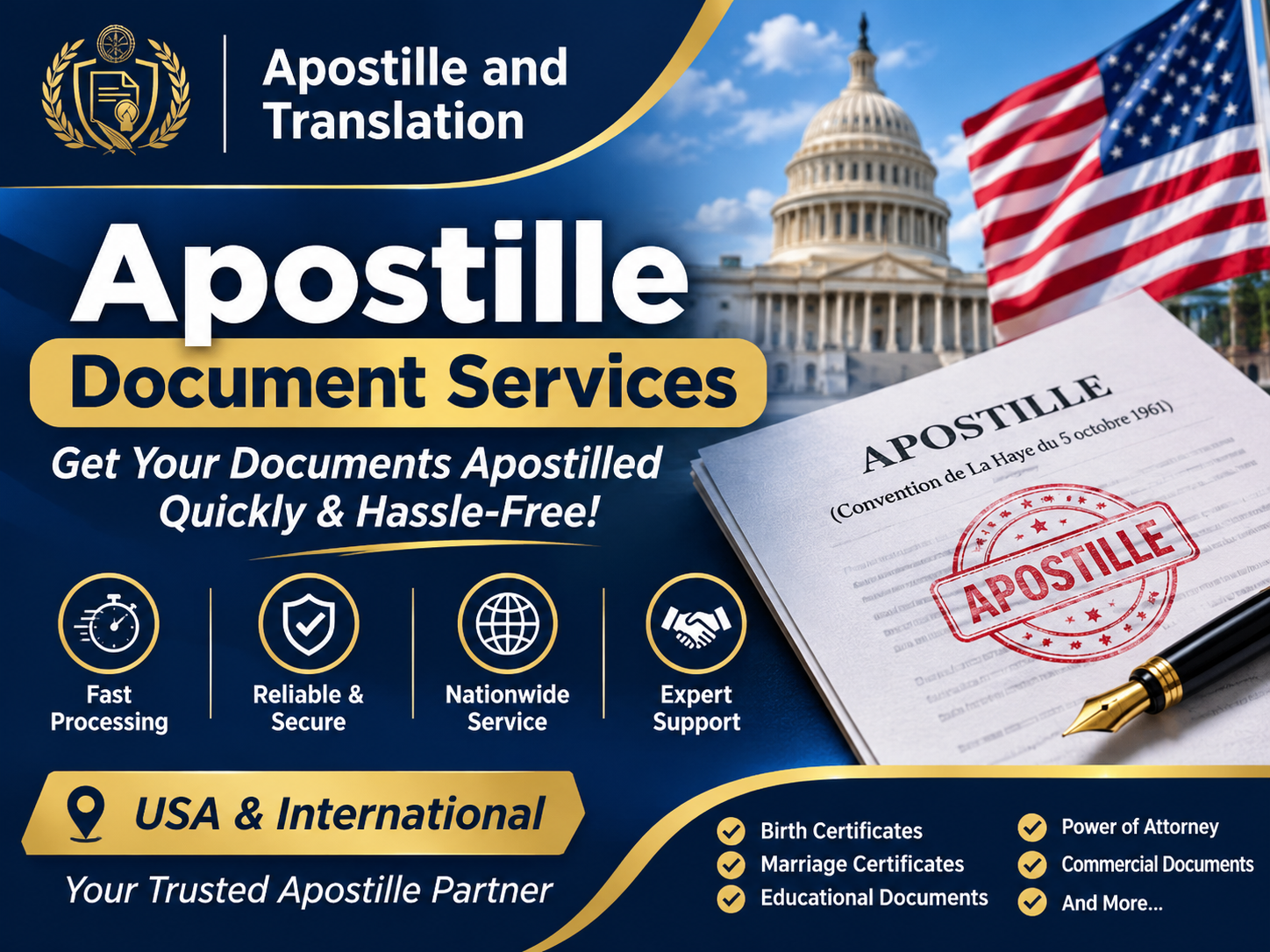
When you need to use a U.S. document in another country, simply having the original document may not be enough. Foreign governments, universities, employers, courts, immigration offices, and other organizations may require additional authentication before accepting it. Depending on the destination country and document type, this process may involve an apostille, document authentication, certified translation, or several of these services together.
Finding reliable apostille and translation services near me can make the process much easier, especially when you are dealing with important personal or business documents. A professional provider can help you understand which services are required, prepare your paperwork correctly, and avoid common mistakes that may cause delays.
What Is an Apostille?
An apostille is a certificate used to authenticate certain public documents for international use in countries that participate in the Hague Apostille Convention.
The purpose of an apostille is to verify the authenticity of the signature, seal, or stamp on a public document. It does not verify the information contained inside the document itself.
Common documents that may require an apostille include:
- Birth certificates
- Marriage certificates
- Divorce decrees
- Death certificates
- Powers of attorney
- School and university diplomas
- Transcripts
- Court documents
- Business documents
- Certificates of incorporation
- Adoption documents
- Notarized documents
The exact procedure depends on the type of document, the state where it was issued or notarized, and the country where it will be used.
Why Do You Need Document Translation?
An apostille and a translation serve different purposes.
An apostille authenticates a document for international use, while a translation converts the document’s information from one language into another.
For example, suppose you have a U.S. marriage certificate that needs to be submitted to a government authority in another country. The receiving authority may require the original certificate to be apostilled and may also require the document to be translated into its official language.
In that situation, getting only an apostille may not be enough.
Translation requirements can vary depending on the receiving authority. Some organizations require a certified translation, while others may have specific rules regarding the translator, certification statement, formatting, or notarization.
This is why it is important to determine the requirements of the organization receiving your documents before beginning the process.
Choosing Apostille Services in California
If your documents originate in California, you may need to work with the appropriate California authority depending on the document type and authentication requirements.
People searching for apostille services in California often need help with documents for international marriage, immigration, employment, education, business transactions, or relocation.
California-issued documents can include many different types of paperwork. A birth certificate, for example, may follow a different procedure from a notarized power of attorney or a business document.
A professional document service can help identify the appropriate process and explain what needs to happen before submission.
When comparing providers, look for:
- Experience with international documents
- Clear pricing
- Transparent processing times
- Knowledge of state requirements
- Translation services when needed
- Document review before submission
- Secure handling of personal documents
- Clear communication throughout the process
Avoid choosing a provider solely because it has the lowest advertised price. A mistake involving an important legal document can cost significantly more in time and additional processing fees.
How the Apostille Process Usually Works
Although requirements differ, the general process often follows several steps.
1. Identify the Document
Start by determining which document needs to be used internationally. Check whether it is an original document, certified copy, notarized document, or another acceptable format.
2. Determine the Destination Country
The country where the document will be used is extremely important. Different countries can have different authentication and translation requirements.
If the destination country participates in the Hague Apostille Convention, an apostille may generally be the appropriate form of authentication. If it does not, another authentication or legalization process may be required.
3. Check State Requirements
The issuing state can affect the authentication process. Documents issued or notarized in California, for example, may have different procedures from documents originating in another state.
4. Prepare the Translation
If the receiving organization requires a translation, determine whether it must be certified, notarized, or completed according to a specific format.
The translation should accurately reflect the original document. Names, dates, identification numbers, stamps, signatures, and other important details should be handled carefully.
5. Submit the Document
After the necessary preparation, the document can be submitted to the appropriate authority or service provider.
A professional service may handle the submission on your behalf, depending on the service selected and the document requirements.
6. Receive and Review the Completed Documents
Once the process is complete, carefully review the apostilled and translated documents. Make sure names and other critical information are correct before submitting them to the final recipient.
Common Reasons People Need Apostille and Translation Services
International document authentication is required in many situations.
Immigration
People moving to another country may need authenticated birth certificates, marriage certificates, police records, educational records, or other documents.
Marriage Abroad
Couples planning to marry in another country may be asked to provide proof of identity, birth records, marital status, or other legal documents.
International Education
Students may need authenticated diplomas, transcripts, certificates, or academic records when applying to educational institutions overseas.
Employment
International employers sometimes request verified educational or professional documents before hiring foreign workers.
International Business
Companies operating internationally may need authenticated corporate documents, contracts, powers of attorney, or certificates for overseas transactions.
Personal Legal Matters
Legal documents may also need authentication when they are being presented to foreign courts, government offices, or other authorities.
What Makes a Good Apostille and Translation Provider?
Not every document service provider offers the same level of support.
A reliable provider should make the process understandable rather than confusing. Before sending sensitive documents, ask questions about the process, fees, turnaround time, and what is included in the service.
A good provider should also be honest about requirements. No company can guarantee that a foreign government will accept a document because the final decision belongs to the receiving authority.
Look for a service that:
- Explains the process clearly
- Reviews documents before processing
- Provides straightforward pricing
- Protects confidential information
- Has experience with different document types
- Offers translation when required
- Communicates about potential problems
- Does not make unrealistic guarantees
How to Avoid Common Apostille Mistakes
Small errors can create unnecessary delays.
One common mistake is submitting the wrong type of document. Another is failing to obtain the required certified copy or notarization before requesting authentication.
Translation is another area where problems can occur. A document may be translated accurately but still fail to meet the receiving organization’s specific certification requirements.
Before submitting anything, confirm:
- The destination country.
- The receiving organization’s requirements.
- Whether an apostille or another authentication is needed.
- Whether the document must be original or certified.
- Whether translation is required.
- Whether the translation must be certified or notarized.
- Whether additional authentication is necessary.
Taking a few minutes to confirm these details can prevent unnecessary reprocessing.
Why Local Service Can Be Convenient
Many people prefer searching for Apostille Services California because local or nearby providers can make document handling easier.
Depending on the provider, local services may offer document pickup, drop-off, mobile assistance, in-person consultations, or expedited processing options.
However, proximity should not be the only factor when selecting a provider. A company located nearby but unfamiliar with your specific document requirements may be less useful than an experienced provider with a strong document-processing system.
Consider experience, transparency, reviews, security, communication, and knowledge of authentication requirements alongside location.
What Should You Bring or Send?
The documents required depend on your situation, but you may need:
- The original document
- A certified copy
- Identification
- Notarized paperwork
- Translation requirements from the receiving organization
- Destination-country information
- Contact information for the receiving authority
Never send original documents without understanding how they will be handled and returned. When using a third-party service, ask about document security and tracking.
Final Thoughts
International document preparation can seem complicated, but understanding the difference between authentication, apostille services, and translation makes the process much easier.
Whether you are preparing documents for immigration, marriage, education, employment, business, or another international purpose, start by identifying the requirements of the organization that will receive your documents. Then make sure your paperwork is properly prepared before submission.
Searching for Apostille and Translation services near me can help you find convenient assistance, but experience and accuracy should matter just as much as location. For California documents, carefully reviewing the state’s applicable authentication requirements is especially important.
With the right preparation and a knowledgeable document service, you can reduce avoidable delays and make the international document process more straightforward.
Frequently Asked Questions
1. What is the difference between an apostille and a translation?
An apostille authenticates certain signatures, seals, or stamps on a document for international use. A translation converts the document’s content into another language. They are separate services, although both may be required for the same document.
2. Do all international documents need an apostille?
No. Requirements depend on the destination country, document type, and purpose. Some countries may use the Hague Apostille process, while others may require a different authentication or legalization procedure.
3. Can a birth certificate be apostilled?
In many cases, yes, but the exact procedure depends on where the certificate was issued and where it will be used. You should confirm the requirements before submitting the document.
4. Does an apostille translate my document?
No. An apostille does not translate the document. If the receiving organization requires another language, you will generally need a separate translation.
5. How long does the process take?
Processing times vary based on the document, government office, service level, location, and whether translation or additional authentication is required. Ask the provider for a current estimated turnaround before submitting your documents.

 English
 Arabic
 French
 Portuguese
 Deutsch
 Turkish
 Dutch
 Italiano
 Russian
 Romaian
 Portuguese (Brazil)
 Greek
