


How to Choose a Baby Walker: 7 Safe Tips for 2027
Your baby just pulled up on the sofa, wobbled for three seconds, and grinned like they won a medal. Now every parent in the room is thinking the same thing: is it time for a baby walker?
It's a fair question, and a smart one to ask before you buy. A good walker can make those first steps more fun and give your little one some confidence. A poor choice can tip over, slide too fast, or simply not suit your child's age. In the UAE, where many families live in apartments with tiled floors and open living spaces, the details matter even more.
In this guide, you'll learn how to choose a baby walker step by step. We'll cover safety, size, features, and local tips for parents in Dubai and across the Emirates. By the end, you'll know exactly what to look for and what to skip.
What Is a Baby Walker, and When Is Your Baby Ready?
A baby walker is a supportive device that helps a baby practice standing and moving while a parent stays close. There are two main kinds, and they are quite different.
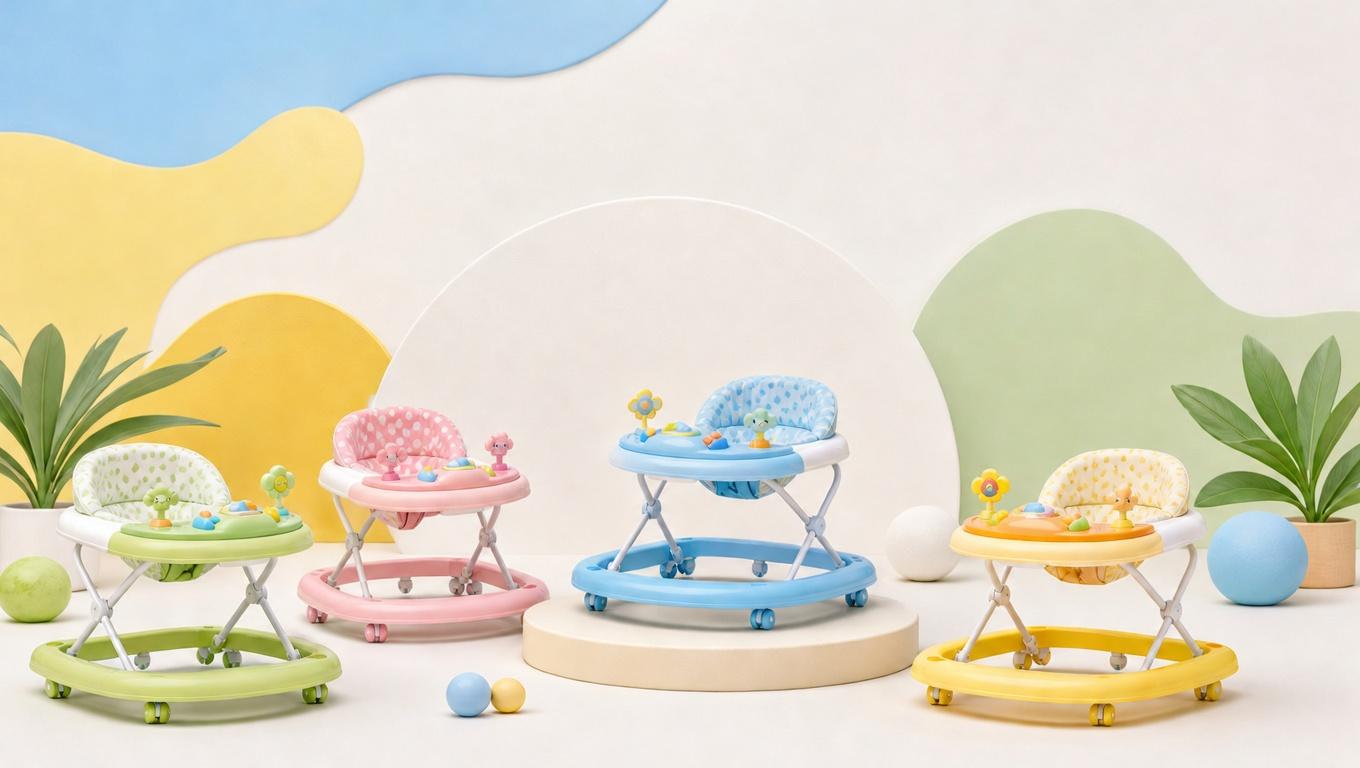
Sit-in walkers have a seat with leg holes and wheels underneath. The baby sits inside and pushes along the floor with their feet.
Push walkers (also called walk-behind walkers) have a handle. The baby stands behind it, holds on, and pushes it forward as they take steps.
Quick answer: when can a baby use a walker? Most babies are ready for a push walker between 9 and 12 months, once they can pull themselves up and stand while holding onto furniture. Sit-in styles are usually marketed from around 6 months, but many pediatric groups advise caution with them. Always check the age and weight range on the product and ask your pediatrician if you're unsure.
Here's a simple readiness check:
-
Your baby can sit up without help
-
They can pull themselves up to standing
-
They show interest in cruising along furniture
-
They are within the weight limit on the label
Tip 1: Put Baby Walker Safety First
Baby walker safety should be the first thing on your checklist, not the last. Walkers are linked to injuries around the world, mostly from falls down stairs, tipping over, or reaching things that were once out of range.
Because of this, many pediatric organizations recommend push-style walkers over sit-in ones, and some countries restrict the sale of sit-in types. Whichever you pick, follow these basics:
-
Never leave your baby unattended, even for a minute
-
Block stairs with a firm, bolted gate
-
Keep hot drinks, cables, and cleaning products out of reach
-
Look for a product that meets recognized safety standards, such as EN 1273 or similar certifications
-
Use the walker on flat, indoor surfaces only
If a seller can't tell you whether a walker meets a safety standard, that's a red flag. Move on.
Tip 2: Choose an Anti-Tip Baby Walker
Babies are top-heavy and unpredictable. They lean, lunge, and grab. That's why an anti-tip baby walker is worth the extra attention.
What makes a walker resistant to tipping?
-
A wide base. The wheels should sit well outside the frame, giving a broad footprint.
-
A low center of gravity. Heavy parts should be near the bottom, not the top.
-
Weighted or reinforced frames. Some push walkers include a weighted base to stop them from rolling away too fast.
-
Wheel brakes or speed control. These let you slow the walker down on smooth floors.
Try a simple test in the store or at home. Push down on one edge of the frame. If it lifts or rocks easily, it probably won't hold up to an excited toddler.
Tip 3: Look for an Adjustable Height Walker
Babies grow fast. A walker that fits perfectly this month might feel awkward in three. That's why an adjustable height walker is one of the smartest features you can pick.
For sit-in models, the seat height should let your baby's feet rest flat on the floor, not dangle and not tiptoe. For push walkers, the handle should reach roughly elbow height when your baby stands. If the handle is too low, they'll hunch forward. Too high, and they'll strain to hold on.
Look for walkers with three or more height settings. They'll last longer and give your child better posture as they learn.
Tip 4: Compare Key Baby Walker Features
With so many options on the shelf, it helps to know which baby walker features actually matter and which are just noise.
Features Worth Having
-
Padded, washable seat or handle. Babies drool, spill, and snack. You'll thank yourself later.
-
Lockable or removable play tray. Great for toys and small snacks.
-
Rubberized wheels. These grip tiled floors better than hard plastic, which matters in UAE homes with marble or porcelain tiles.
-
Foldable frame. Handy for small apartments and for travel.
-
Music and light panels. Fun, but not essential. Look for volume control.
Features You Can Skip
-
Too many loud electronic buttons
-
Flimsy detachable parts that could become choking hazards
-
Anything that makes the walker top-heavy
Think of features as bonuses. The frame, wheels, and stability always come first.
Tip 5: Match the Walker to Your Home
A walker that works in a villa may not suit a compact flat in Dubai Marina, and the reverse is also true. Before buying, take a quick look around your home.
Check your flooring. Smooth tiles let walkers glide quickly, which can be risky. Look for wheel locks or a speed-control feature. Thick rugs can catch wheels and cause tipping, so keep the play area clear.
Measure your doorways. Some sit-in walkers are wider than you'd expect. Measure before you order.
Think about storage. A foldable design saves space, especially in apartments where every cupboard counts.
Plan for heat. If you want to use the walker on a balcony or patio, remember that plastic and metal can get very hot in summer. Indoor use is the safer choice for most UAE households.
Tip 6: Consider Weight Limits, Materials, and Build Quality
A walker is only as good as what it's made from. Pick up the product, or read the description closely, and check three things.
Weight limit. Most walkers support babies up to about 12 to 15 kg. Make sure your child falls comfortably within the range, not right at the edge.
Materials. Look for BPA-free plastics, smooth edges, and non-toxic paint. If your baby chews on the handle (and they will), you want it to be safe.
Build quality. Screws should be tight, joints should feel solid, and nothing should wobble. Read reviews from real parents when you can. Comments about parts cracking or wheels coming loose are worth noting.
Spending a little more on a sturdy walker often costs less than replacing a cheap one after a few months.
Tip 7: Buy From a Trusted Store in the UAE
Where you buy matters almost as much as what you buy. If you're searching for a baby walker Dubai parents can rely on, look for a store that offers:
-
Clear product details, including age range, weight limit, and dimensions
-
Genuine brands and original packaging
-
Fast delivery, so you're not waiting weeks
-
Easy returns if the size or style isn't right
-
Helpful customer support that can answer safety questions
Online shopping is convenient, especially with a baby at home. Just make sure the listing shows real photos and full specifications. Vague descriptions are another warning sign.
How to Use a Baby Walker Safely at Home
Once you've picked the right walker, a few habits will keep playtime smooth.
-
Start small. Begin with 10 to 15 minutes at a time, so your baby doesn't tire out.
-
Stay within arm's reach. Supervision is the single most important rule.
-
Clear the space. Remove loose rugs, cords, and small objects from the floor.
-
Wear them in comfortable clothes. Soft, light outfits and non-slip socks or bare feet work best.
-
Don't rush the process. Walkers are a tool, not a shortcut. Your baby will walk when their body is ready.
Mix walker time with floor play, tummy time, and supported standing. Variety helps babies build strength naturally.
Frequently Asked Questions
Are baby walkers safe for babies?
They can be safe when you choose a well-built model and supervise closely. Push walkers with a wide, stable base are generally considered safer than sit-in styles. Always follow the manufacturer's age and weight guidelines.
What age is best for a baby walker?
Most babies are ready between 9 and 12 months, once they can pull up and stand with support. Every child develops differently, so check with your pediatrician if you're unsure.
Do baby walkers help babies walk earlier?
Not really. Research does not show that walkers speed up walking, and some studies suggest sit-in types may even delay it slightly. Think of a walker as a fun, supportive toy rather than a training tool.
How long can my baby use a walker each day?
Short sessions of 10 to 20 minutes are plenty. Longer use can tire your baby and limit free movement on the floor, which is important for development.
What should I look for in a baby walker in the UAE?
Prioritize a stable, anti-tip frame, adjustable height, rubberized wheels for tile floors, and a trusted local seller who offers quick delivery and returns.
Final Thoughts
Choosing a baby walker doesn't need to feel overwhelming. Start with safety, check for stability and adjustable height, and match the design to your home and your baby's stage. Add a few helpful features, buy from a reliable store, and keep a close eye on your little one during every session.
Those first wobbly steps are moments you'll remember for years. The right walker simply helps make them a little safer and a lot more fun.
Ready to find the perfect walker for your little one? Browse the Baby Shop collection at ToysUAE for trusted baby gear, fast delivery across the UAE, and everything your family needs for happy first steps.

 English
 Arabic
 French
 Spanish
 Portuguese
 Deutsch
 Turkish
 Italiano
 Russian
 Romaian
 Portuguese (Brazil)
 Greek
