


How Does a Modular Cardiac OT Engineering Company Optimize OT Workflow?
Introduction
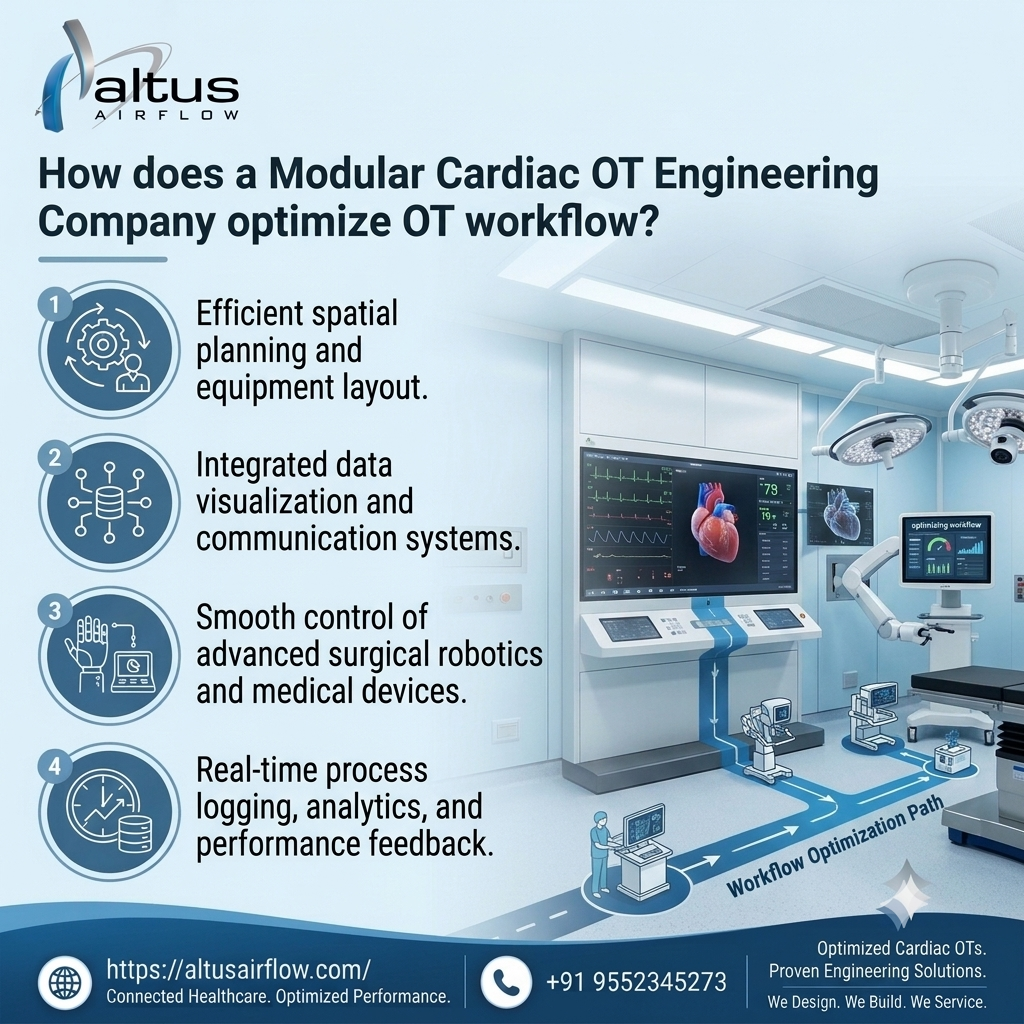
Altus Airflow provides specialized modular healthcare infrastructure solutions that support hospitals in developing efficient and technologically advanced cardiac operation theatres. A Modular Cardiac OT Engineering Company optimizes OT workflow through intelligent space planning, controlled ventilation, integrated medical utilities, ergonomic equipment placement, and well-coordinated infrastructure design. These elements help surgical teams perform their responsibilities efficiently while maintaining a controlled operating environment. Proper engineering also reduces unnecessary movement, improves accessibility, and supports infection control throughout the surgical process.
A well-planned cardiac OT combines architectural design, engineering systems, and clinical requirements to create a functional environment that supports surgical efficiency and patient safety.
1. Understanding the Importance of OT Workflow Optimization
OT workflow refers to the organized movement of surgeons, nurses, anaesthesiologists, patients, medical equipment, and sterile supplies within an operating theatre.
In cardiac surgery, efficient workflow is particularly important because procedures involve specialized equipment, multiple healthcare professionals, and carefully coordinated activities.
Poorly planned operating theatres may experience unnecessary movement, equipment accessibility issues, delays in preparation, and difficulties maintaining sterile conditions.
Workflow optimization focuses on creating an environment where every component has a defined purpose and location.
Important considerations include:
-
Smooth movement of surgical personnel.
-
Proper separation of sterile and non-sterile activities.
-
Convenient equipment positioning.
-
Efficient patient transfer arrangements.
-
Accessible medical gas and electrical outlets.
-
Controlled ventilation and air quality.
-
Organized storage and preparation areas.
By addressing these requirements during the engineering stage, hospitals can develop an operating theatre that supports organized surgical activities.
2. Designing an Efficient OT Layout
The physical layout of a cardiac operation theatre directly influences how healthcare professionals perform their duties.
An efficient layout should provide sufficient space for the operating table, surgical equipment, anaesthesia workstation, monitoring systems, and medical personnel.
Engineering teams evaluate the available area and develop customized layouts according to the hospital's clinical requirements.
Important layout considerations include:
Operating table positioning: The operating table should be positioned to provide sufficient access for surgeons, anaesthesiologists, and supporting staff.
Equipment placement: Surgical lights, monitors, anaesthesia machines, and other essential equipment should be positioned according to their intended use.
Personnel movement: Clear movement pathways help healthcare professionals access different areas without unnecessary obstruction.
Storage arrangements: Dedicated locations for sterile supplies and frequently used instruments help reduce unnecessary movement.
Emergency accessibility: The layout should allow quick access to essential equipment and provide suitable space for emergency interventions.
Three-dimensional layouts and technical drawings can help hospitals evaluate the proposed arrangement before installation begins.
3. Improving Airflow and Ventilation Management
Airflow management is one of the most important engineering considerations in a cardiac operation theatre.
Proper ventilation planning helps maintain the required environmental conditions and supports infection control.
A professional Modular Cardiac OT Engineering Company considers several HVAC parameters while developing an operating theatre.
These include:
-
HEPA filtration arrangements.
-
Air supply and return air positioning.
-
Temperature regulation.
-
Humidity control.
-
Pressure differential management.
-
Air change requirements.
-
Ventilation system accessibility.
Laminar airflow arrangements may also be incorporated where specified by the clinical design and applicable requirements.
Properly positioned supply diffusers and return air grilles help establish the intended airflow pattern.
Pressure relationships between the operating theatre and adjoining spaces should also be carefully planned to support the required direction of airflow.
Regular airflow assessments, filter integrity testing, and HVAC maintenance help verify that the system continues to operate according to its design specifications.
4. Establishing Proper Zoning and Movement Pathways
Zoning is essential for organizing different activities within a cardiac surgical facility.
A well-planned operating theatre environment considers the movement of patients, medical professionals, sterile supplies, and used materials.
The objective is to reduce unnecessary crossing between different movement pathways.
Common zoning considerations include:
Sterile zones: Areas designated for maintaining sterile supplies and supporting surgical activities.
Restricted zones: Areas with controlled access to protect the operating environment.
Clean support areas: Spaces used for preparing equipment and storing clean materials.
Patient transfer pathways: Designated routes that support the organized movement of patients.
Waste and used material pathways: Arrangements that support safe removal of used materials according to hospital infection control procedures.
Proper zoning helps reduce congestion and supports organized movement throughout the surgical facility.
Engineering teams should coordinate these arrangements with hospital infection control specialists and clinical personnel.
5. Integrating Medical Gas and Electrical Systems
Medical gas and electrical infrastructure are essential for uninterrupted cardiac surgical operations.
Poorly positioned outlets or insufficient electrical connections can create accessibility challenges and interfere with equipment arrangements.
Engineering planning helps determine the appropriate locations for these utility connections.
Electrical infrastructure may include:
-
Dedicated power outlets.
-
Emergency power connections.
-
UPS-supported circuits where required.
-
Proper earthing arrangements.
-
Equipment-specific electrical connections.
-
Organized cable management.
Medical gas infrastructure may include oxygen, medical air, vacuum, and other services specified by the hospital.
Positioning these outlets near their intended equipment locations helps reduce unnecessary cable and hose movement.
Proper coordination also prevents conflicts between electrical services, medical gas pipelines, modular wall panels, and ceiling-mounted equipment.
These considerations help create a more organized and accessible operating environment.
6. Optimizing Surgical Equipment Placement
Cardiac operation theatres use several specialized devices, and their placement can significantly influence surgical workflow.
Equipment should be positioned according to clinical requirements, accessibility, and the movement patterns of healthcare professionals.
Common equipment includes:
-
Operating tables.
-
Anaesthesia workstations.
-
Patient monitoring systems.
-
Surgical lighting.
-
Electrosurgical equipment.
-
Imaging systems.
-
Perfusion-related equipment.
-
Instrument storage units.
Engineering teams should coordinate with surgeons, anaesthesiologists, biomedical engineers, and equipment suppliers before finalizing equipment positions.
Ceiling-mounted service pendants can also help organize selected equipment and utility connections while reducing floor-level obstructions.
A carefully planned arrangement improves accessibility and helps healthcare professionals focus on surgical responsibilities.
7. Using Modular Wall and Ceiling Systems for Better Organization
Modular wall and ceiling systems contribute to the functional organization of cardiac operation theatres.
These systems can accommodate selected medical utility connections, electrical outlets, control panels, and equipment integration requirements.
Their smooth, easy-to-clean surfaces also support routine cleaning and hygiene procedures.
Important features include:
Integrated service panels: These allow selected electrical and medical utility connections to be arranged conveniently.
Observation windows: Properly positioned windows support visibility while maintaining the intended room configuration.
Modular ceiling systems: Specialized ceiling arrangements can accommodate surgical lighting and other approved equipment.
Sealed joints: Appropriate joint finishing helps maintain cleanable interior surfaces.
Accessible service arrangements: Proper engineering can simplify inspection and maintenance of selected infrastructure components.
Modular construction also allows components to be planned according to the room's technical requirements rather than relying entirely on conventional interior arrangements.
8. Introducing Digital Monitoring and Automation
Digital monitoring and automation can improve the management of different operating theatre infrastructure systems.
Modern cardiac OTs may incorporate centralized control panels, environmental sensors, automated doors, and integrated monitoring platforms.
These features provide useful information to authorized hospital personnel.
Important automation functions include:
-
Digital temperature monitoring.
-
Humidity measurement.
-
Pressure differential monitoring.
-
HVAC operating status.
-
Automated door controls.
-
Medical gas alarm indications.
-
Selected equipment status monitoring.
For example, digital pressure sensors can identify deviations from configured pressure limits and activate alerts.
Similarly, temperature and humidity monitoring systems help facility teams identify environmental changes.
Building Management System integration can also provide centralized access to selected infrastructure information.
These technologies support better infrastructure supervision and can reduce the time required to identify certain technical problems.
9. Improving Lighting and Visual Accessibility
Proper lighting is necessary for surgical precision and efficient operating theatre activities.
Cardiac operation theatres require suitable illumination for surgical procedures, equipment operation, and general movement.
Engineering teams coordinate lighting arrangements according to clinical requirements and equipment specifications.
Important lighting considerations include:
Surgical lighting: Lights should provide appropriate illumination of the operative field while minimizing unwanted shadows.
Ambient lighting: General room lighting supports staff movement and routine activities.
Adjustable intensity: Compatible lighting systems allow users to modify brightness according to procedural requirements.
Emergency lighting: Appropriate backup arrangements support visibility during power interruptions.
Control accessibility: Lighting controls should be conveniently positioned for authorized personnel.
Proper lighting design helps create a comfortable and functional working environment for surgical teams.
10. Supporting Infection Control Through Engineering Design
Infection control is an essential part of OT workflow optimization.
The operating theatre should be designed to support routine cleaning, controlled access, and appropriate environmental management.
Engineering solutions contribute to these objectives through material selection, ventilation planning, and interior design.
Important considerations include:
-
Smooth and non-porous interior surfaces.
-
Properly sealed wall and ceiling joints.
-
Suitable flooring materials.
-
Appropriate door sealing arrangements.
-
Effective ventilation and filtration.
-
Organized clean and used material pathways.
-
Convenient access for cleaning and maintenance.
The placement of equipment should also avoid unnecessary obstructions that make cleaning difficult.
Engineering teams should coordinate infection control requirements with hospital clinical and facility management departments.
This ensures that design decisions support the hospital's established hygiene protocols.
11. Coordinating Project Execution and System Integration
Workflow optimization depends not only on the final design but also on the quality of project execution.
A cardiac operation theatre involves multiple engineering disciplines that must work together.
These include architectural planning, HVAC engineering, electrical systems, medical gas infrastructure, modular interiors, and equipment integration.
A structured project execution process generally includes:
-
Initial site assessment.
-
Hospital requirement analysis.
-
Layout development.
-
Technical design coordination.
-
Material selection and procurement.
-
Modular infrastructure installation.
-
Utility integration.
-
System testing and commissioning.
-
Final inspection and handover.
Regular coordination meetings help resolve technical conflicts and ensure that installation activities follow approved drawings.
A properly managed process also helps reduce unnecessary rework and project delays.
12. Testing and Commissioning for Reliable OT Performance
Testing and commissioning help confirm that the installed infrastructure operates according to the approved specifications.
Before the operating theatre is handed over, different systems should undergo appropriate inspections and performance assessments.
These may include:
HVAC performance testing: Verification of airflow, temperature, humidity, and pressure relationships.
HEPA filter integrity testing: Assessment of filter installation and integrity according to applicable procedures.
Electrical safety testing: Inspection of electrical distribution, earthing, and backup power arrangements.
Medical gas testing: Verification of pipeline safety, pressure, and leakage conditions.
Door functionality testing: Checking automated operation, sensors, and sealing arrangements.
Control system testing: Verifying digital monitoring, alarm functions, and integrated controls.
Commissioning documentation provides a useful reference for future maintenance and performance reviews.
These activities help hospitals identify issues before the facility becomes operational.
13. Benefits of an Optimized Cardiac OT Workflow
An appropriately engineered operating theatre can provide several practical benefits to hospitals.
Reduced unnecessary movement: Better equipment positioning and organized layouts help minimize avoidable staff movement.
Improved equipment accessibility: Strategically positioned devices and utility outlets support convenient access.
Better environmental control: Integrated HVAC planning helps maintain the required operating conditions.
Organized surgical activities: Clear zoning and movement pathways support smoother coordination.
Improved maintenance access: Planned service arrangements simplify inspection and maintenance activities.
Enhanced infection control support: Suitable surfaces, ventilation, and room arrangements support hospital hygiene procedures.
Future adaptability: Modular infrastructure can be planned to accommodate selected equipment upgrades and changing operational requirements.
These benefits demonstrate the importance of integrating clinical workflow requirements into every stage of OT engineering.
Conclusion
A Modular Cardiac OT Engineering Company optimizes OT workflow through customized layouts, controlled ventilation, efficient equipment positioning, integrated medical utilities, digital monitoring, and infection control-focused infrastructure. These engineering considerations help hospitals create organized surgical environments that support healthcare professionals and improve operational efficiency.
Altus Airflow focuses on specialized modular healthcare infrastructure solutions designed around hospital requirements. Through coordinated engineering, careful planning, and quality-focused execution, Altus Airflow helps healthcare facilities develop functional, hygienic, and technologically advanced cardiac operation theatres.
Frequently Asked Questions (FAQs)
1. How does a Modular Cardiac OT Engineering Company optimize OT workflow?
A Modular Cardiac OT Engineering Company optimizes workflow through customized layouts, equipment positioning, HVAC planning, medical utility integration, and organized movement pathways.
2. Why is OT layout planning important?
It improves staff movement, equipment accessibility, space utilization, and coordination during surgical procedures.
3. How does ventilation improve cardiac OT workflow?
Proper ventilation helps maintain controlled environmental conditions and supports infection control requirements.
4. What role do modular wall panels play in OT engineering?
They provide cleanable interior surfaces and can accommodate selected medical utilities and electrical connections.
5. Can automation improve operating theatre efficiency?
Yes, automated doors, digital monitoring, and centralized control systems simplify selected infrastructure management activities.
Read Our Previous Blog ---------------> Does a Modular Cardiac OT Setup Company provide project planning services?

 English
 Arabic
 French
 Spanish
 Portuguese
 Deutsch
 Turkish
 Dutch
 Italiano
 Romaian
 Portuguese (Brazil)
 Greek
