


SL Series Parts Buying Guide: Practical Steps for Crane Owners
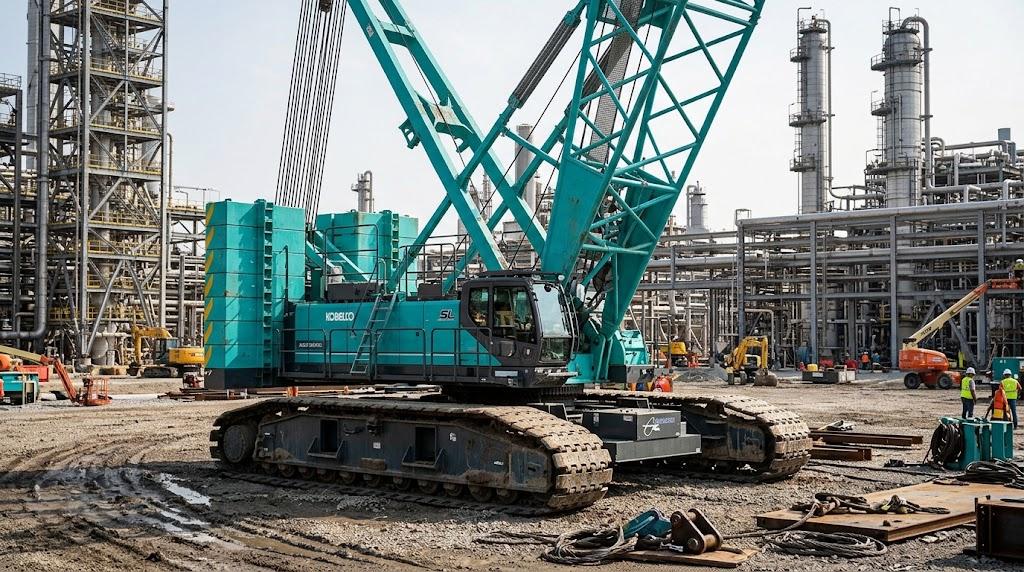
An SL series lattice boom crawler supports heavy lifts and tight schedules. A failed component can interrupt a wind farm erection or a refinery turnaround. The buying process works best when it starts with verified machine data. This guide covers practical steps for selecting components without unnecessary complexity.
Verify the Machine Before Ordering
Before contacting any supplier, assemble the model, serial number, build year, and retrofit notes. Kobelco revised components between production runs. An early SL7300 boom pin may not fit a later machine. The same risk applies to valve blocks and harnesses.
Those details let a counterperson match the correct drawing. A supplier of Kobelco parts should ask for them before quoting. Without that check, return freight and delay become likely. Keep a master list of serial-numbered assemblies.
That list shortens every reorder conversation. It also prevents mix-ups when two cranes share a model name. Update it after any major repair. Store it with the service file.
Main Component Groups
The categories below follow the machine from ground contact to control system. Each has different tolerances for aftermarket substitution. Review them before requesting quotes.
Undercarriage
Track groups and lower works take constant stress during travel and setup. Shoes, links, pins, bushings, sprockets, idlers, rollers, and adjuster assemblies are the main wear items. Cracked bolt holes and oval pin wear point to unsuitable material or hardness. Replace worn sets together when possible.
Forgings and through-hardened pins are preferable for track service. Suppliers of quality crane parts should provide material certificates for these items. Ask how hardness and dimensional tolerance are verified. If documentation is missing, look elsewhere.
Boom and Jib Structure
Boom components carry the load path and deserve close attention. Chord sections, lacings, connection pins, stop plates, and accessory brackets affect structural behavior. A lacing tube below specification can alter the load chart. Pins and bushings wear together and create play at connections.
Confirm that pins and bushings are matched as a set. When ordering Kobelco parts for the boom, ask for mill certificates on critical steel sections. If documentation is unavailable, consider another source. Worn pin holes should be inspected before new pins are installed.
Hoist and Load Handling
Hoist drums, wire rope, swedges, hook blocks, and load blocks require exact specification matching. Brake bands and clutch packs inside the hoist also need planned replacement. Rope construction, diameter, and strength should follow the original specification. A close substitute may not suit a high line pull application.
Brake bands are easy to overlook because they are small relative to the lift. Quality crane parts for the hoist should match the original rope construction, diameter, and strength. Replace brake bands on a planned interval rather than after slipping begins. Keep rope certificates with the crane records.
Hydraulic Systems
SL series hydraulics include pumps, control valves, counterbalance valves, swivel joints, and cylinders. Contamination and heat are the main causes of premature failure. A replacement pump or valve should come with clear documentation. Rebuilt units can be suitable when the rebuilder records the work performed.
Ask whether a rebuilt unit includes new seals and controls. A supplier of Kobelco parts can explain the core source and test procedure. Replace filters and flush affected lines after a major component change. Clean fluid protects the new part and the rest of the system.
Engine and Powertrain
Most SL series machines use diesel engines in the 400 to 600 horsepower range. Filters, injectors, turbochargers, water pumps, alternators, and starters are common service items. If the engine is a known industrial model, several supply channels may be available. The crane maker, engine OEM, and industrial distributor can all be valid sources.
Compare part numbers carefully across those channels. Quality crane parts for the engine may come through the crane maker, the engine OEM, or an industrial distributor. Confirm that filters and sensors match the engine serial number. Keep service records for injectors and turbochargers.
Electrical and Control Systems
Electrical architecture varies by production period. Older SL cranes may use relay logic, while newer machines use CAN-based controls, load moment indicators, and electronic joysticks. LMI sensors, amplifiers, and displays require correct system matching. A display unit with the wrong configuration can lock out functions.
Keep harness drawings and connector diagrams with the machine records. Many intermittent faults trace to a connector or chafed wire. Kobelco parts for LMI and control electronics should come from a supplier who knows the system. Document any electronic component change in the maintenance file.
OEM and Aftermarket Choices
The OEM versus aftermarket choice depends on the component and its role. OEM parts suit structural pins, load-path components, LMI electronics, and warranty work. Aftermarket parts can work for filters, belts, consumables, and standard hardware. Track components may also be suitable when material documentation is available.
Some buyers reserve Kobelco parts for load-path items and use alternatives elsewhere. That approach can work when the supplier documents material and test results. Ask for that evidence before ordering. Keep a record of every substitution.
For filters, belts, and standard hardware, aftermarket sources can be appropriate. Hydraulic hoses and fittings are another common aftermarket category. Quality crane parts from aftermarket sources can be appropriate for lower-risk categories. Document the decision for each category.
Evaluating a Supplier
A supplier should ask for the serial number before quoting. They should know where the part is made and provide a lead time they can support. A clear warranty process is also important. These checks reveal whether the supplier understands SL series machines.
Ask how claims are processed before you place an order. A good supplier of quality crane parts will also document warranty handling. If any answer is vague, continue your search. Keep quotes and correspondence in the job file.
Common Pitfalls
Ordering by description instead of part number is a common error. "The large boom pin" may not identify the correct item. Assuming two SL models share a parts catalog creates fit problems. Production changes can occur within the same model year.
Skipping the serial number increases the chance of a wrong part. Selecting load-path components without material documentation adds risk. Forgetting shipping dimensions can delay a boom section delivery. Oversize freight requires planning before the part leaves the supplier.
Ignoring storage conditions can damage new components before installation. Keep pins and seals in clean, dry storage. Inspect deliveries before signing. Report shipping damage immediately.
Confirm the part number on the label matches the invoice before installation. A mislabeled box can cause the same delay as a wrong order.
Closing
Parts sourcing for an SL series crane combines engineering checks and logistics planning. Accurate machine data, clear category decisions, and careful supplier screening reduce surprises. The goal is to fit the right component the first time. That approach keeps the crane available for the work it was built to perform.

 English
 Arabic
 French
 Portuguese
 Deutsch
 Turkish
 Dutch
 Italiano
 Russian
 Romaian
 Portuguese (Brazil)
 Greek
