


Exploring the Technology Behind Eight-Wheel All-Terrain Vehicles
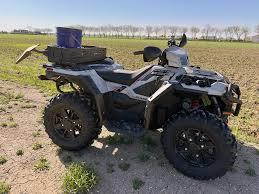
Transportation across wetlands, flooded landscapes, muddy trails, and remote waterways requires vehicles designed for more than conventional road conditions. Specialized amphibious platforms combine land mobility with the ability to travel through water, providing access to locations that may be difficult to reach using ordinary vehicles. An 8-Wheel Amphibious ATV is particularly interesting because its multi-wheel configuration creates opportunities for flexible ground contact and specialized transportation applications. Its effectiveness depends on structural design, material selection, mechanical coordination, and the conditions in which it is expected to operate.
Material selection is fundamental to amphibious vehicle construction. Unlike ordinary outdoor vehicles, amphibious platforms must consider both land-based mechanical demands and prolonged exposure to water. The body structure needs to support the vehicle's components while helping prevent unwanted water entry. Corrosion-resistant materials and protective surface treatments are important considerations, particularly when vehicles operate in wetlands, coastal environments, or areas with frequent water exposure.
Metal components remain important in structural and mechanical assemblies because of their strength and fabrication flexibility. However, the surrounding body may incorporate materials selected for water resistance, durability, and practical maintenance. Protective coatings can help reduce environmental deterioration, while suitable sealing materials contribute to the protection of internal compartments. Buyers should also consider the quality of joints, access panels, and connections because these areas can influence long-term maintenance requirements.
Purchasing an amphibious vehicle should begin with an assessment of the intended application. Agricultural users may need access to flooded fields, irrigation areas, or muddy farmland. Forestry and environmental organizations may require transportation through wetlands and remote natural landscapes. Emergency response departments may use amphibious platforms to reach isolated locations during floods or other incidents. Tourism operators may prioritize passenger comfort, convenient access, and an exterior design suitable for outdoor experiences.
The number of wheels alone should not determine the purchasing decision. Buyers should examine how the complete vehicle configuration supports its intended work. Wheel arrangement, suspension structure, drivetrain coordination, steering, and body design all influence movement across different surfaces. The relationship between ground contact and vehicle weight distribution is particularly important when moving from solid terrain into soft ground or water. Understanding these design relationships helps buyers evaluate whether a particular platform matches their operating requirements.
Amphibious engineering involves the coordination of several mechanical systems. On land, the drivetrain transfers power to the wheels, while suspension and steering arrangements help the vehicle respond to uneven surfaces. When entering water, the body structure and propulsion arrangement become increasingly important. The vehicle must maintain its intended floating characteristics while allowing controlled movement through the surrounding environment. Waterproofing, sealing, propulsion integration, and operator control should therefore be considered together.
A major advantage of specialized amphibious transportation is its ability to reduce dependence on conventional access routes. In flooded areas, roads may become inaccessible, and ordinary vehicles may be unable to reach isolated communities or working locations. Wetlands can also contain soft soil, shallow water, and vegetation that complicate transportation. An amphibious platform designed for these environments can provide another mobility option for teams that need to move personnel, equipment, or supplies.
The working environment determines how the vehicle should be configured. Freshwater wetlands, muddy agricultural fields, coastal areas, and forest waterways create different demands. Saltwater exposure can increase corrosion concerns, while muddy environments may require more frequent cleaning around mechanical assemblies. Vegetation and floating debris can also affect movement and maintenance. Buyers should consider local environmental conditions when discussing materials, protective components, cleaning procedures, and after-sales support with manufacturers.
Safety and operator experience are equally important. An effective cabin arrangement should provide convenient access, clear visibility, and practical control placement. Operators need to understand the transition between land and water operations and follow suitable procedures for changing environmental conditions. Storage arrangements should keep equipment organized and accessible without interfering with normal vehicle operation. For rescue applications, the layout may also need to accommodate emergency supplies and communication equipment.
Design and appearance should reflect the amphibious vehicle's functional purpose. The exterior structure needs to accommodate both mechanical components and the requirements of water-based operation. Body contours, protective panels, access doors, lighting, and seating arrangements all contribute to usability. A practical design should also allow maintenance personnel to reach important components for inspection and cleaning. Modular layouts can provide additional flexibility when the same vehicle platform is intended for agricultural, rescue, tourism, or industrial applications.
LIN HAI HAISDER MACHINERY CO.,LTD. specializes in developing tracked utility vehicles and amphibious all-terrain platforms for demanding working environments. Its vehicle solutions are relevant to applications such as flood rescue, firefighting, agriculture, wetland transportation, and outdoor tourism. When evaluating an 8-Wheel Amphibious ATV, buyers should compare the vehicle's structural design, mobility configuration, water-related engineering, and maintenance requirements with their actual operational needs. To explore specialized amphibious vehicle products, customization options, and manufacturing capabilities, visit LIN HAI HAISDER MACHINERY CO.,LTD. through its official website at https://www.chinahaishida.com.

 English
 Arabic
 French
 Portuguese
 Deutsch
 Turkish
 Dutch
 Italiano
 Russian
 Romaian
 Portuguese (Brazil)
 Greek
